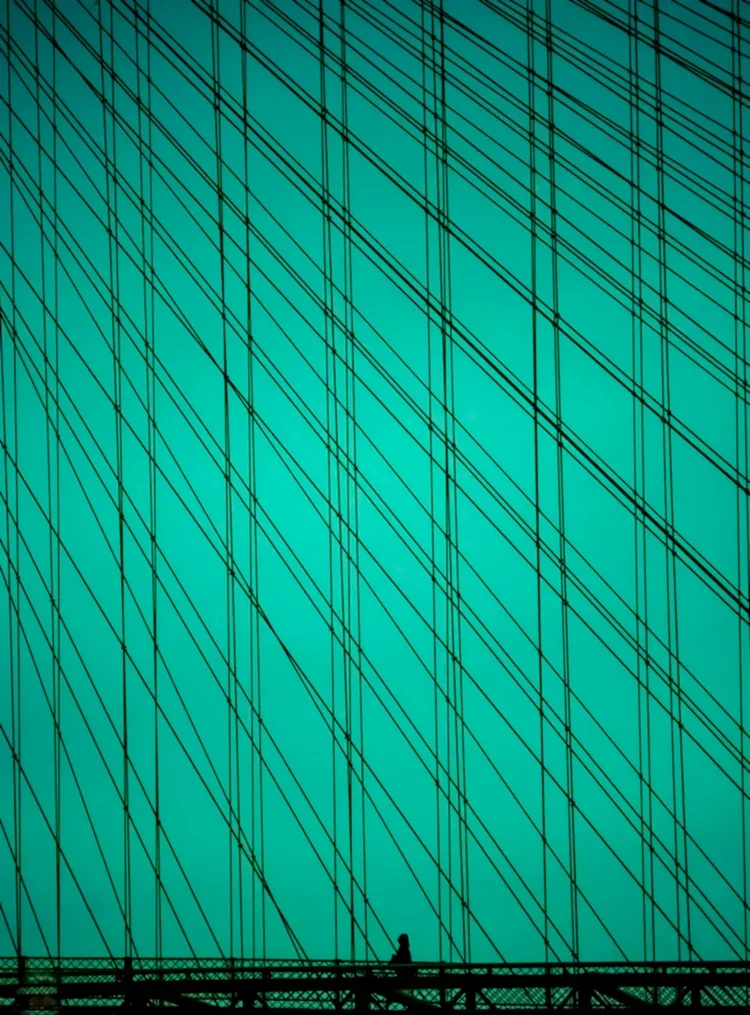
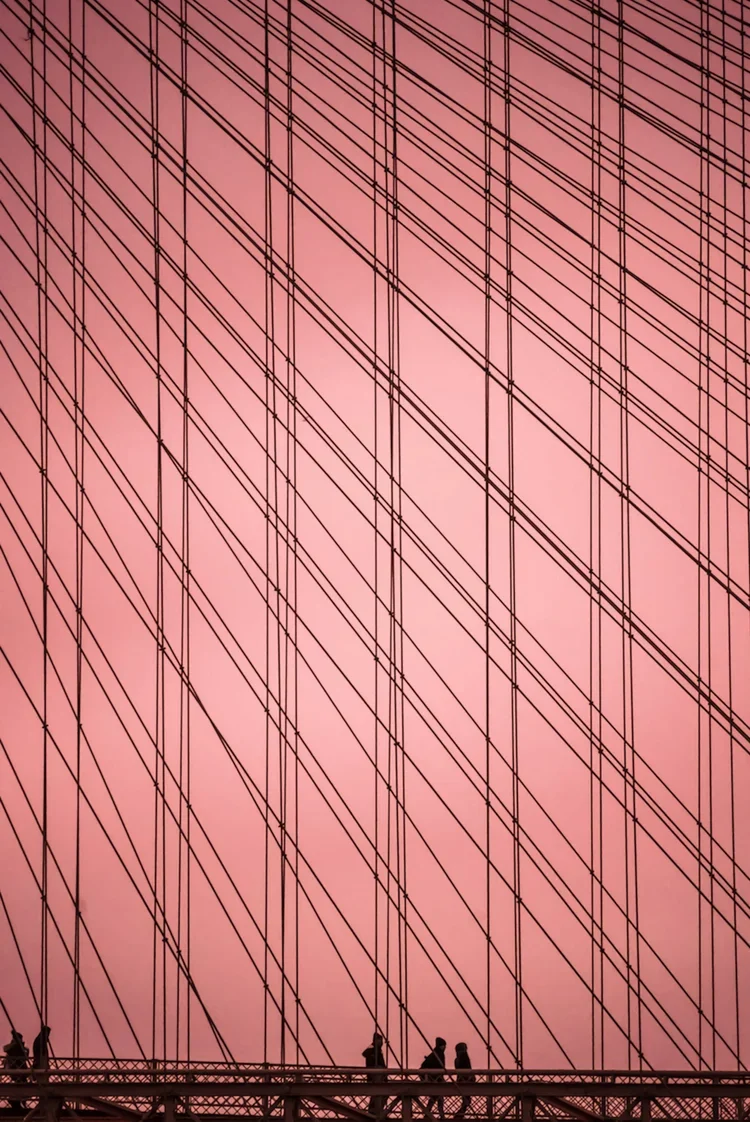
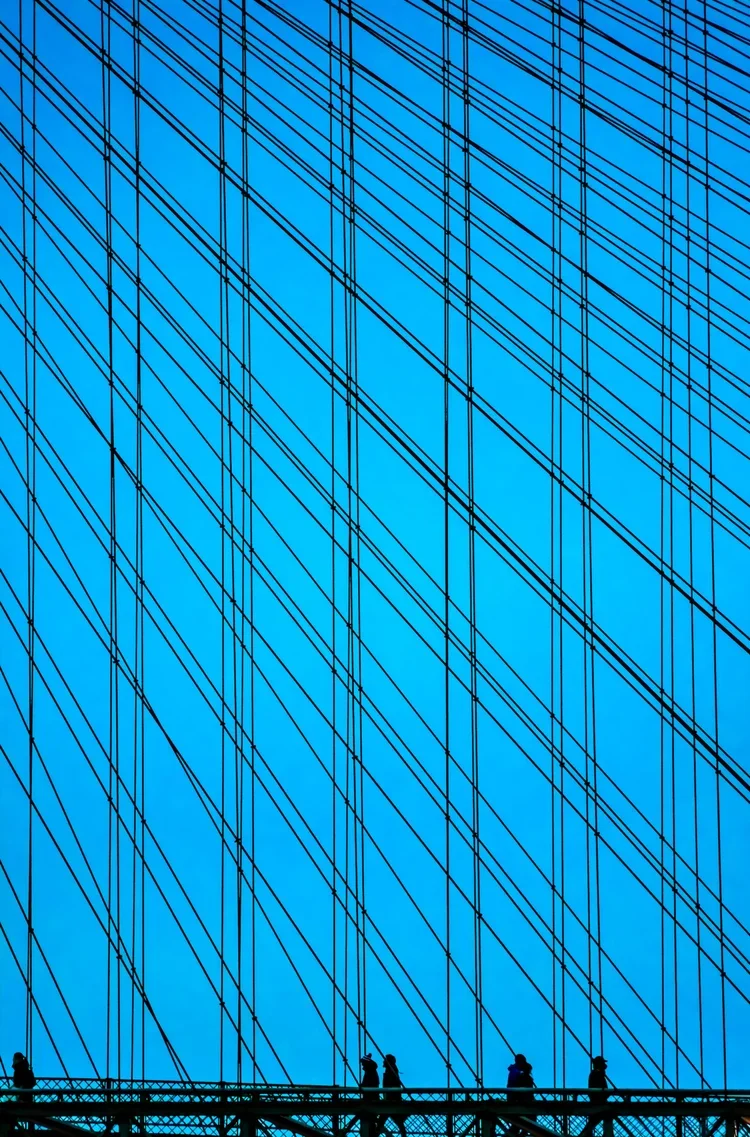
Bahar Kural is an internationally acclaimed fine art photographer whose work has earned more than 180 awards worldwide since 2020. Her celebrated series Brooklyn Bridge: Life’s Theater has won a record-breaking 17 international awards—more than any other series by a photography artist—garnering Gold Medals at the Paris International Street Photography Awards and the Tokyo International Foto Awards, as well as top honors in Moscow, Paris, and beyond.
Bahar Kural’s work inhabits the space between photography and painting, where time ceases to document and instead begins to breathe.
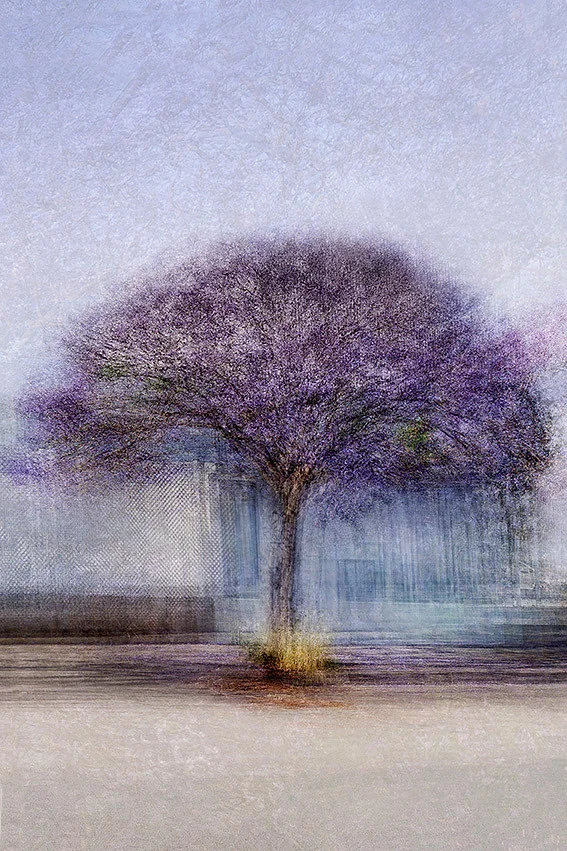
Her art moves between the visible and the remembered — between the photograph and what it becomes once time has passed through it. Across her series, the real dissolves into abstraction, and the ordinary becomes a vessel for something quieter, more eternal: the traces of human presence, the pulse of memory, and the meeting point between structure and luminosity.
Her images are built on a paradox: they are precise, yet elusive. The compositions — her framing, geometry, and spatial balance — are crystal clear. There’s no chaos in her images. But the feeling within them — the time, the emotion, the psychological undertone — is ambiguous, open, dreamlike. That duality is the heart of her voice: her work is clear in form but mysterious in meaning.
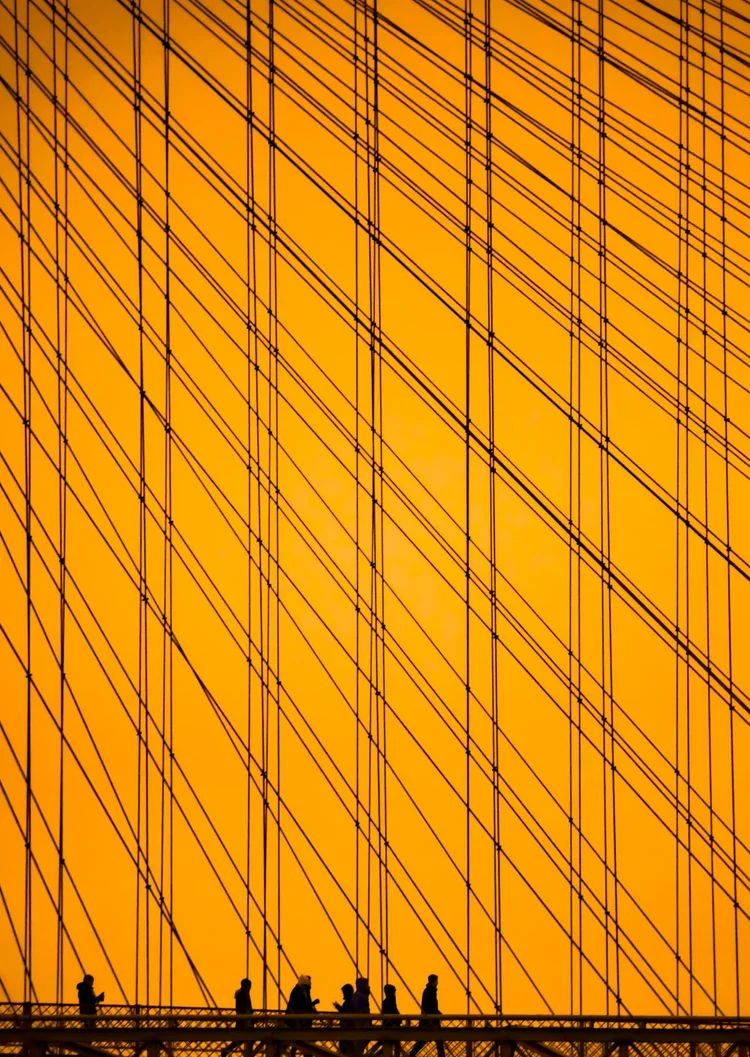
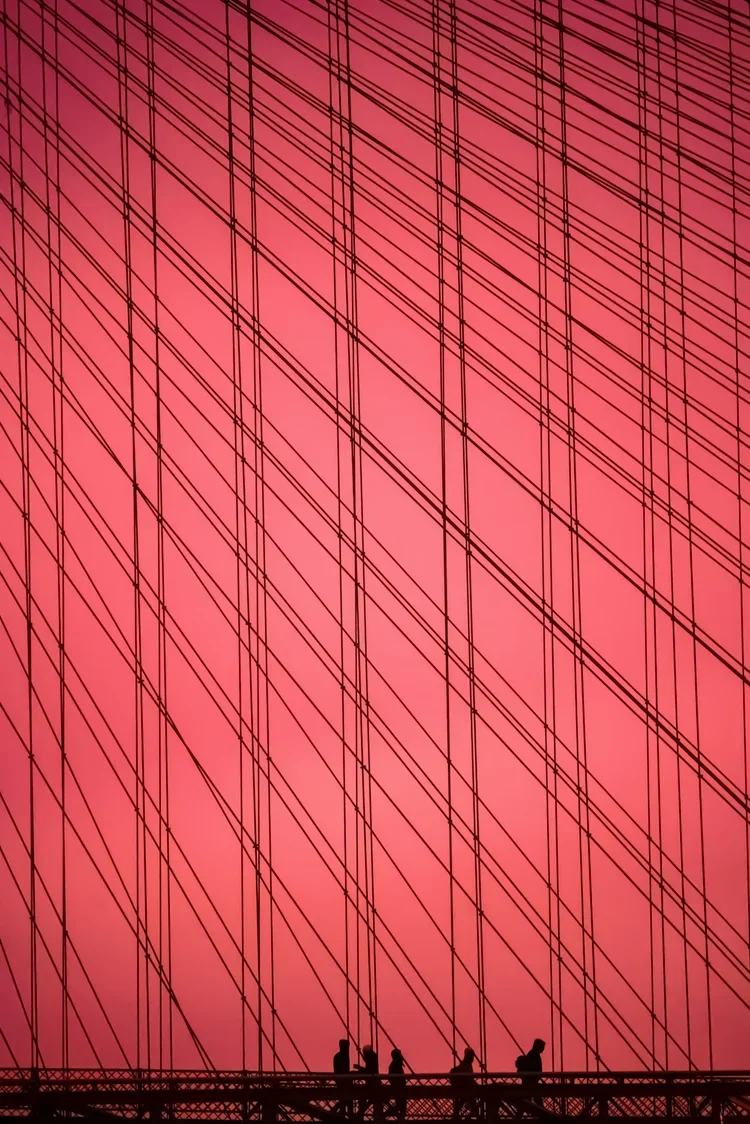
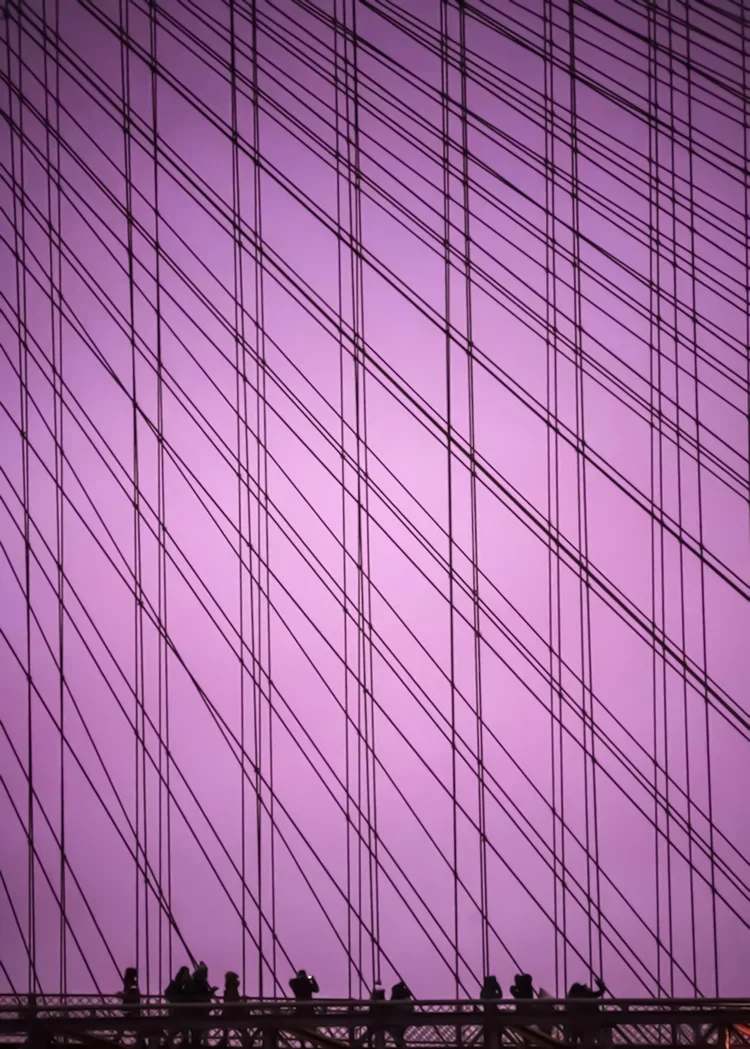
Her earliest series, Life’s Theater, transformed the Brooklyn Bridge into a stage of existence — where silhouettes crossed through shifting skies, embodying the rhythm of time and routine. The work introduced Kural’s central preoccupation: how life, when viewed from a distance, becomes performance — both fleeting and monumental.
In When Time Melts, the city itself softens. The sharp edges of architecture blur into fields of color and vapor, as if solid structures could surrender to emotion. Here, the photographic surface begins to breathe like paint, signaling Kural’s move toward abstraction — a language she continues to refine.
Utopian Dreams extends that exploration into architectural idealism — façades of perfect symmetry and color that question whether beauty can exist without flaw, or whether perfection is merely another illusion. The compositions, minimalist yet emotional, evoke a quiet tension between fantasy and form.
In Whispers of Deco, Kural turns her gaze to New York’s art deco skyline, treating ornament as voice — each curve and spire a fragment of whispered history. Geometry becomes sensual, the city’s grandeur softened by nostalgia.
Transient Echoes takes her abstraction seaward. Beachgoers fade into mist, turquoise waters shimmer to the edge of unreality. What appears serene reveals itself as meditation on impermanence — joy filtered through the awareness of time.
With Olympos, the exploration turns inward. The natural world becomes a mirror for the sacred — mountains, light, and ruins converge in silent equilibrium. The images speak of origins and cycles, of humanity’s ancient dialogue with nature.
In When Time Played Along, memory becomes the medium itself. The photographs distill recollection into color — moments of play and sunlight rendered through the palette of emotion rather than fact. By flattening landscapes into bands of pigment, Kural reimagines nostalgia as vibration, transforming the past into a present tense of feeling.
Her newest series, Sagalassos – Fault Lines of Memory, returns to Anatolia — to the ancient city of Sagalassos, perched 1700 meters in the Pisidian Taurus Mountains, inhabited since the Bronze Age. Here, terraces of mountains dissolve into veils of color, and the altitude becomes a threshold between earth and ether. The ridges, stripped to essential silhouettes, echo ancient time while slipping toward abstraction. In these works, the geological becomes psychological: strata of rock mirroring strata of memory. What remains is not the archaeology of a place, but the quiet afterimage of centuries — the sense that land remembers long after we are gone.
Across her oeuvre, Bahar Kural builds a visual language that oscillates between stillness and movement, precision and reverie. She uses structure as an anchor: geometry, framing, and light are meticulously controlled. But she allows atmosphere and emotion to introduce fluidity. The result is an image that is technically exact yet emotionally boundless, where the eye rests but the mind travels. Her work reveals not only what is seen, but what is felt — the invisible architectures of memory, time, and light.
Her work is collected and exhibited widely, notably in a seven-story Upper East Side mansion she conceived and built from the ground up, where thirty-six of her artworks are permanently installed, and in a 4,000-square-foot Tribeca loft she developed and staged with twenty-five of her photographs.
A native of Istanbul and based in New York City, Bahar also leads Bahar Kural Development, specializing in boutique ground-up projects and restorations in New York and Turkey. Educated at Robert College of Istanbul, Swarthmore College, and Columbia Business School, she merges artistic vision with entrepreneurial spirit to create spaces and images that are striking, timeless, and deeply personal.
Stripped of detail, the figures are reduced to essence: light, posture, rhythm. The bridge’s cables form the geometry of order — a quiet counterpoint to the unpredictability of human motion below. The play of lines and color evokes the structure of a score, the choreography of routine rendered transcendent.
By replacing the realism of sky and steel with radiant fields of pink, violet, turquoise, and gold, I sought to transform the familiar into abstraction — not to depict a place, but to evoke a state of being. Each hue becomes an emotion; each line, a measure of time. The images hover between precision and reverie, capturing life not as narrative but as pattern, repetition, and flow.
Life’s Theater marks the beginning of my exploration of how photography can transcend documentation — how the ordinary act of crossing a bridge can become a meditation on continuity, solitude, and the quiet beauty of human persistence.
Awards: Gold Medal and the Finalist Prizes in the 2020 Paris International Street Photography Awards, 2021 MasterPrize in Architecture Award, Gold Medal in the 2021 Tokyo International Foto Awards, Silver Medal in the 2021 Moscow Foto Awards, Silver Medal in the 2021 The Prix de la Photographie Paris Awards, Silver Medal in the 2021 Tokyo Foto Awards, Jury’s Top 5 Selection Award and 3 Honorable Mention Awards in the 2020 International Photography Awards, Honorable Mention Award from The Neutral Density 2020 Awards, Honorable Mention from the 17th Julia Margaret Cameron Awards