
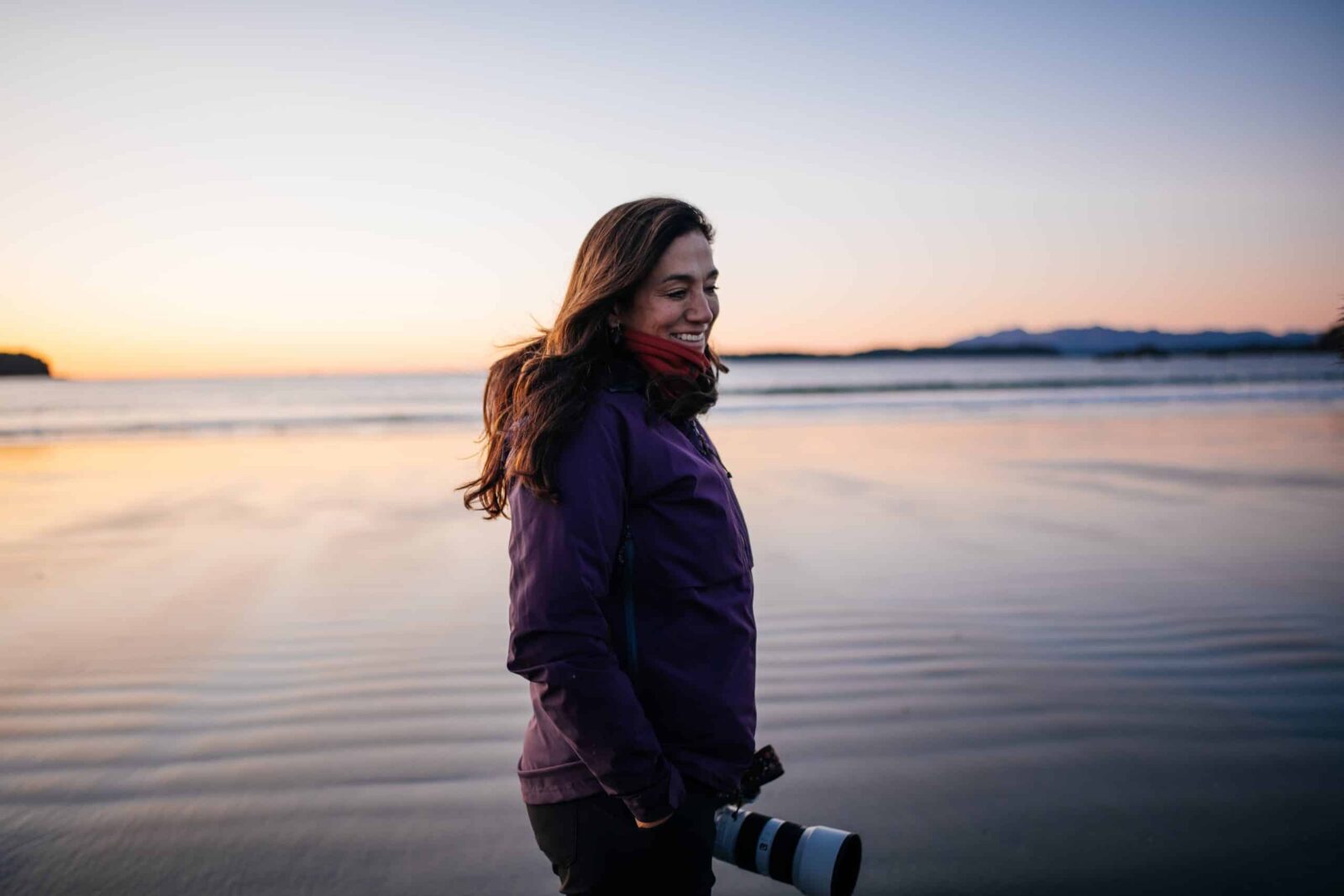
Engine Of Change
The future of our planet and of humanity relies not just in lifting women up, but in giving them the opportunity to lead and to help invent a new economic era… because what’s good for women and girls, is good for Earth.
— Cristina Mittermeier
When we do this, we change the cycle. We build change. Seeds of change. Winds of change. Oceans of change. Climate change. Catalyst of change. Cristina Mittermeier is an engine of Change.
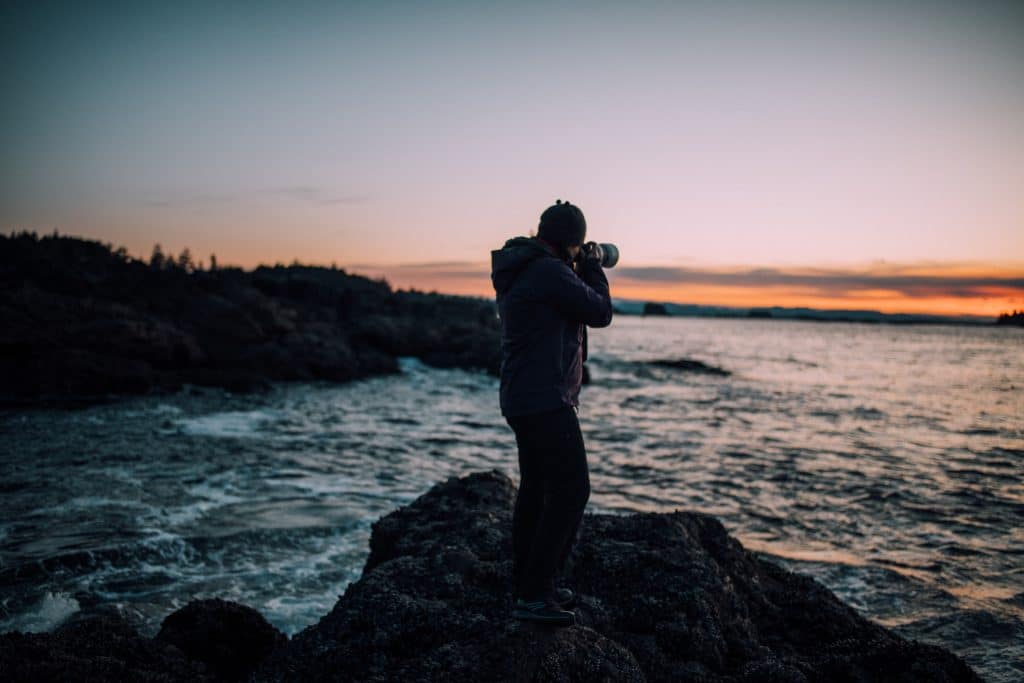
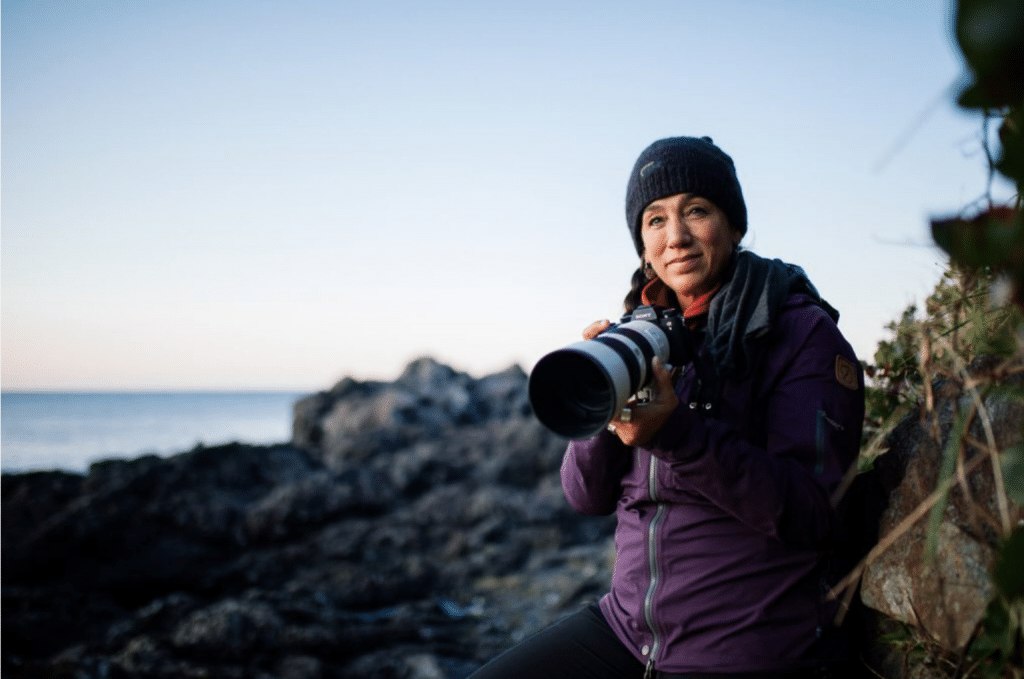
She is a Sony Artisan of Imagery, National Geographic Woman of Impact, founder of the International League of Conservation Photographers and co-founder of Sea Legacy, an organization combining decades of experience in conservation, photography, and communications, with the latest digital and social technologies, to build a healthy future for our oceans.
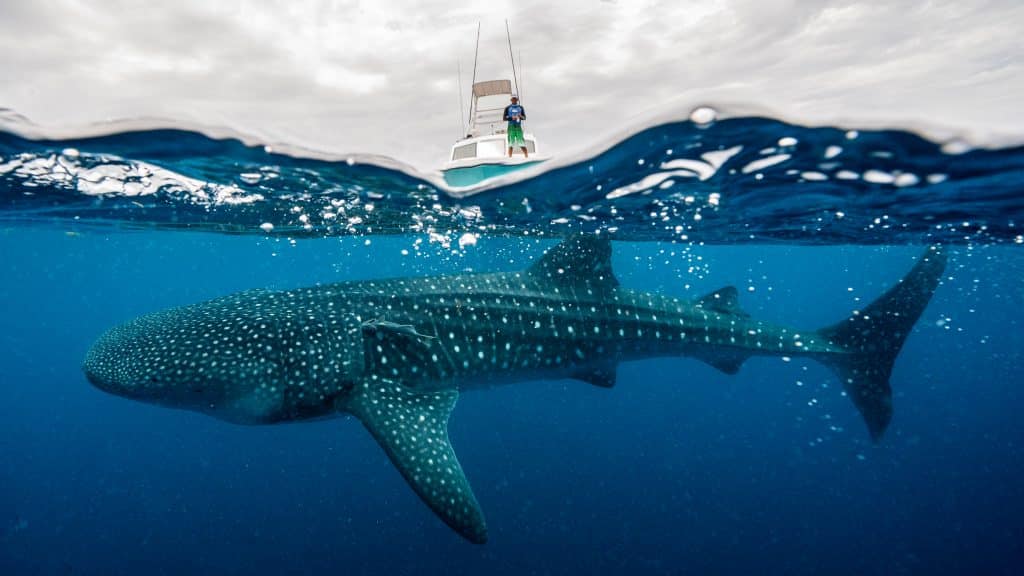
She is a woman whose influence has grown beyond her Mexico City roots as a marine biologist, artist, author and global champion for a sustainable earth. Her accomplishments fill an impossibly long list of environmental protections working in over 120 countries, from fisheries, biodiversity and the plight of indigenous peoples around the world to the support and education of young women and girls.
Mittermeier’s success as an activist and her ability to see into the needs of our world comes from a special place. All of her success and the mission that drives her comes from her ability to truly see the world and people as they are. Her provocative, insightful images come from a much deeper place when you understand Mittermeier’s focus behind the camera:
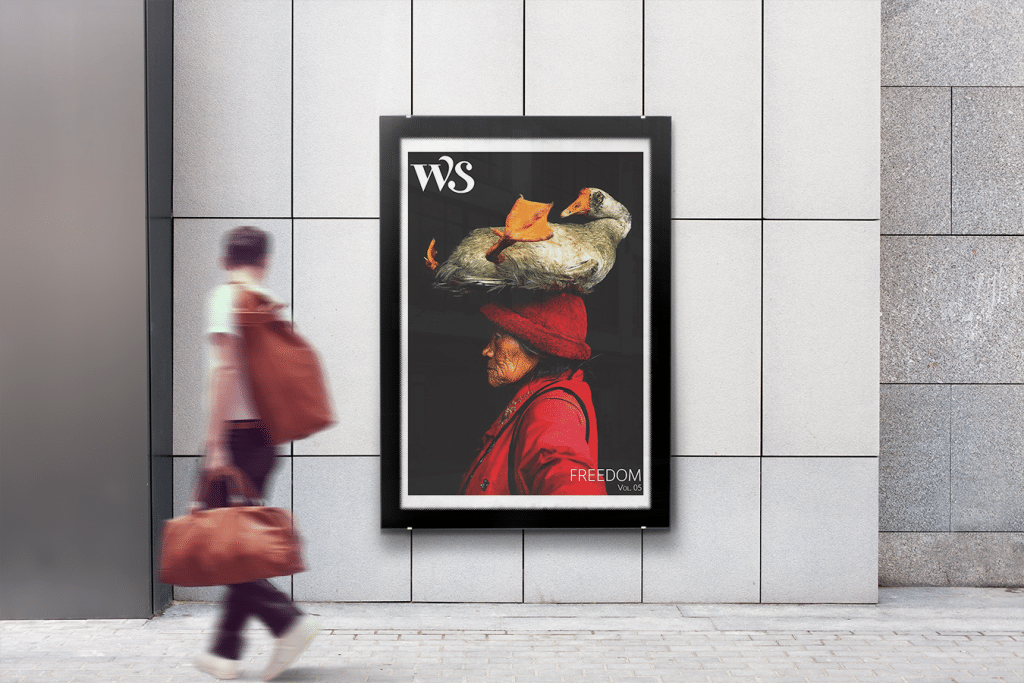
“There are some who believe that when you photograph a person, you capture an image of their soul. When photographing people, I have always focused on creating a photo that captures their essence as a human. My profound love for taking portraits is because they have such a deep narrative- a lifetime of stories within a single image.” ~ Cristina Mittermeier talks about “Lady With the Goose.”
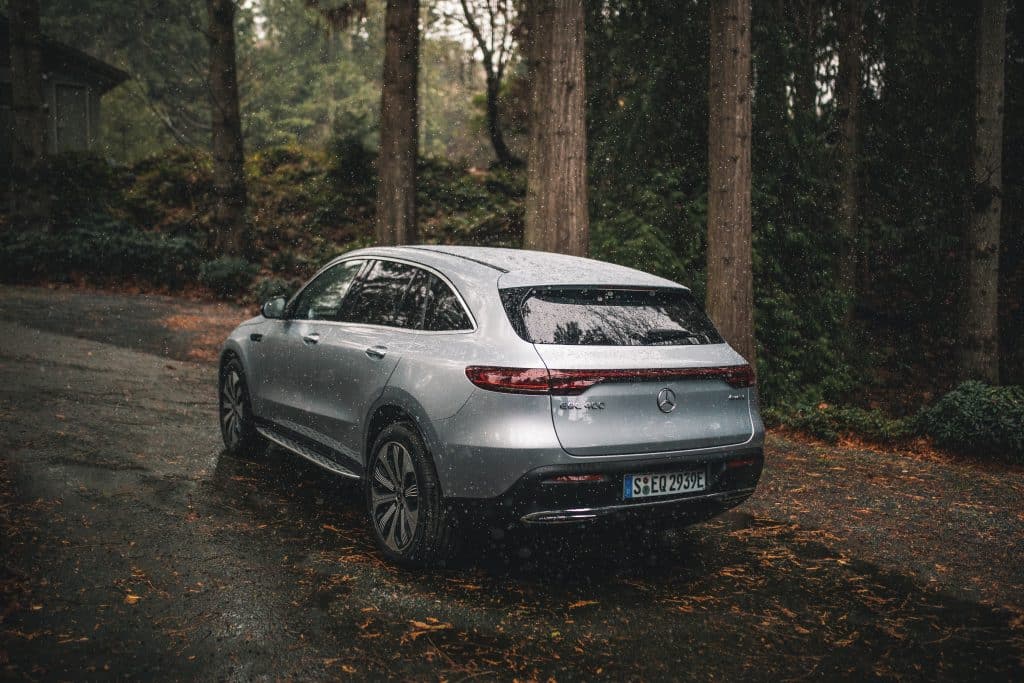
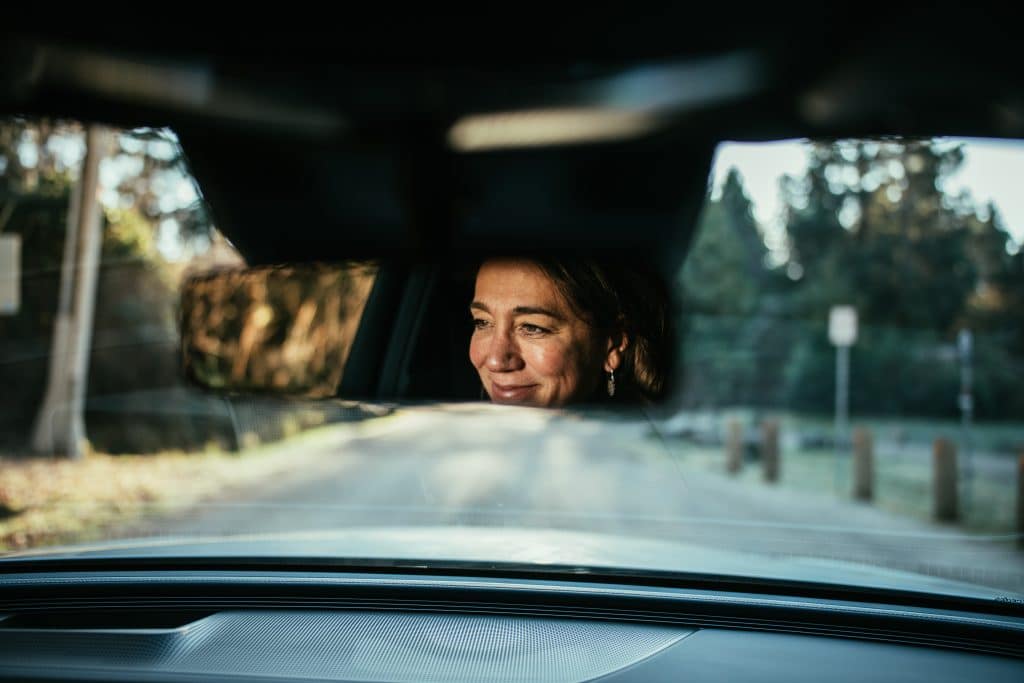
For International Women’s Day, German automobile manufacturer Mercedes-Benz chose Mittermeier as a central figure in their global initiative, She’s Mercedes. She’s Mercedes recognizes her ability to “inspire, connect and empower women in creating a dialogue that transcends cultures, industries and experience.” In doing so, Mittermeier’s conservation and photography honors the company’s storied traditions established, in part, by one of its pioneering founders, Bertha Benz.
Mercedes-Benz was founded on a dream to utilize technology in a way that would enhance the lives of people and the overall progress of humanity. As the wife of Karl Benz, Bertha was instrumental in supporting his vision of an engine-powered vehicle. But it was Bertha’s insistence that he use her dowry before the couple was married to save the fledgling company as it struggled financially, in the early stages. Further to this, she also suggested technical enhancements such as adding wire insulation and leather brake pads, during the initial creation of this new “horseless carriage.”

In fact, Bertha Benz was so committed to advancing progress as quickly as possible that she secretly took the first long-distance journey in the company’s inaugural motor car, traveling 105 km (65 miles) with her two teenage sons. Karl had no idea and during the rigorous drive, Bertha solved technical issues and proved to doubters that his 1888 invention was safe and reliable.
The confluence between Benz’s work and Mittermeier’s is obvious, more than one hundred years later. Mittermeier uses her camera, embarking on her own long-distance journeys to document the plight of our oceans and the effects of unsustainable living habits on our planet. As a trailblazing spokesperson for the damaging effects of climate change, it’s inspiring to see her recognized and supported by the very company that Bertha Benz helped establish.
Who would have thought that the connection between these two heroic women would run so deep? Benz ushered in mobility and progress, while Mittermeier advocates for cleaner technologies and progress away from petroleum-powered vehicles. This bold move by Mercedes-Benz recognizes Mittermeier’s influence as an advocate and spokesperson for the damaging effects of climate change. Mittermeier’s collaboration with the very company that Benz helped to establish speaks to the role that every company should play in combating the devastating effects of the petroleum industry.
By the year 2022, the mission of Mercedes-Benz is carbon neutral production in all European plants (and worldwide by 2039) through renewable energy sources, such as wind power and other clean forms of energy. Once again, the automobile giant will need technological ingenuity and financial investments to change production methods, renovate factories, overhaul supply chains and develop new models of electric vehicles; all this while reducing production of the combustion engine within the next 20 years.
By promoting the use of hybrid-gas and electric powered cars, Cristina Mittermeier is driving change into the future. The theme for She’s Mercedes is Change Your Mindset. And that is what Mercedes-Benz has done. They have changed their mission and business model in accordance with their values.
“We have set a clear course to help prevent further acceleration of climate change,” the auto maker said in a statement, adding that the Paris climate accord is “more than an obligation — it’s our conviction.”
By using art as a tool, Mittermeier exposes the truths about the effects of climate change, our oceans, and the lifeblood of our existence. The oceans are under siege and not indestructible. They are the healing source of life and regulator of our climate. Oceans provide food and medicines for over seven billion people, yet they have become a holding tank for over 8 million metric tons of plastic – used once, and discarded. The implications of discarding a plastic water bottle or a single straw can no longer be ignored.
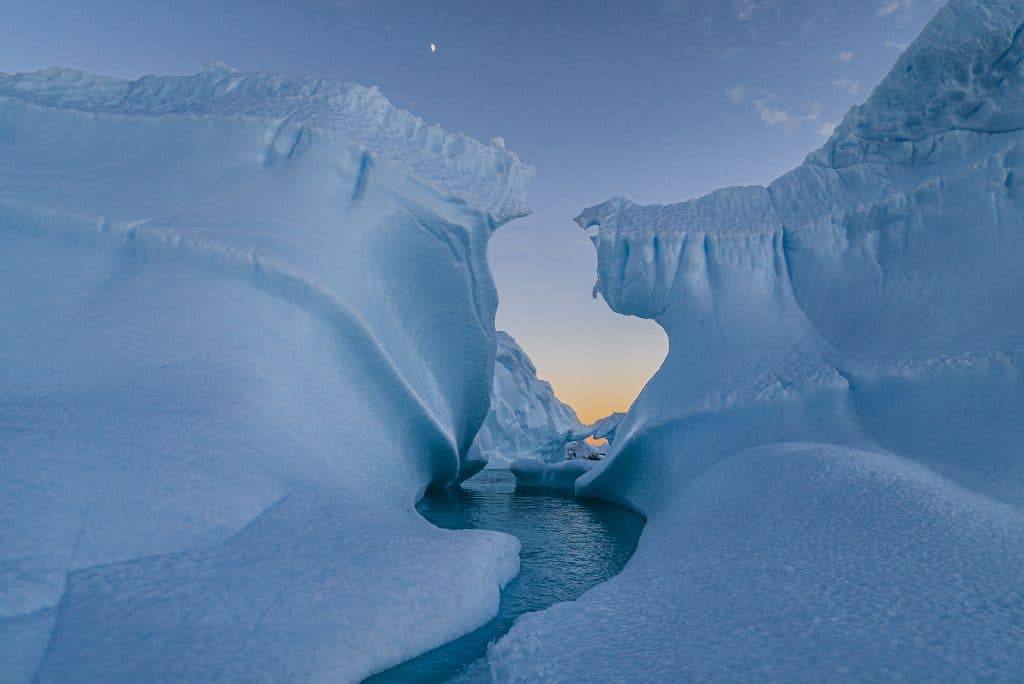
The extent of our negligent behavior can be seen, as Mittermeier suggests, as far as the polar regions and the coldest places on Earth. Antarctica is not immune to the immense threat of climate change. In addition, large commercial fisheries exploit foundation species, like a small crustacean called krill, a staple in the diet of whales, penguins and seals, and whose population dynamics are barely understood. A growing tourism destination, increasing pressure is put on fragile landscapes of the southern regions.
As consumer awareness about the harmful effects of gas emissions and the production industry that supports gas powered vehicle manufacturing, it is up to all of us to change the way we travel in the present and into the future. Our freedom to easily navigate our lives and explore our earth must acknowledge the footprint on our environment and the species that inhabits it.
“This year marks Antarctica’s 200th anniversary since it was first discovered and, unfortunately, it’s also the year where the highest temperatures in the ice continent’s history were recorded. This past February, temperatures soared to 20.75°C (69.3°F), alarming scientists and conservationists across the globe. World leaders are joining together to consider the establishment of three major MPAs (Marine Protected Areas) that would span across East Antarctica, the Antarctic Peninsula, and the Weddell Sea.
This would protect almost 1% of the ocean globally and approximately 4 million square kilometers. This is our chance to protect ecosystems to provide climate stability and to mitigate the effects of global warming on future generations. Think about that! At our fingertips is the creation of the greatest act of ocean conservation in the history of humanity, and it can all happen in a pandemic year!”
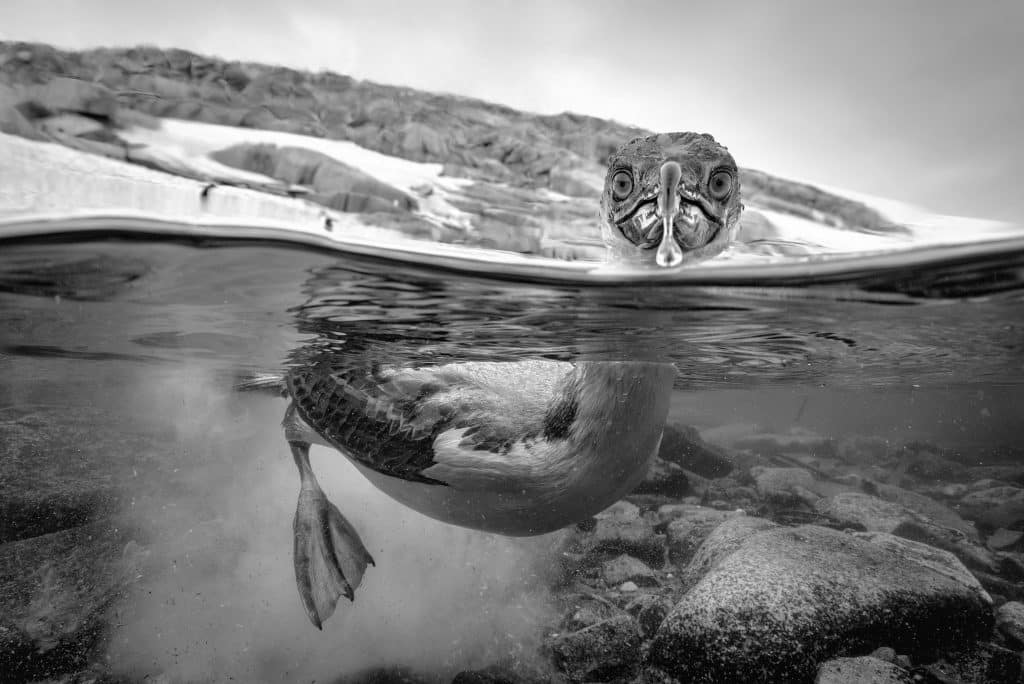
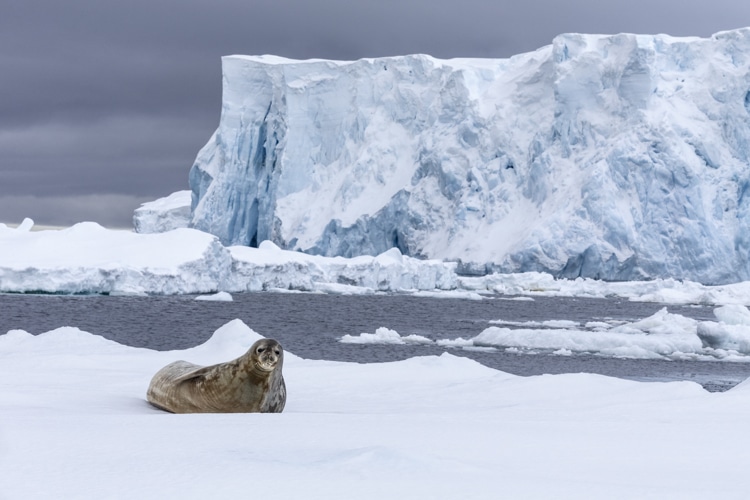
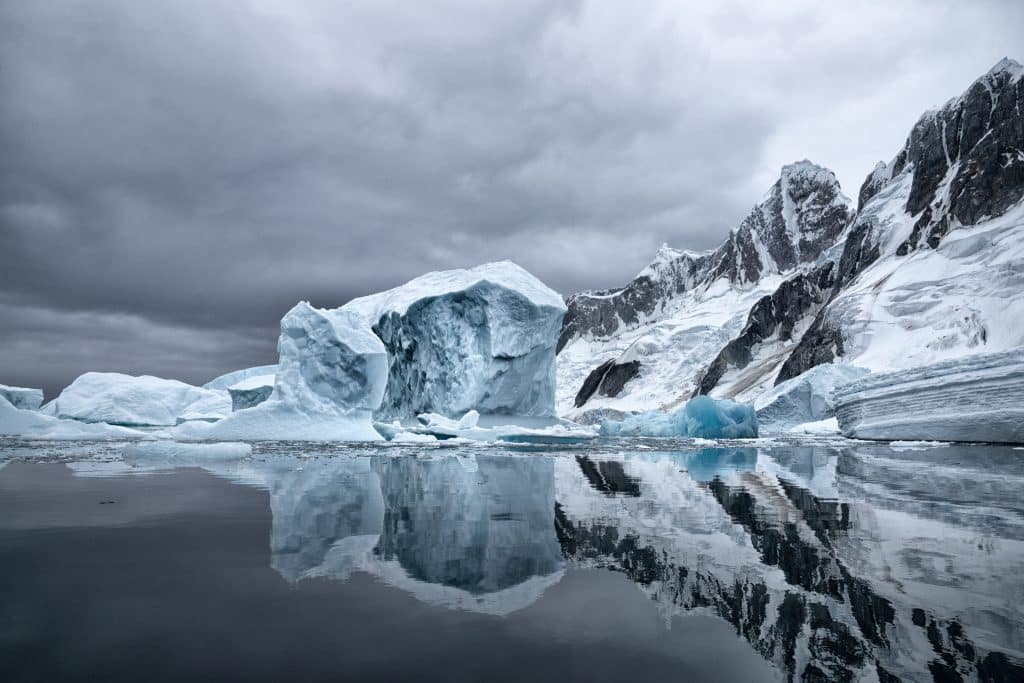
Mittermeier reminds us that 90% of the fish have disappeared from the oceans so every protection counts. “When I take stock of the challenges facing humanity and planet Earth, I cannot help but wonder, how can we aspire to solve massive global existential threats like climate change and inequality when half of our planet’s population is disenfranchised participate in the solutions?”
Women make up slightly more than half the global population. If we are serious about engaging every sentinel to save our great earth, we must ensure women have the opportunity to change the trajectory and find solutions.
Written By | Arica Hilton

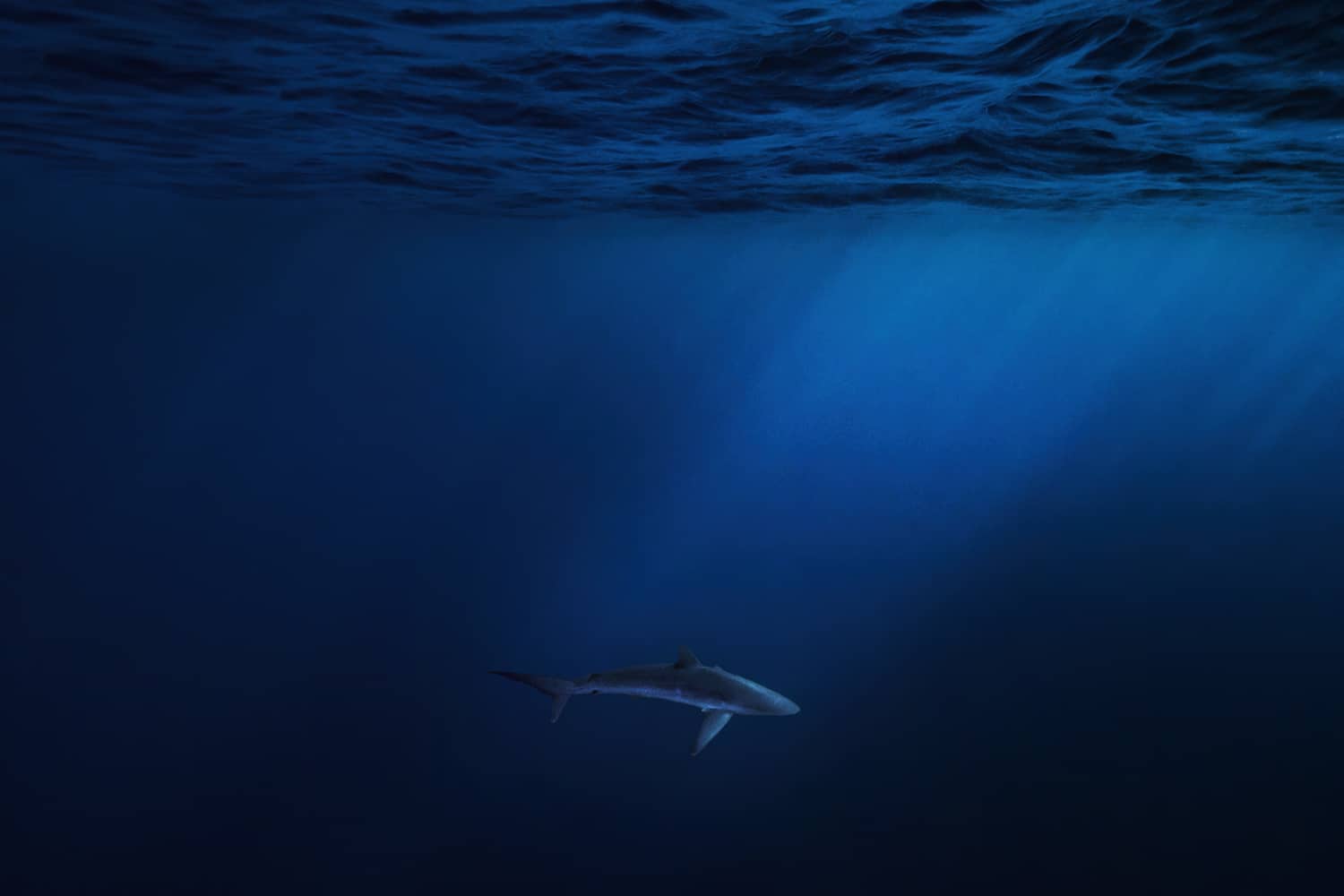
Conservation in the Time of Corona
The new decade has brought with it some unexpected challenges, but those same obstacles have given us an opportunity to focus on reaching out to our online community, and to explore new methods of digital story telling.
At this time when science is critical for our survival and art is necessary for our sanity, the conservation photography of Paul Nicklen and Cristina Mittermeier is the perfect union of these two complementary paradigms. Hilton Asmus Contemporary couldn’t be representing a more inspirational and dedicated pair of humans.
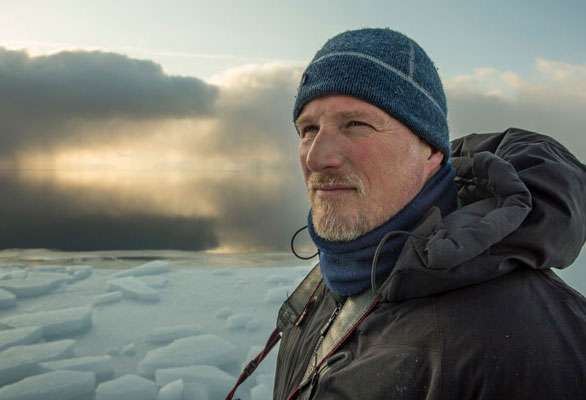
Paul Nicklen is an acclaimed National Geographic photographer, filmmaker, and marine biologist who has spent the last twenty years documenting the natural beauty of our planet in an effort to illustrate the plights of critical species and their fragile ecosystems, while advocating for their protection. As a National Geographic assignment photographer, he is particularly famous for his awe-inspiring images of polar wilderness regions and the unique animals that call these harsh and rugged habitats home. Nicklen’s sensitive and evocative imagery has garnered many of the highest awards given to any photographer in his field, including the BBC Wildlife Photographer of the Year and the prestigious World Press Photo for Photojournalism.
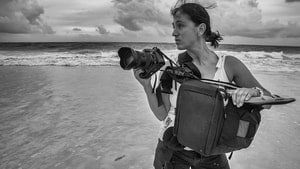
Cristina Mittermeier is a marine biologist, photographer, writer, and conservationist. Fifteen years ago, she founded the prestigious International League of Conservation Photographers (ILCP) to provide a platform for photographers covering environmental issues. She primarily specializes in creating images related to ocean conservation and indigenous peoples. Mittermeier is recognized as one of the World’s Top 40 Most Influential Outdoor Photographers, was the recipient of Smithsonian Conservation Photographer of the Year Award in 2010, and was named one of National Geographic’s 2018 Adventurers of the Year. Cristina’s work has appeared in hundreds of publications, including National Geographic Magazine, McLean’s and TIME.
Together, Cristina and Paul founded SeaLegacy in 2014. The goal of this Canadian nonprofit is to “bring together the world’s best photographers, conservationists, scientists, storytellers and strategists to lead a bold new movement to engage one billion people in ocean conservation.” SeaLegacy’s three-pronged approach of leading expeditions, fueling campaigns, and implementing solutions is united by a focus on extraordinary visual storytelling. “I’m fortunate to be able to lead some of the world’s best photographers and film makers to the farthest corners of our oceans,” says Paul. “It’s our job to bring the oceans to you.” SeaLegacy uses its massive media footprint of over six million followers to rally global support for projects that invest in community-centered solutions that help build healthy and abundant marine ecosystems. As Cristina explains, “Extraordinary opportunities exist to restore and sustainably develop our oceans in order to protect them and sustain all life on this planet.”
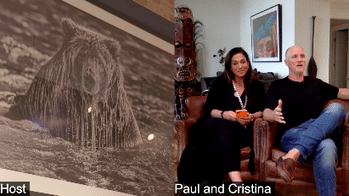
It’s a privilege for us at Hilton Asmus Contemporary to represent the gorgeous work of this truly visionary team. Paul and Cristina were kind enough to join us earlier this week from their home in Vancouver for the virtual launch of their show at our gallery. It was enlightening to hear firsthand about their mission at SeaLegacy, and a pleasure to get a peak into their exciting and unique lives. Two nights in a row – April 2nd and 3rd – they transported us all over the planet with their stories. Paul closed out the live Instagram feed last night by regaling us with a tale of a Grizzly bear he called Morris who chose to eat his salmon dinner right next to Paul while he sipped on a nightcap. These lively and personal background narratives bring the photos to life.
Once it’s safe to start going back to our regular activities, we can’t wait to invite everyone to come to the gallery and enjoy each one of these stunning images. When you view their photographs, they pull you in and hold your attention, making you yearn to know everything about the subject. The color photos will be a feast for your eyes, while the black and whites will mesmerize you with their details. Each composition is so saturated with life that you’ll swear you can hear the ice crunching under your feet, and feel the humid air of the tropics on your skin.

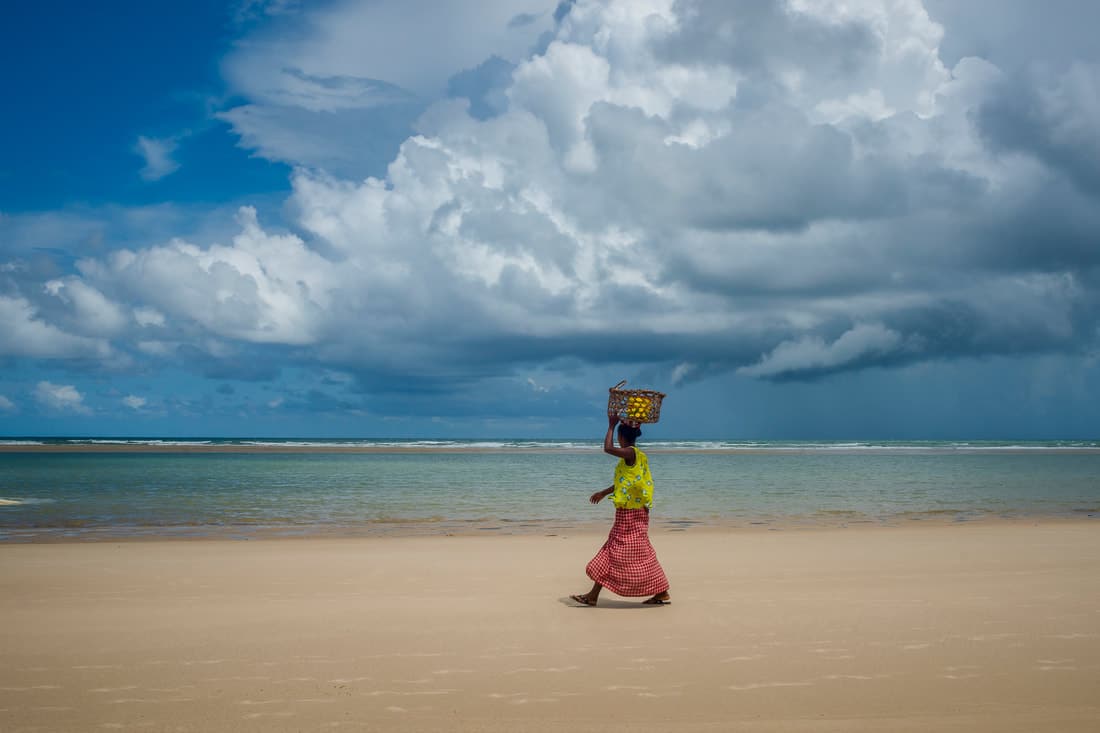
We have dubbed 2020 our Year of Conservation, and the tireless efforts put forth by Paul and Cristina to protect our priceless natural wonders, embody this theme to perfection. Even though we may currently be apart, their art excels at bringing us together, and reminding us how important it is to value and protect every ecosystem on this beautiful planet we are endlessly lucky to call home.
Written By | Alex Rose
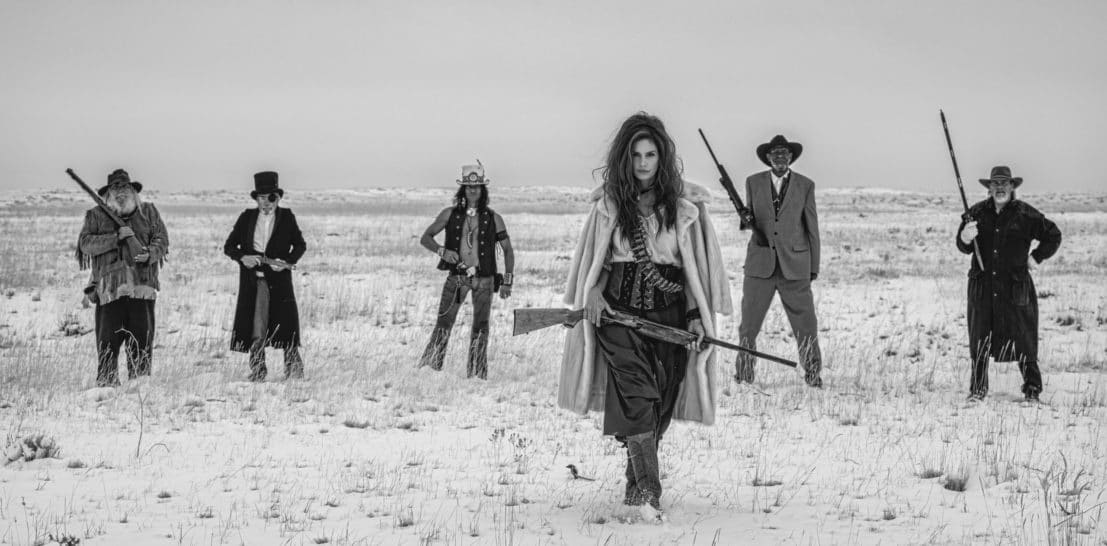
Photographer David Yarrow on the Inspiration Behind His New ‘Wild West’ Series Starring Cindy Crawford and Cara Delevingne
Yarrow traveled to Montana and Wyoming to create these quintessentially American images.
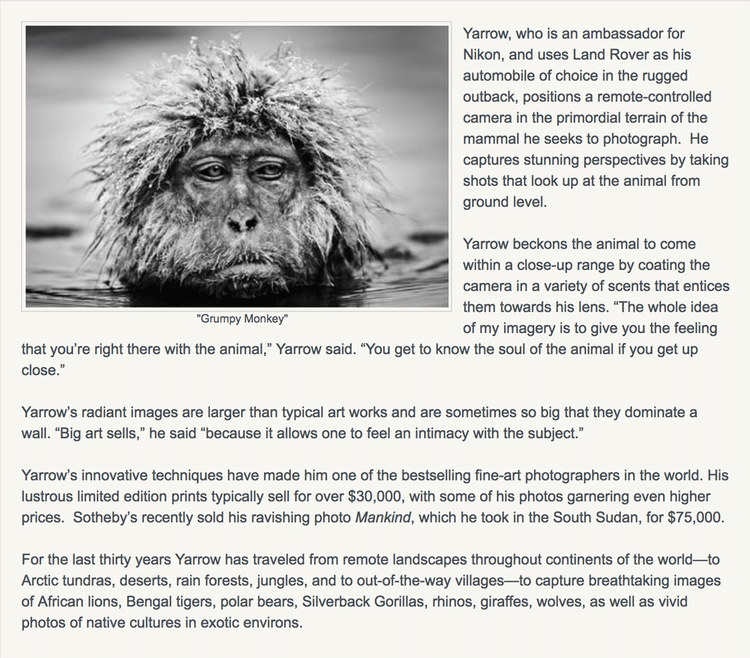
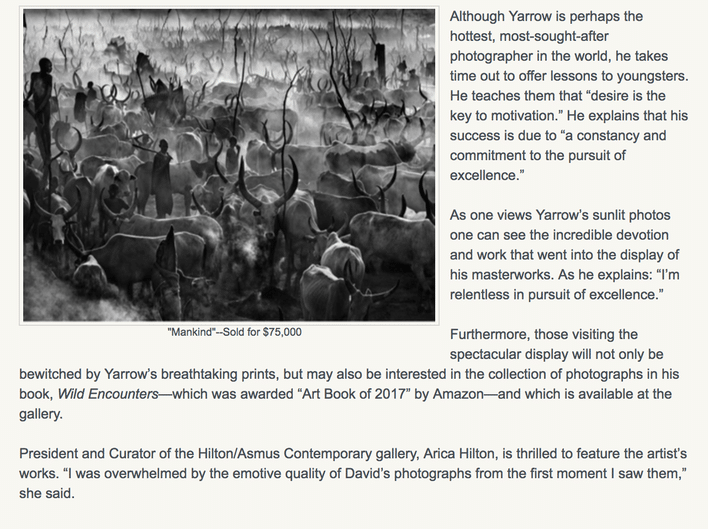
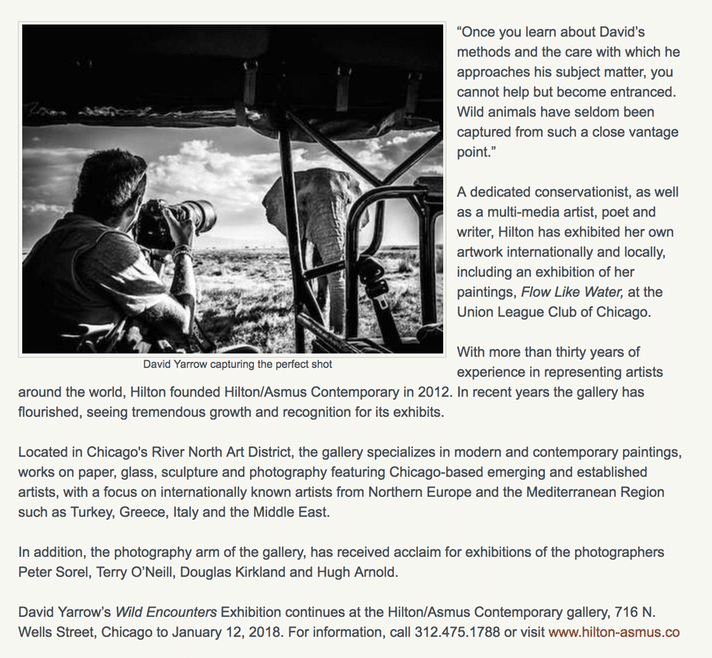
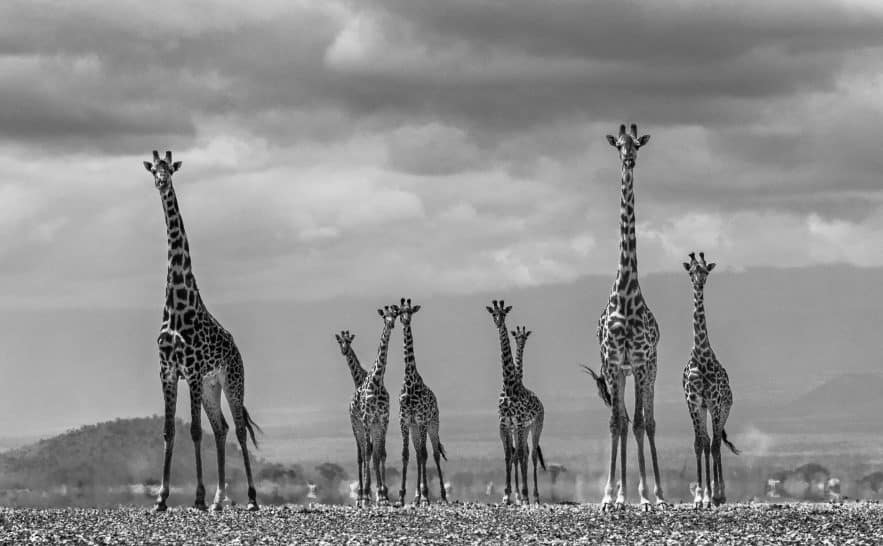
British photographer and conservationist David Yarrow is celebrated for his black-and-white photos of far-flung territories, endangered landscapes, and nature’s most majestic creatures. This fall, after a long quarantine, the photographer set off for Wyoming and Montana to shoot his new series “The Wild West.” Headlined by supermodels Cindy Crawford and Cara Delevingne, the series captures quintessentially American scenes from the cross-country road trip, which culminated at a Western saloon. “The Wild West” series also features Chief John Spotted Tail, of the Lakota tribe, who appears self-styled in his images.
The new images—along with many of Yarrow’s iconic works from earlier series—are currently on view at Chicago’s Hilton | Asmus Contemporary. A portion of the profits from sales will be go to benefit charities and organizations supported by Yarrow and his models.
Below, Yarrow shares his inspiration behind a few of his new photographs:
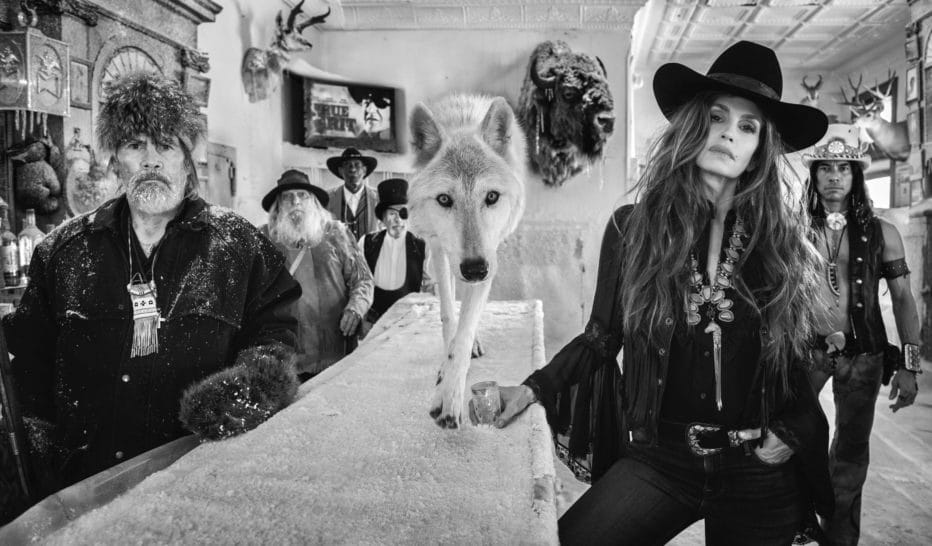
“We have all, at one time or another, entered a bar, and immediately felt out of place. At the most extreme level this can evoke a sense of trespassing. This was very much the narrative behind this photograph. To be greeted by an overtly territorial crew with menace and attitude. But, for the story to work, two things had to coalesce as—the characters and the interior. I like playing with the cold, it adds a visceral layer to the story and in this case, it hints at an outpost on the final frontier. Surely the further off the beaten track we travel, the greater the chance of being the outsider. This is a frame that exhausts every inch available in the camera and that was my intent. There were so many characters I wanted to include, but I was also reluctant to lose the mood of the frozen saloon…. Our key asset was, of course, Cindy Crawford, and she had to have sovereignty of the joint. She can play a badass very well and that was her ascribed role.”
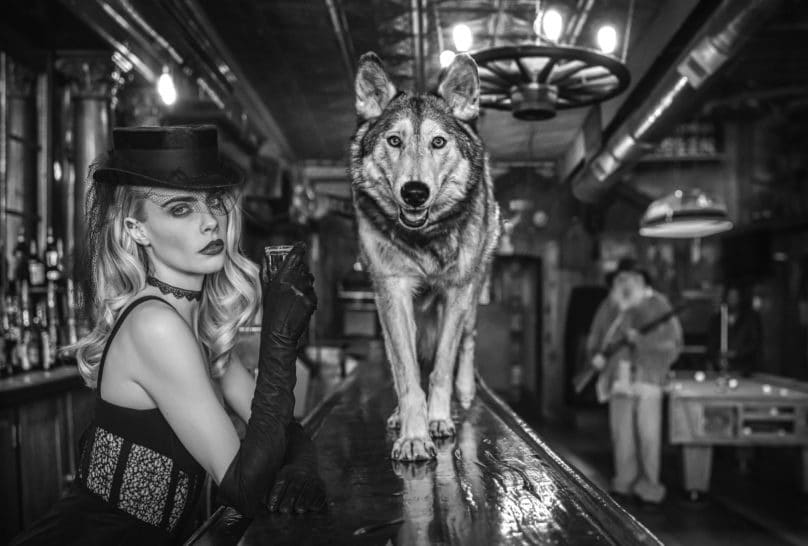
“The Pioneer bar in Virginia City has offered so much to us over the years and we are acutely conscious not to overplay our hand here. After all, there are many other weathered saloons in the West. We don’t want to be repetitive in our story telling…The Pioneer is emphatically the best bar known to us. It has depth and the wagon wheel on the ceiling is ideally positioned. To bring such a celebrated and relevant woman as Cara to Montana is fresh ground. Put her in front of the Eiffel Tower and it is a new look on the Eiffel Tower. I can’t think of any other woman in the world I would prefer to play this role. These are not easy images to execute as there is such limited light. Depth of field and shutter speeds are therefore compromised. Cara would always be sharp—that was easy—then we had to hope for some luck elsewhere. Cameras have improved so much over the years in terms of ability to work in low light. I could not have done this 10 years ago. But you are pushing the camera right to the edge of its capability.”
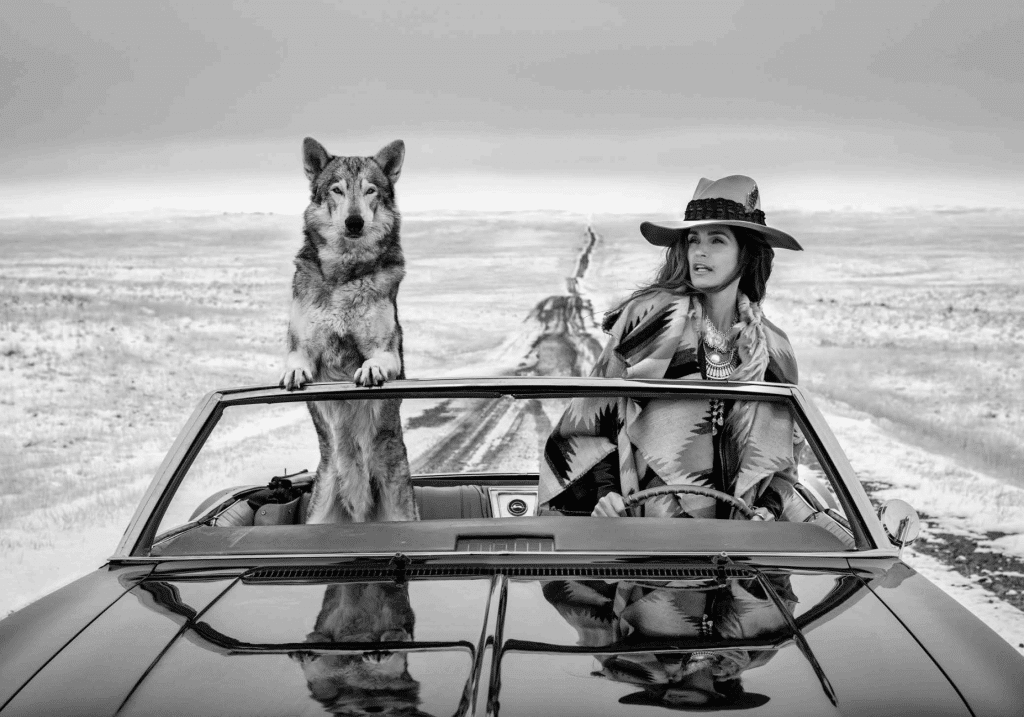
“Once we found the caterpillar road that dissects this picture, I knew that we had the canvas on which to continue our road series that started in 2018… The only traffic was the occasional oil worker or perhaps someone who was totally lost… The sense of place is palpable. This is the America that so many know and love, with its long roads running to the horizon with either side exuding a simple sense of calm and solitude. No other country in the world offers road trips as visually rewarding as America and they are integral to the fabric of the American dream. The snowfall the previous night added another layer to the narrative both on the road itself and on the prairies. We were lucky that the snow stopped and the light picked up. It adds warmth to an image already glowing with positivity and joy. Willie Nelson was surely singing “On the Road Again” on the car radio with the volume turned up to the maximum level.”
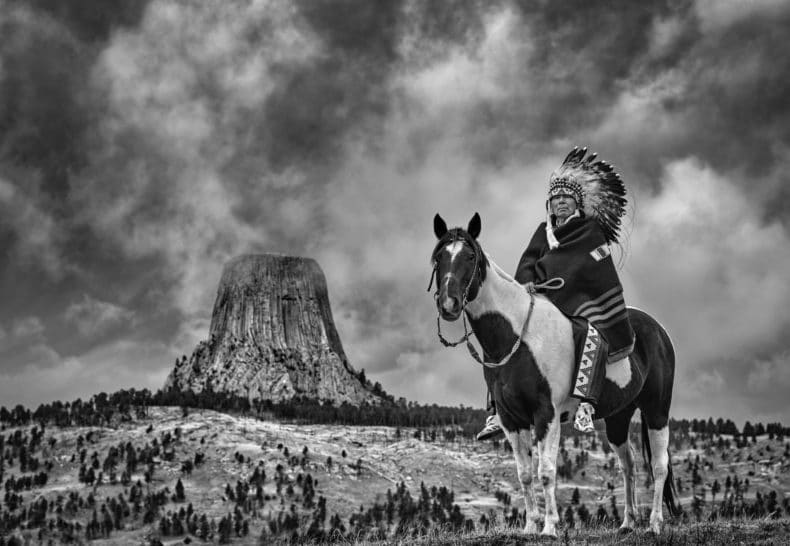
“The senior Elder of the fabled Lakota tribe is Chief John Spotted Tail. We spent two days with him in northern Wyoming and he was so excited to wear the headpiece that only the most senior Native American chiefs like him can wear. His attire was emphatically his decision, not ours. Their heritage is integral to their souls. The ground in front of Devils Tower has film history. It is, of course, where Spielberg shot Close Encounters of a Third Kind immediately after the release of Jaws in 1975. More poignantly, it is sacred land for Native Americans, and, at dawn, before our early morning shoot, John and his wife, Tamara Stands and Looks Back, spent some time there praying. At around 8:30 am, the low hanging clouds lifted above the iconic geographical landmark and shafts of light lit up our canvas. We had our moment. Later that day, when I showed Chief John Spotted Tail this image, he shed a tear and I am proud to admit I did too. It was one of the most privileged days I have ever had in the field.”
David Yarrow’s “The Wild West” series is on view at Hilton| Asmus Contemporary through June 2021.
Written By | Artnet


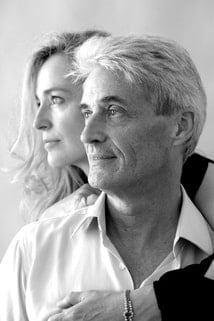
For Years, This Couple Has Been Quietly Collaborating on Sculptures. Now, They Are Finally Showing Together
The true extent of the collaboration between Boky Hackel-Ward and Blake Ward was a secret for years.
The story of husband-and-wife artists Blake Ward and Boky Hackel-Ward is a romance, certainly, but one complicated by the tribulations of the art market, among other obstacles.
They were born on different sides of the world: Ward in the depths of the Northwest Territories in Canada into a family that made its name running an airline and Hackel in Germany, who then was raised between Switzerland, Costa Rica, and Venezuela.
In a cinematic turn, the pair met at a wedding where he was the best man and she the maid of honor. There was a spark—but Hackel was married at the time and both were busy pursuing individual artistic careers.
Ward had studied figurative sculpture in Paris with the sculptor Cyril Heck and gone on to teach sculpture at the University of Hanoi, as one of the first Western educators in Vietnam since 1945. She was a Conceptual artist and polyglot who played in an orchestra and restored artworks for a living.
Three years later, the two would meet again, and, with Hackel newly single, they soon became a couple. But their union was more than romantic.
An artistic collaboration soon grew between them as Hackel slowly informed the development of Ward’s sculptures. Mutually thrilled by this development, the pair was unaware that their collaboration would actually cause a flurry of distress as Ward’s publicist at the time quickly tried to subdue news of Hackel’s involvement, believing it would damage his client’s career. For years, as later gallerists would continue to subtly dismiss her influence, Hackel continued to work quietly behind-the-scenes.
Now, for the first time, the couple will present both their own works and their collaborative efforts together in “Somewhere Within” at Chicago’s Hilton Asmus Contemporary. Recently, we caught up with the pair to learn more about their story and this collaborative debut.
How did you two begin to collaborate? Was it something you discussed or did it just happen?
Boky Hackel-Ward: Our collaboration happened quite naturally. I had been working in art restoration and at one point Blake asked me to help with some gold leafing on one of his sculptures. Before we knew it, I was learning about his process and helping him with wax casting, which can be rather temperamental with regards to temperature. We would enter this state of flow, where the world of the studio became the only world.
We went on foundry visits together, too. The first time I went, I just watched, but with my career history, working the bronze came quite naturally to me. Power tools and files didn’t intimidate me. Blake asked me for help, so I put some gloves on and the rest is history.
What was your work like before you started collaborating with Blake?
Boky: I composed music and wrote poetry and whenever possible did performance art pieces, such as conducting the university orchestra, complete with vocal cadenzas. I was strongly influenced by artists such as Laurie Anderson, John Cage, David Tudor, Merce Cunningham, and Robert Wilson.
One of my early sculpture pieces is Requiem for my Father, which is made of crushed wire and computer memory boards. I built things but it was a bit like swimming in the dark. I never really found the right medium until Blake walked into my life.
Blake, what qualities did you feel Boky contributed to your work?
Blake: When we were working in the foundry, she wasn’t concerned with the technical principles of the pour; she was fearless. I liked that energy. I watched her pour and copied her abandonment and found myself using the technique or, shall we say, the freedom with which she poured the wax.
She introduced the idea of deconstruction or, what we now call, the reverse engineering of our sculptures. She’s very good at editing the wax sculptures. I realized that these pieces were no longer just mine, they had changed and I wanted to include her in that.

When did you decide to start signing works together, to define yourselves as equal partners?
Blake: Boky made a sculpture called Hathor while I was away on a trip. When I saw it I recognized its significance: it’s a beautiful work that I couldn’t improve upon. Then, right away, I insisted she sign it. In my opinion, with that work, Boky had expanded upon the rules of classical sculpture and she had helped me to break some of those rules as well.
So her name is written on it in bronze. I thought that everyone would recognize and accept that she was a co-creator, but people didn’t. It seemed that everyone preferred to ignore the fact. I pushed back, since truly these people, particularly one marketing consultant, had no idea what she had contributed and were wrongly worried about my career.
That must have been difficult for your relationship both as a couple and as collaborating artists.
Blake: These people missed the point completely. One of the things we try to do with this body of work is tell the truth; the truth in materials, the truth about the work, about how the work is made. This was another part of telling the truth. I was embarrassed by the way Boky was treated.
Boky: People insisted I’d ruin your career and I didn’t want to cause trouble for you. In this era, I suppose I expected some visibility as an individual artist. If nothing more, some credit for my work, for my ideas, and for my writing.
What changed?
Blake: We stepped back and removed these people from our lives. First I was shocked, then I was mad and then we became resilient. We retreated and let everybody’s contracts expire. It was a new chapter in both our careers.
Boky: Another very important element has been having a gallerist such as Arica Hilton who recognized us as a creative entity and wanted to show that to the world. She is an artist herself and an ardent defender of women.
How does it feel to be exhibiting together as an artistic entity for the first time?
Boky: The idea of being able to share our love story and our sculpture with others, and to do so openly, means everything to me. It means I’m not invisible. We all have our own stories and we all have the possibility of healing. For me this exhibition is about letting the light shine and telling the truth.
Blake: It is also about celebrating the overlooked accomplishments of Boky and all women, as well as recognizing realities facing our society today. Women still have to fight so hard for every little thing.
Written By | Artnet
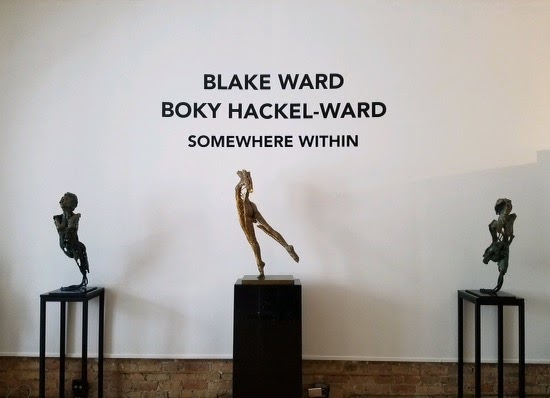
SOMEWHERE WITHIN: Open Your Eyes to Your Eyes
Mikhail Larionov’s words to Natalia Goncharova in 1900: “Open your eyes to your eyes” is a sentiment that mirrors the beginning of an artistic collaboration and exquisite love story between what would one day become a husband and wife creative entity. Each with their own road to follow yet passing through all the stages of love that culminate in the lyrical. This is the story of Blake Ward and Boky Hackel-Ward.
Three years ago my gallery had a wonderful exhibition of sculptures by internationally recognized artist, Blake Ward. During that time, I met his partner in life, German-born Boky Hackel. She was not only stunningly beautiful, but a brilliant poet, writer, artist and all around gorgeous soul. After the opening, Blake and Boky told me the story of how they began working together and how Blake’s publicist at the time was opposed to Blake giving Boky any credit for the work she had done on the creation of his sculptures. It was too late to change the direction of our exhibition as we had already sent out press releases and BMO Harris was the sponsor of the exhibition along with the Canadian Consulate. In the end, the exhibition was a resounding success.
Now, three years later, we have invited Blake to return for a second exhibition in our gallery. But this time he comes with his partner, co-creator and new wife, Boky Hackel Ward. We are thrilled to feature Boky as Blake’s collaborator and artistic partner of this beautiful collection of inspiring angels, phantoms, ushabtis and modern sculptures. Below is some history on how Blake and Boky came to be.
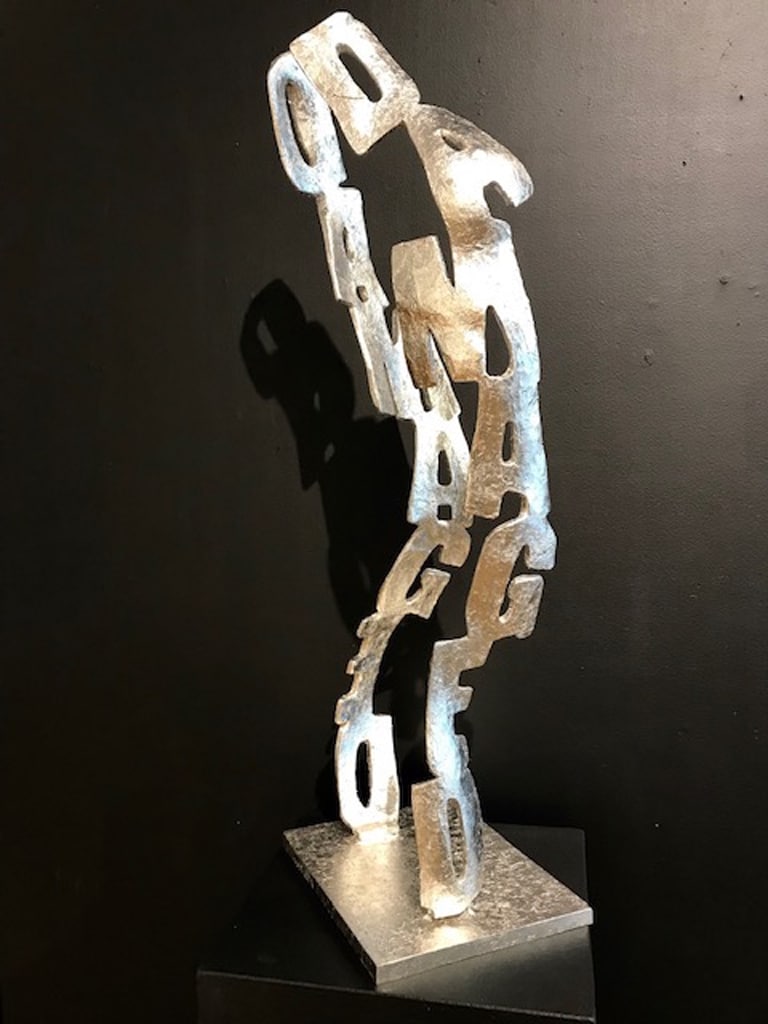
German-born Boky Hackel began life as a conceptual artist, restorer of Old Master paintings, photographer, musician, writer and poet. As a conceptualist and a polyglot, language had always been extremely important in her work. Although Blake Ward’s name is well known in the art world, it was not known that Boky Hackel-Ward was in the shadows as Blake’s artistic partner. In 2015, when Blake made an announcement that he and Boky were co-creators, his publicist relentlessly convinced him that Boky’s name be kept out of the press and public because “it would hurt Blake’s career.”
In 2015 Blake and Boky exhibited in Monaco at the Grimaldi Forum when the Monaco Matin ran a story featuring their love story and their work. It was an artistic collaboration made in heaven, they wrote. On Valentine’s Day 2015, at the vernissage of Blake’s exhibition at the Canadian Sculpture Society, Blake publicly announced that the new work presented was not his alone but a result of his collaboration with Boky.
Immediately, the publicist called an urgent meeting where he strongly discouraged Blake from telling anyone about the collaboration. There were many arguments while their representative in Canada backed the publicist 100%. They relentlessly tried to dissuade Blake from following his instinct and ethics. Boky’s contribution they said should be to continue ghost writing his blogs every three days, but no mention or credit should be given to her artistic collaboration with Blake.
In short time, Blake fired the publicist. He gave Boky credit not only for her writing but also for her creative contributions. Although the damage to their artistic synergy was serious, their love, respect and devotion to one another ran deeper.
Canadian-born Blake Ward was born in Yellowknife in the North West Territories in Canada, In 1985 Blake moved to Paris to study under Cyril Heck with whom he learned traditional techniques of modeling figurative sculpture. When the opportunity arose for Blake to move closer to both his foundry and marble quarry in France and Italy, he opened his current studio in Monte Carlo in 1990.
It was Blake who introduced Boky to sculpture. He asked her to do some gold leafing on some bronze pieces because of her mastery in restoring old master paintings in Italy. This assignment became the catalyst to her development as a sculptor.
“I suppose our collaboration is a result of the love that we have for one another. From the very beginning we have always tried to teach one another and share our knowledge. We each bring different things to the table; the sculpture techniques, the conceptual, the wax and the clay, we share this beautiful life together. Without the art we would be lost!” states Boky.

In March 2013, Blake & Boky began offically working together. Blake taught Boky the techniques he used in building his sculpture and Boky shared with Blake her knowledge and experience as a conceptual artist. The synergy was evident as they began to create together. It quickly turned into an incredible love story.
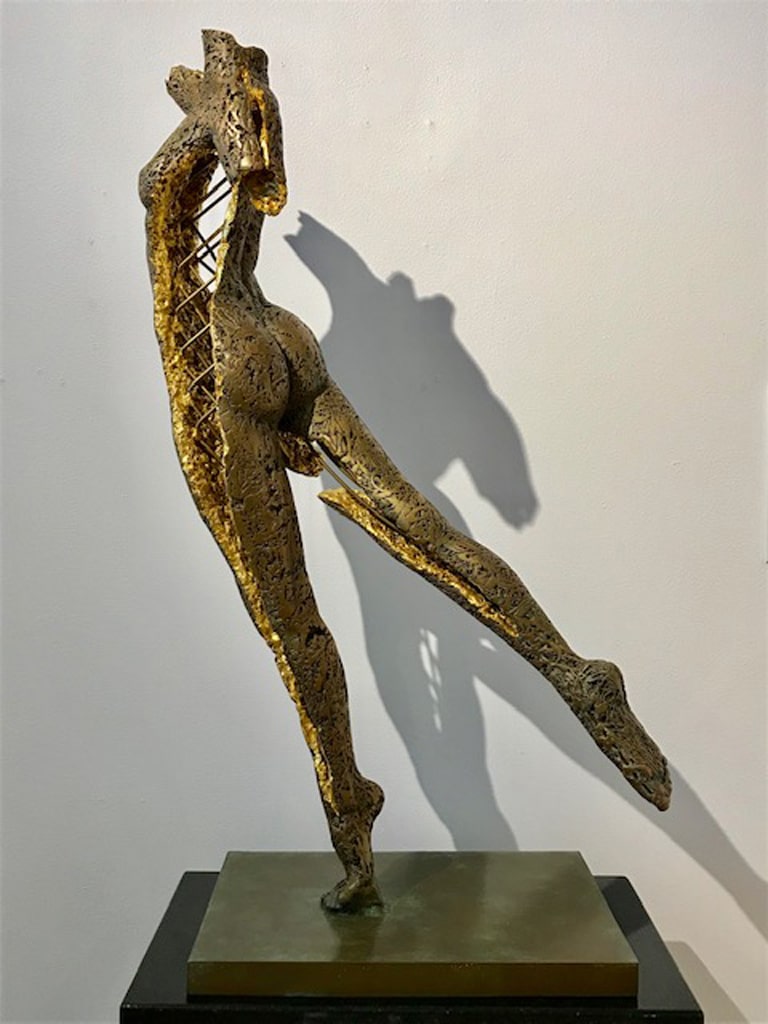
One day, as Boky returned to the studio after an orchestra rehearsal, she found Blake holding up a sculpture that the she had built in the style of his work. He looked at her and said, “Sign it….there is nothing I can do to make it better.” The sculpture was an Ushabti (a funerary figurine used in ancient Egypt) Boky had named “Hathor – Goddess of Love.” In ancient Egyptian mythology, Hathor is also the goddess of beauty, music, dance, joy, motherhood but best known as the goddess of love. She was also considered the protective goddess of women. Perhaps Boky created Hathor as a way of protecting herself after she was negated so strongly by the “good ole boy” publicist.
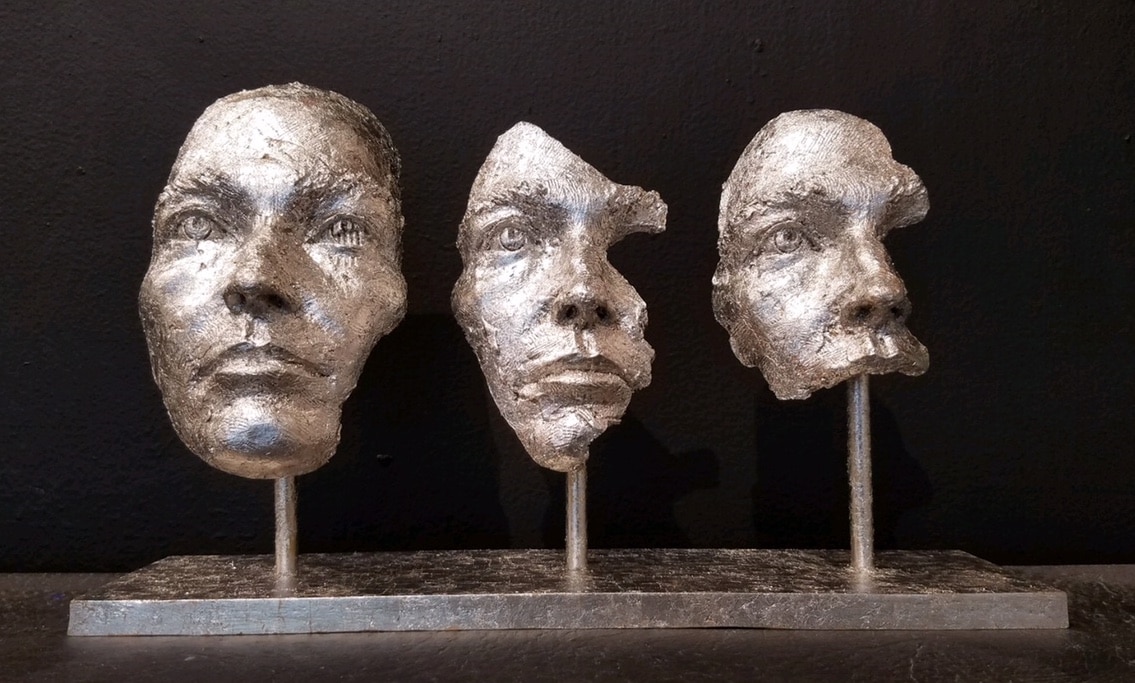
Blake created an inner structure for it, built a dream catcher and ultimately, they both signed the piece. From that point on, they worked incessantly, creating well over 20 sculptures per year. “Hathor” along with her sister sculpture “Hetheru” will be on display.
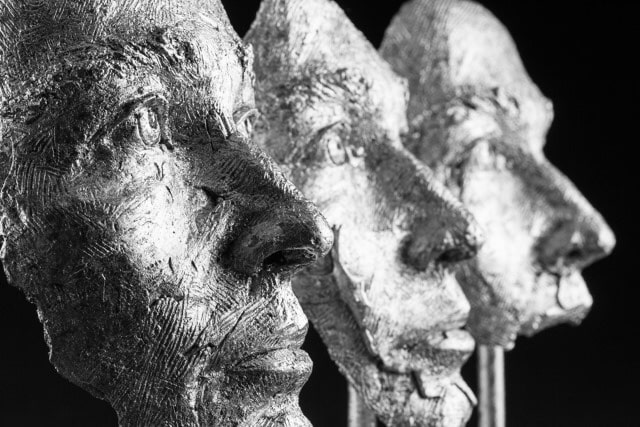
After much soul searching, today Blake and Boky are married and working together in perfect synergy. They work in harmony in the studio and in their foundries in Italy, France and Canada. His work, her work, and their work… They are two separate artists but sometimes one plus one makes for an even stronger one.
Blake has thrown himself into the digital world of Z-brush and 3D printing, mixing the digital with the analogue, the state of the art with the ancient lost wax techniques. Boky’s collection of Figurative Poetry is about making the hurt subside. It is what Blake calls Intentional Art, art with a purpose; it is about healing.
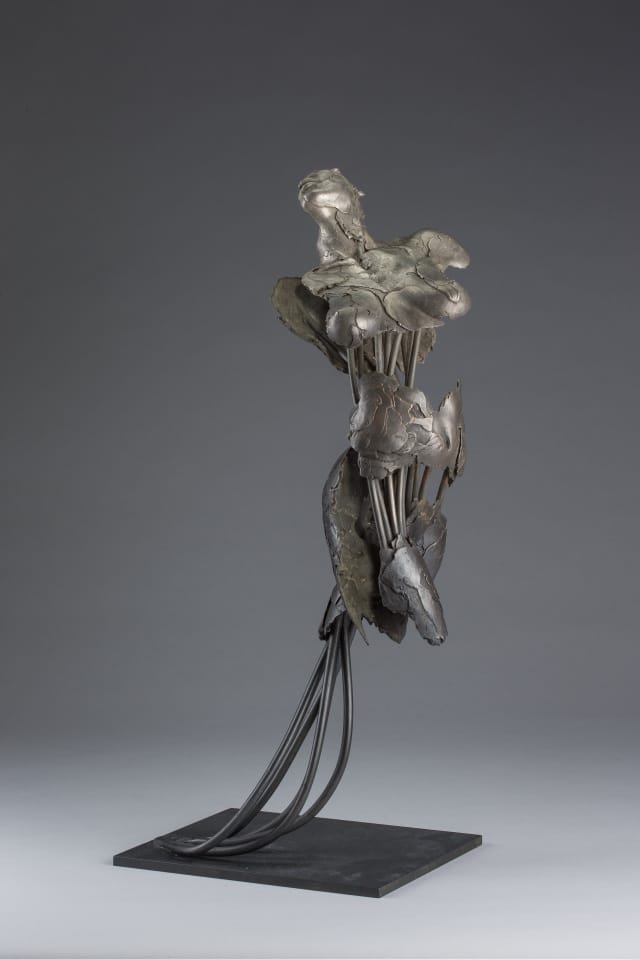
While building on the techniques of figurative sculpture lost in antiquity, Blake remains true to their representational qualities, yet his sculptures are a transgression of the rules, crossing over into the abstract and ethereal realms of our inner worlds. His 1/4 life-size, partial figures materialize before us. Both seductive and tragic, their perfect proportions reflect the hidden perspectives of our human condition. The textured exterior surface alludes to the complexity of our individuality. The open, exposed interior elicits introspection. Holding fast to his love of the human figure, Ward leads us toward self-discovery.
Ward received his Fine Arts Degree from the University of Alberta in 1979 and went on to study classical figurative sculpture in Paris until 1990, when he moved to his current studio in Monte Carlo. When he was invited to teach at the University of Hanoi in 2003, Ward began a journey combining art and activism. His work evolved a bold socio-political voice calling out to our humanitarian dreams of justice, truth, and equality and he has been a positive force raising funds and awareness for the eradication of landmines. Blake’s works have shown in Monaco, England, Germany, Italy, Singapore, Hong Kong, India, The United States, and Canada including many public installations in the principality of Monaco, where he and Boky currently reside, including Princess Grace’s Rose Garden. The work is in the private collections of Prince Albert of Monaco, Herb Alpert, Gerry Moss among others.
“Somewhere Within” will be the first time that Blake Ward and Boky Hackel-Ward will be showing together in the United States as co-creators.
“SOMEWHERE WITHIN” runs from Thursday, May 23, 2019 thru June 12, 2019.
Written By | Arica Hilton