
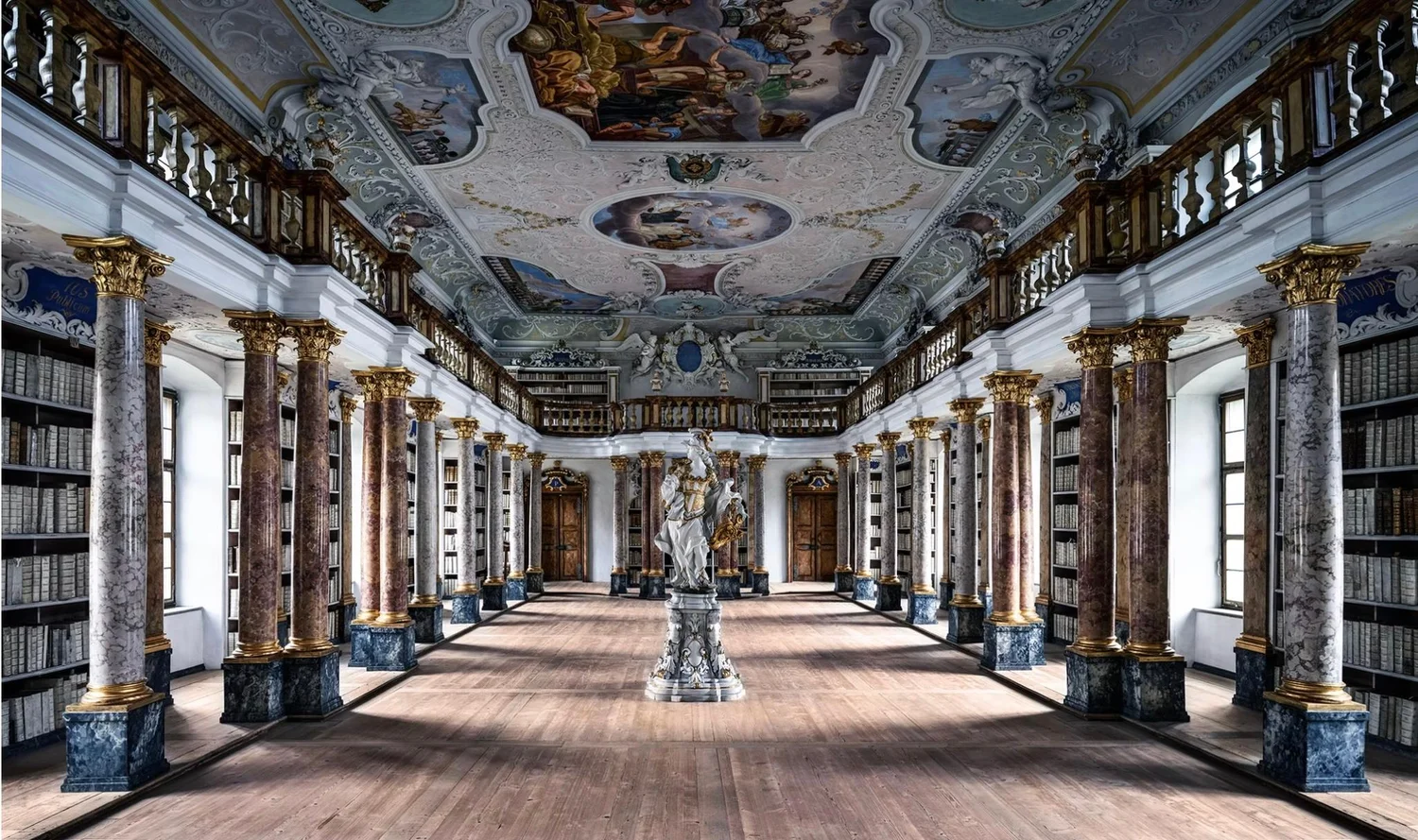
Ottobeuren Abbey Library

Ottobeuern, Germany – 2024
The abbey was founded by the Benedictine order in the 8th century, one of a number of surviving important religious buildings in Bavaria which can date their history back to those times.
The early history of the monastery appears to have been somewhat of a rollercoaster, with enthusiastic abbots who installed reforms and set up centres for writing and, later, printing and the grant of the ‘Imperial Abbey’ status (which essentially gave the abbot the rights of an independent state subject only to the Emperor, including the right to raise taxes from the surrounding villages).
But the abbey also suffered from financial instability and the frequent central European wars. The 18th century, with a period of peace and prosperity, meant that the institution could start to bloom and the imposing Baroque complex dates from this period.
Ottobeuren was taken into government hands during the Napoleonic era and only became a religious institution again in 1835 (as a priory) and in the early 20th century it regained its status as an abbey.
Ottobeuren Abbey is these days also well-known for its series of classical music concerts held every Saturday in the summer months, which started after the Second World War and have attracted prominent conductors and musicians.
Lightjet Exposure on High Glossy Paper, Alu Dibond | Distance Frame, Tulipwood, Lacquered Matt Black, Museum Glass
- Framed Size: 55.1" x 86.6" (140 x 220 cm) - Edition of 12
We ship worldwide and use a multitude of providers to safely deliver your artwork. Domestic delivery and installation may also be available via Hilton Contemporary’s private art shuttle. Please inquire.

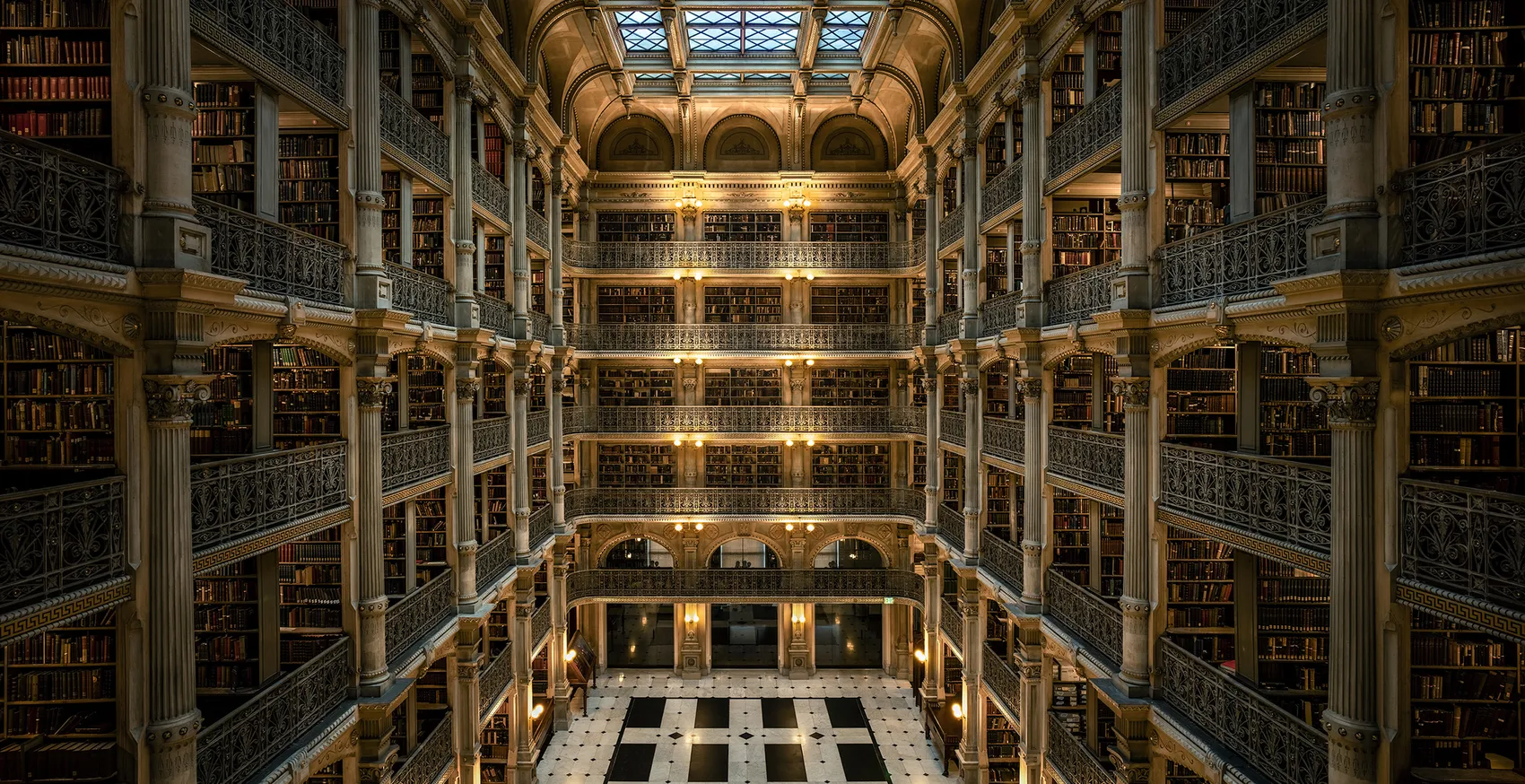
George Peabody Library
Baltimore, USA – 2022
Formerly the Library of the Peabody Institute of the City of Baltimore, the library’s collection dates from the founding of the Peabody Institute in 1857. In that year, George Peabody, a Massachusetts-born philanthropist, dedicated the Peabody Institute to the citizens of Baltimore in appreciation of their “kindness and hospitality.”
The library building opened in 1878 and was designed by Baltimore architect Edmund G. Lind, in collaboration with the Peabody Institute’s first provost, Dr. Nathaniel H. Morison. The stack room contains five tiers of ornamental cast-iron balconies, which rise dramatically to the skylight 61 feet above the floor.
The library contains 300,000 volumes mainly from the 19th century, with strengths in religion, British art, architecture, topography and history; American history, biography, and literature; Romance languages and literature; history of science; and geography, exploration, and travel.
Lightjet Exposure on High Glossy Paper, Alu Dibond | Distance Frame, Tulipwood, Lacquered Matt Black, Museum Glass
- Framed Size: 53.15" x 88.19" in (135 x 224 cm) - Edition of 12
We ship worldwide and use a multitude of providers to safely deliver your artwork. Domestic delivery and installation may also be available via Hilton Contemporary’s private art shuttle. Please inquire.
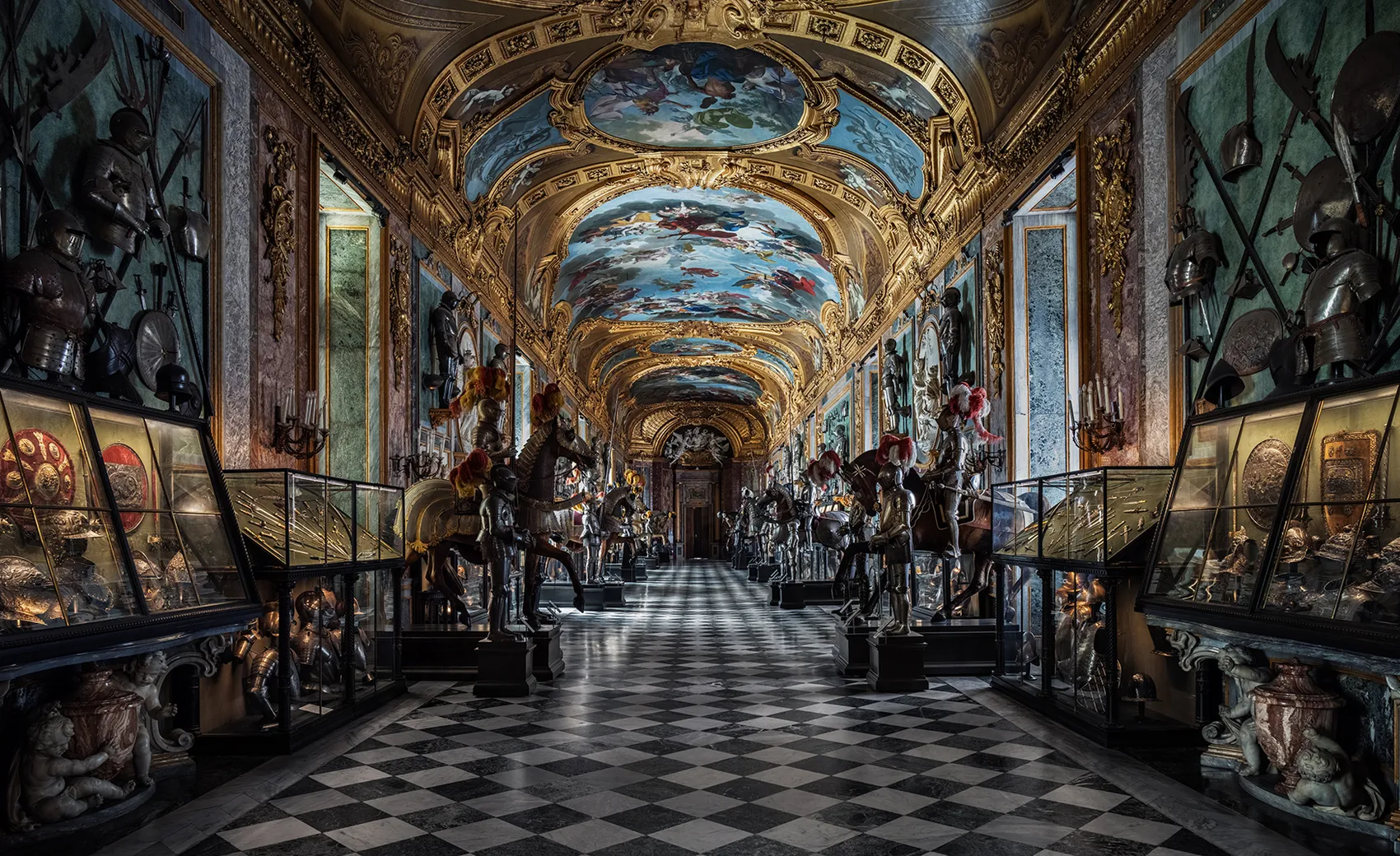
Armeria Reale
Palazzo Reale, Torino
The Armeria Reale Museum is dedicated to antique weaponry. The armoury was set up by King Charles Albert and inaugurated in 1837. It is in the magnificent Queen’s Gallery, decorated between 1738 and 1742 by the court painter Claudio Francesco Beaumont. The creation of the museum is due to Vittorio Seyssel D’Aix, artillery captain and first director of the armoury, who gathered works from the arsenals of Turin and Genoa, from collections of antiquities, and from prestigious collections purchased on the antiques market, such as the collection of Alessandro Sanquirico (1833) from Milan and the collection of the Martinengo della Fabbrica (1839) from Brescia.
In 1842, an expansion of the museum took place in the Rotunda designed by Pelagio Palagi. This space was conceived to house more recent collections, such as the Oriental weapons collection. With the beginning of the Republic in 1946, the Armoury, until then under the Ministry of the Royal Household, became a state museum.
The collection has more than five thousand works ranging from Prehistory to the early 20th century and includes the Royal Medal Hall, with more than 60,000 pieces including ancient and modern coins, medals and seals.
Lightjet Exposure on High Glossy Paper, Alu Dibond | Distance Frame, Tulipwood, Lacquered Matt Black, Museum Glass
- Framed Size: 52.75" x 78.74" in (134 x 200 cm) - Edition of 12
We ship worldwide and use a multitude of providers to safely deliver your artwork. Domestic delivery and installation may also be available via Hilton Contemporary’s private art shuttle. Please inquire.
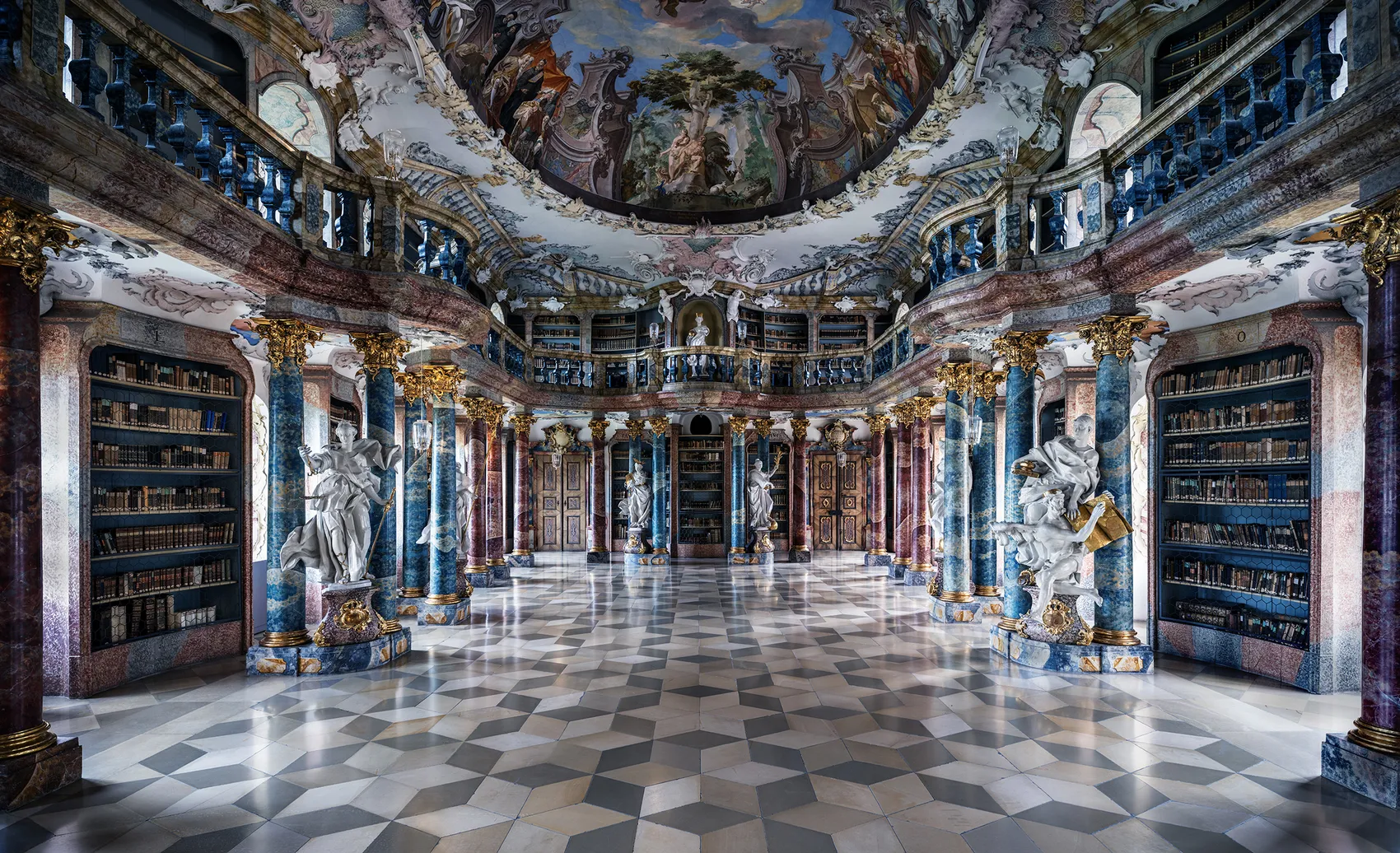
Wiblingen Monastery Library
Wiblingen Monastery Library
Wiblingen, Germany – 2024
Wiblingen Monastery and its church represent the final masterpiece of Baroque architecture in Upper Swabia. The former Benedictine monastery is located south of the city of Ulm in Upper Swabia. Founded in 1093 by the Counts Hartmann and Otto von Kirchberg and dedicated to St. Martin, the monastery was inhabited by Benedictine monks from St. Blasien in the Black Forest. An ambitious renovation and expansion project began in 1714, turning the monastery into an awe-inspiring Baroque masterpiece.
The interior of the library is considered to be one of the finest examples of Rococo architecture. The numerous statues and sweeping ceiling fresco represent the architect’s vision that the library be a place for preserving “treasures of wisdom and science”.
Lightjet Exposure on High Glossy Paper, Alu Dibond | Distance Frame, Tulipwood, Lacquered Matt Black, Museum Glass
- Framed Size: 55.51" x 88.19" in (141 x 224 cm) - Edition of 12:
We ship worldwide and use a multitude of providers to safely deliver your artwork. Domestic delivery and installation may also be available via Hilton Contemporary’s private art shuttle. Please inquire.
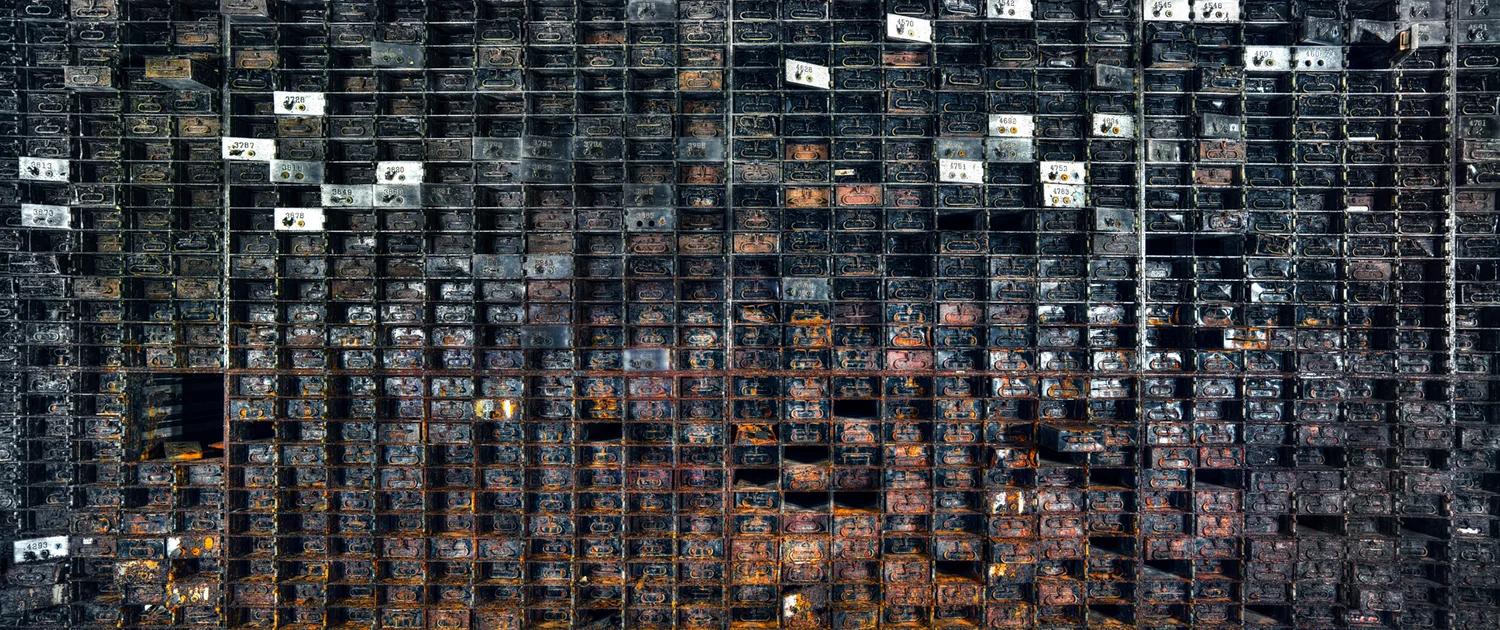
Vault Interior II
Chicago, USA, 2015
This antiquated bank vault in Chicago is both a historical and sociological piece, reminding us about the value that humanity places in materialism. Vaults are intended to keep monetary goods and other valuables safe from theft, unauthorized use, or other threats. Unlike a safe, a vault is integral to the structure in which it is built, and Voigt’s photograph cements this notion. The labyrinthine look of the vault interior draws the viewer in, despite its nature being to keep people at bay.
Banking secrets – An essay about the vault series by Christian Voigt
In the ‘Golden Twenties’, the vaults of the Mid-City Trust and Savings Bank on Chicago’s Near West Side must inevitably have harboured a fair quantity of dirty dollars. Following an extension in the year 1928, the bank shone out as a modern cathedral of high finance, with a light-bathed foyer redolent of power and money. It experienced its best days in the period when America was discovering the consumer culture, and nobody suspected that the Depression was just around the corner. Chicago shifted into the heady rhythm of jazz and the blues. Louis Armstrong was playing the country’s most advanced music in Chicago, and on Saturday evening crowds avid for entertainment flocked to legendary dance halls like the Aragon. Life was overblown and intoxicating, like one of Louis’s trumpet extravaganzas.
And it could be dangerous as well. Prohibition was in force between 1920 and 1933, and the smoky basement bar next door was open for illegal alcohol consumption on a daily basis. Irish and Italian gangs fought to the death for a market share of the enormously profitable bootlegging business. Al Capone, the best known of all Chicago’s hoodlums, was now the secret boss of the city. He actually popularised the term ‘money laundering’, when he invested his gigantic illegal takings in washeterias. So there must have been a whole lot of dirty money in circulation, and plenty of it will have ended up in the vaults of the Mid-City Bank. Half the city police took bribes from Capone’s underlings, and his backhanders made politicians and officials, up to and including the Mayor, bend to his bidding. Places like the Mid-City neighbourhood bank were universal clearing houses, bringing together members of the Socialist Party (which had its headquarters in the same building), local vegetable dealers and no doubt a fair number of gangsters eager to stow their bootlegging profits in the bank’s lockers.
Today the bank is no more. The original deposit boxes of the former vault, which Christian Voigt has copied in his monumental ‘Safe’, now contain nothing but rust and recollections of a former era. The original box – this simple metal container from the vault of the Mid-City Bank – would seem to be all that remains from those golden years. Entering the former vault of the decommissioned financial institute, the artist finds religious symbolism coming to mind. ‘The space is comparable with a Christian tabernacle – this is where in the old days they celebrated money as if it were a religion,’ says Christian Voigt. ‘Behind every deposit box there lurks a mysterious secret, a philosophy of moneymaking and accumulation and more than a few shady stories.’
Isn’t our whole idea of the past sometimes a bit like a room full of lockers? Each door conceals a little black box full of hidden recollections. Memory itself is a bank containing our most precious treasures and sinister secrets – all we have lived through in the way of experiences and emotions. With the right key, the right kind of access, this closely guarded world might open up to us and surrender the secrets it holds.
Lightjet Exposure on High Glossy Paper, Alu Dibond | Distance Frame, Tulipwood, Lacquered Matt Black, Museum Glass
-
Framed Size: 46.85" x 98.43" in (119 x 250 cm) - Edition of 12
We ship worldwide and use a multitude of providers to safely deliver your artwork. Domestic delivery and installation may also be available via Hilton Contemporary’s private art shuttle. Please inquire.
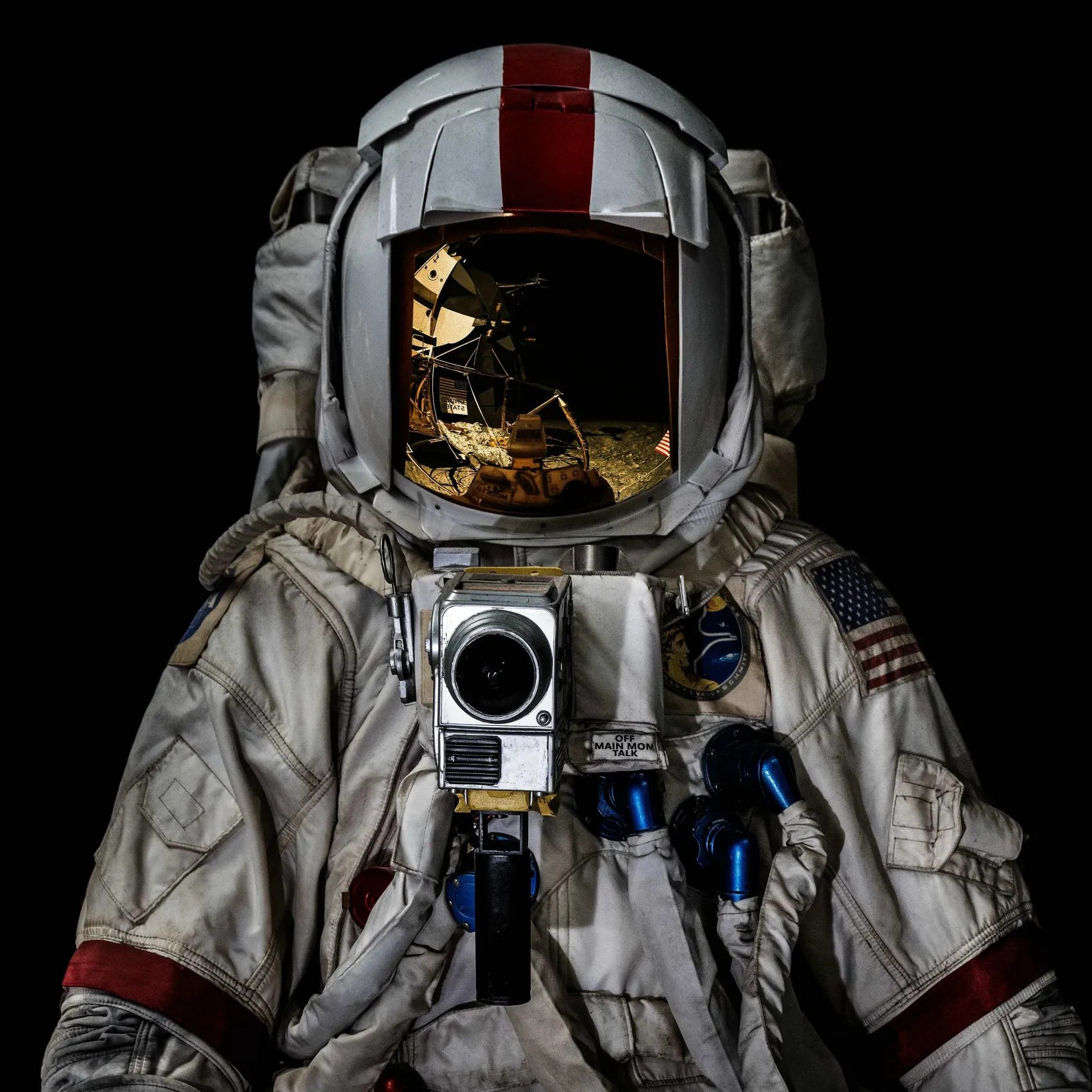
A7-LB Apollo 17, 1972
USA, 2024
The adventures of astronauts and cosmonauts venturing into the unknown and exploring the limits of the human horizon form the starting point for Christian Voigt’s new series LUNAR. In his photographs, iconic suits and technical marvels from the USA, Russia and Europe are presented in a previously unseen way of poetic quality. The latin adjective lunar means relating to, emanating from, belonging to the moon and summarises the pioneering spirit of the series.
From the bulky suits of the early years to the sleek and highly technological spacesuits of the present, the images portray the progressing evolution of spaceflight technology. With remarkable attention to detail and precision, Christian Voigt captures the subtleties and sophisticated elements of this high-performance attire. The images underscore how science and technology strive to provide astronauts with ever-advancing and safer equipment for their journeys into space, protecting the human body outside the Earth.
By depicting the suits and technologies individually and isolating them from any tangible surroundings, Christian Voigt emphasizes their individuality. The images show the objects against a black background, as if they were situated in the absolute silence of space, conveying both the loneliness and the immense vastness of the cosmos. By reducing the elements to a minimalist environment, Voigt visualizes the unknown and at the same time underlines the fearlessness and pioneering spirit of humans venturing into the dark void. These images deepen our understanding that behind the impressive suits and technical achievements, there are still men with the courage to explore the depths of the universe.
The series reminds us that space exploration is not only a scientific endeavor but also a journey rooted in our inner most yearning for knowledge and connection. Christian Voigt’s images encourage viewers to look beyond the confines of their own world and recognize humanity’s potential to enter new worlds when bravely embarking on the journey into the unknown and reaching for the stars together.
Lightjet Exposure on High Glossy Paper, Alu Dibond | Distance Frame, Tulipwood, Lacquered Matt Black, Black Metal Passepartout, Museum Glass
- Framed Size: 63" x 63" in (160 x 160 cm) - Edition of 12
We ship worldwide and use a multitude of providers to safely deliver your artwork. Domestic delivery and installation may also be available via Hilton Contemporary’s private art shuttle. Please inquire.
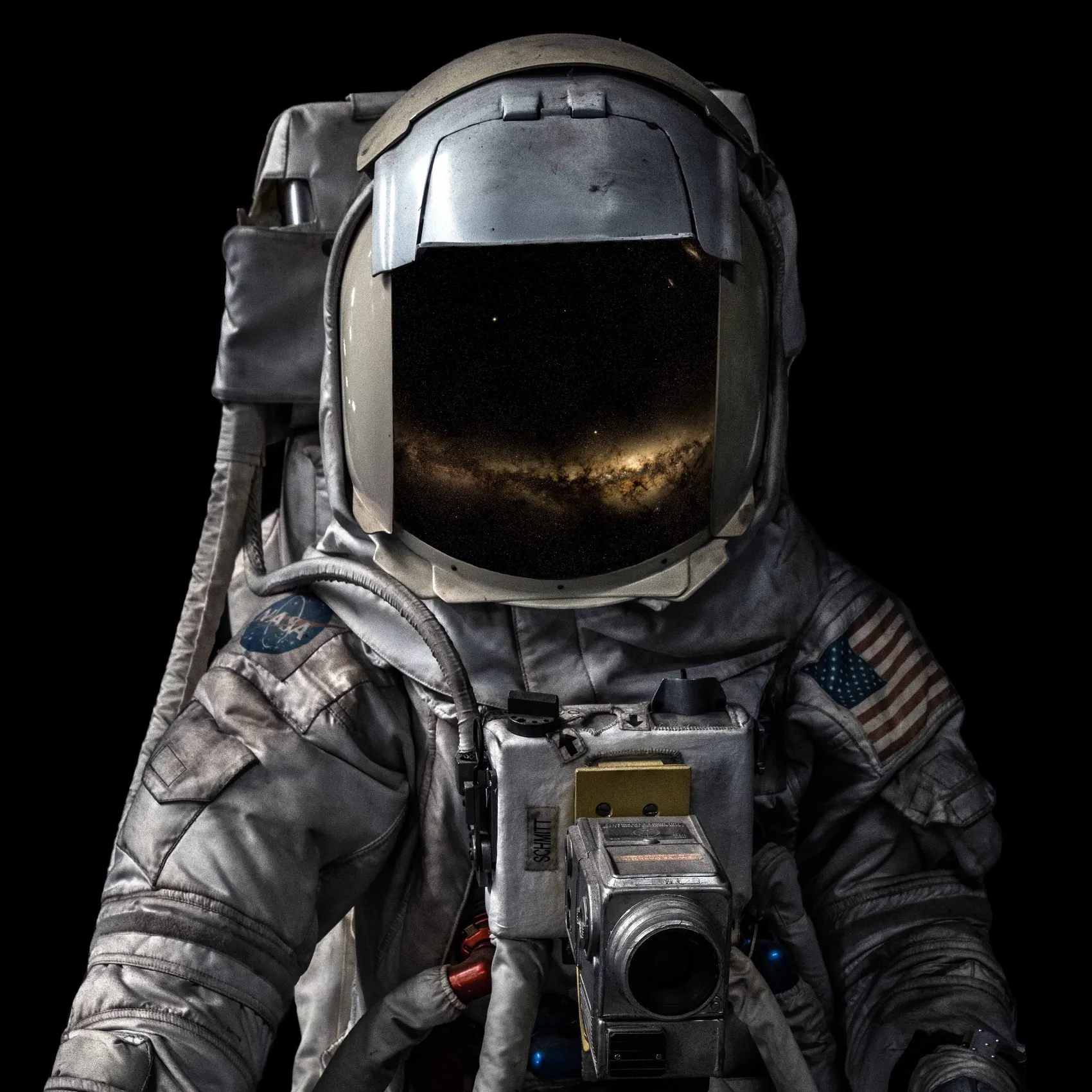
A7L Apollo 15, 1971
USA, 2024
The adventures of astronauts and cosmonauts venturing into the unknown and exploring the limits of the human horizon form the starting point for Christian Voigt’s new series LUNAR. In his photographs, iconic suits and technical marvels from the USA, Russia and Europe are presented in a previously unseen way of poetic quality. The latin adjective lunar means relating to, emanating from, belonging to the moon and summarises the pioneering spirit of the series.
From the bulky suits of the early years to the sleek and highly technological spacesuits of the present, the images portray the progressing evolution of spaceflight technology. With remarkable attention to detail and precision, Christian Voigt captures the subtleties and sophisticated elements of this high-performance attire. The images underscore how science and technology strive to provide astronauts with ever-advancing and safer equipment for their journeys into space, protecting the human body outside the Earth.
By depicting the suits and technologies individually and isolating them from any tangible surroundings, Christian Voigt emphasizes their individuality. The images show the objects against a black background, as if they were situated in the absolute silence of space, conveying both the loneliness and the immense vastness of the cosmos. By reducing the elements to a minimalist environment, Voigt visualizes the unknown and at the same time underlines the fearlessness and pioneering spirit of humans venturing into the dark void. These images deepen our understanding that behind the impressive suits and technical achievements, there are still men with the courage to explore the depths of the universe.
The series reminds us that space exploration is not only a scientific endeavor but also a journey rooted in our inner most yearning for knowledge and connection. Christian Voigt’s images encourage viewers to look beyond the confines of their own world and recognize humanity’s potential to enter new worlds when bravely embarking on the journey into the unknown and reaching for the stars together.
- Framed Size: 63" x 63" in (160 x 160 cm) - Edition of 12
We ship worldwide and use a multitude of providers to safely deliver your artwork. Domestic delivery and installation may also be available via Hilton Contemporary’s private art shuttle. Please inquire.
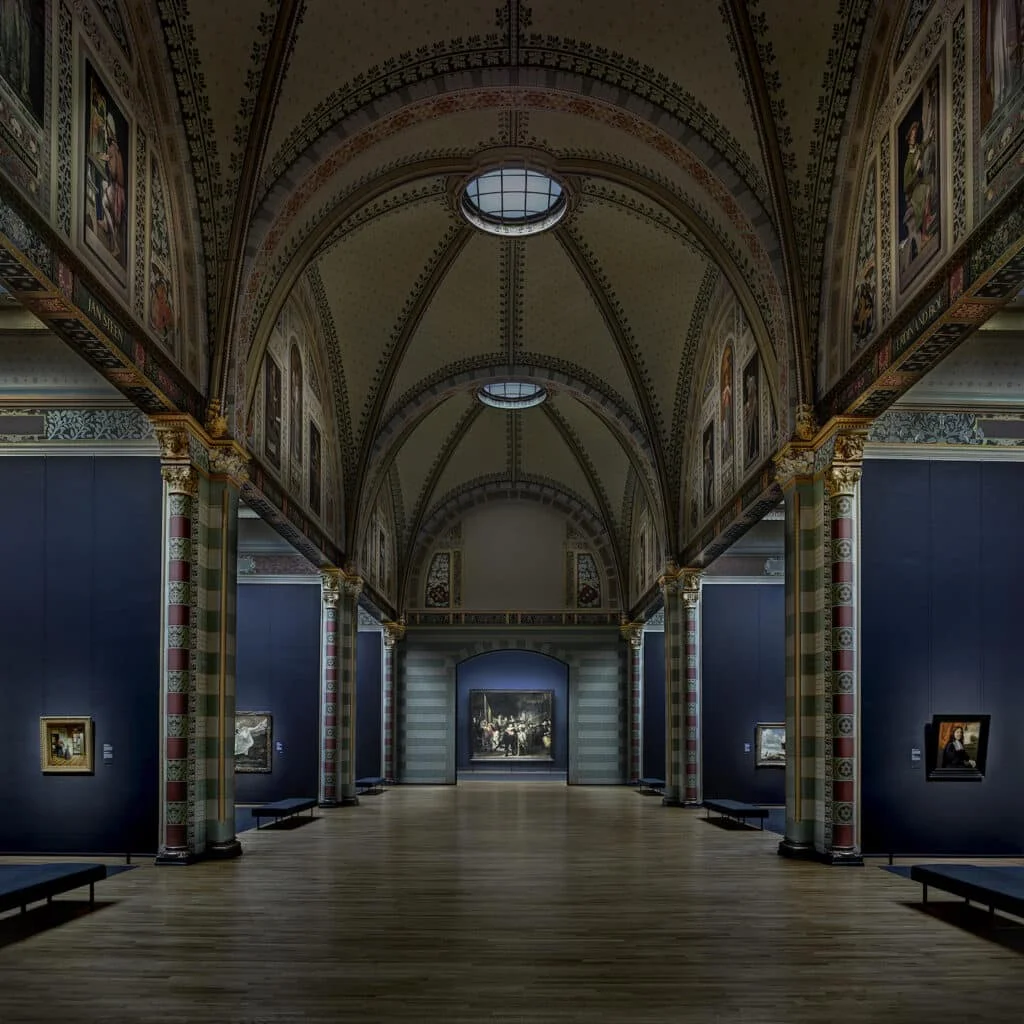
Hall of Fame III
Amsterdam, The Netherlands – 2014
The Rijksmuseum Amsterdam is the Dutch national museum located on Museumplein in Amsterdam. The current main building was designed by Pierre Cuypers and first opened in 1885. The museum is dedicated to arts, crafts, and history. It keeps a large collection of painting from the Dutch Golden Age and an extensive collection of Asian art objects and artifacts related to Dutch history. The museum displays about 8,000 exhibits and has been declared a Rijksmonument.
Lightjet Exposure on High Glossy Paper, Alu Dibond | Distance Frame, Tulipwood, Lacquered Matt Black, Museum Glass
- Framed Size: 70.9" x 70.9" in (180 x 180 cm) - Edition of 12
- Framed Size: 47.24" x 47.24" in (120 x 120 cm) - Edition of 25
We ship worldwide and use a multitude of providers to safely deliver your artwork. Domestic delivery and installation may also be available via Hilton Contemporary’s private art shuttle. Please inquire.

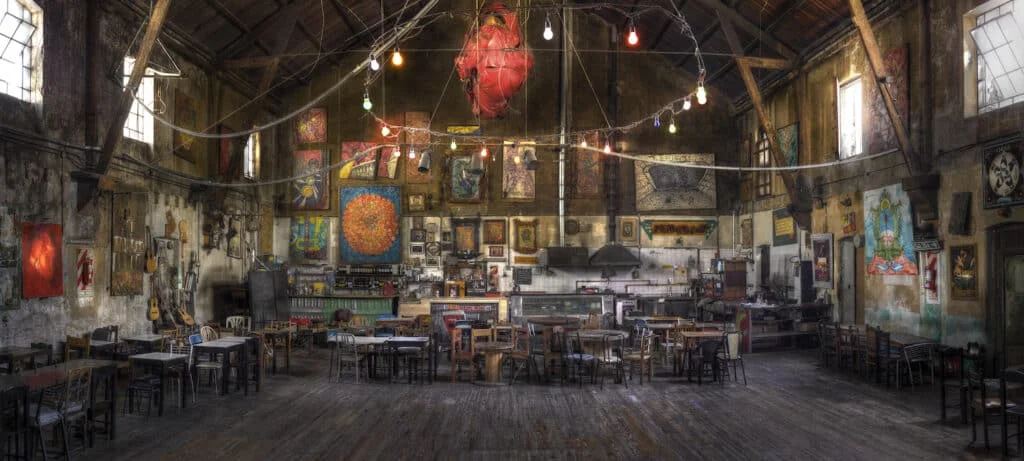
Catedral Del Tango
Buenos Aires, Argentina, 2013
The Cathedral in Buenos Aires is a unique milonga (tango ballroom) where tango aficionados and novices gather to take classes, practice dancing, and eat and drink together every night. The unique space mixes the sacred aura of a cathedral and the cheerful bohemian clutter of a circus tent. The vibrant atmosphere features 12-meter-high wooden ceilings decorated with large sculptures and hanging lights. In former incarnations the 1880 building was a grain silo, dairy factory, and a refrigeration warehouse, before finally being converted into a cultural event space.
Lightjet Exposure on High Glossy Paper, Alu Dibond | Distance Frame, Tulipwood, Lacquered Matt Black, Museum Glass
- Framed Size: 49.6" x 98.4" in (126 x 250 cm) - Edition of 12
- Framed Size: 44.88" x 88.19" in (114 x 224 cm) - Edition of 12
- Framed Size: 31.5" x 63" in (80 x 160 cm) - Edition of 10
We ship worldwide and use a multitude of providers to safely deliver your artwork. Domestic delivery and installation may also be available via Hilton Contemporary’s private art shuttle. Please inquire.
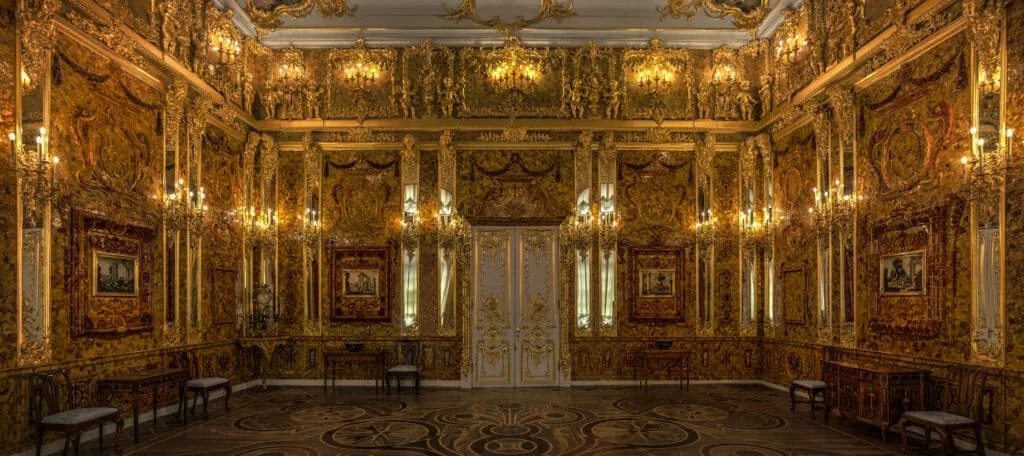
Amber Room
Catherine Palace, St. Petersburg, Russian Federation – 2018
The Amber Room was a chamber decorated in amber panels backed with gold leaf and mirrors, located in the Catherine Palace of Tsarskoye Selo near Saint Petersburg. Constructed in the 18th century in Prussia, the room was dismantled and eventually disappeared during World War II. Before its loss, it was considered an “Eighth Wonder of the World”. A reconstruction was made, starting in 1979 and completed and installed in the Catherine Palace in 2003.The Amber Room was intended in 1701 for the Charlottenburg Palace, in Berlin, Prussia, but was eventually installed at the Berlin City Palace. It was designed by German baroque sculptor Andreas Schlüter and Danish amber craftsman Gottfried Wolfram. Schlüter and Wolfram worked on the room until 1707, when work was continued by amber masters Gottfried Turau and Ernst Schacht from Danzig (Gdańsk). It remained in Berlin until 1716, when it was given by the Prussian King Frederick William I to his ally Tsar Peter the Great of the Russian Empire. In Russia, the room was installed in the Catherine Palace. After expansion and several renovations, it covered more than 55 square meters (590 sq ft) and contained over 6 tons (13,000 lb) of amber.
The Amber Room was looted during World War II by the Army Group North of Nazi Germany and taken to Königsberg for reconstruction and display. Sometime in early 1944, with Allied forces closing in on Germany, the room was disassembled and crated for storage in the Castle basement. Konigsberg was destroyed by allied bombers in August 1944 and documentation of the room location ends there. Its eventual fate and current whereabouts, if it survives, remain a mystery. In 1979 the decision was taken to create a reconstructed Amber Room at the Catherine Palace in Pushkin. After decades of work by Russian craftsmen and donations from Germany, it was completed and inaugurated in 2003.
Lightjet Exposure on High Glossy Paper, Alu Dibond | Distance Frame, Tulipwood, Lacquered Matt Black, Museum Glass
- Framed Size: 48.8" x 98.4" in (124 x 250 cm) - Edition of 12
We ship worldwide and use a multitude of providers to safely deliver your artwork. Domestic delivery and installation may also be available via Hilton Contemporary’s private art shuttle. Please inquire.