
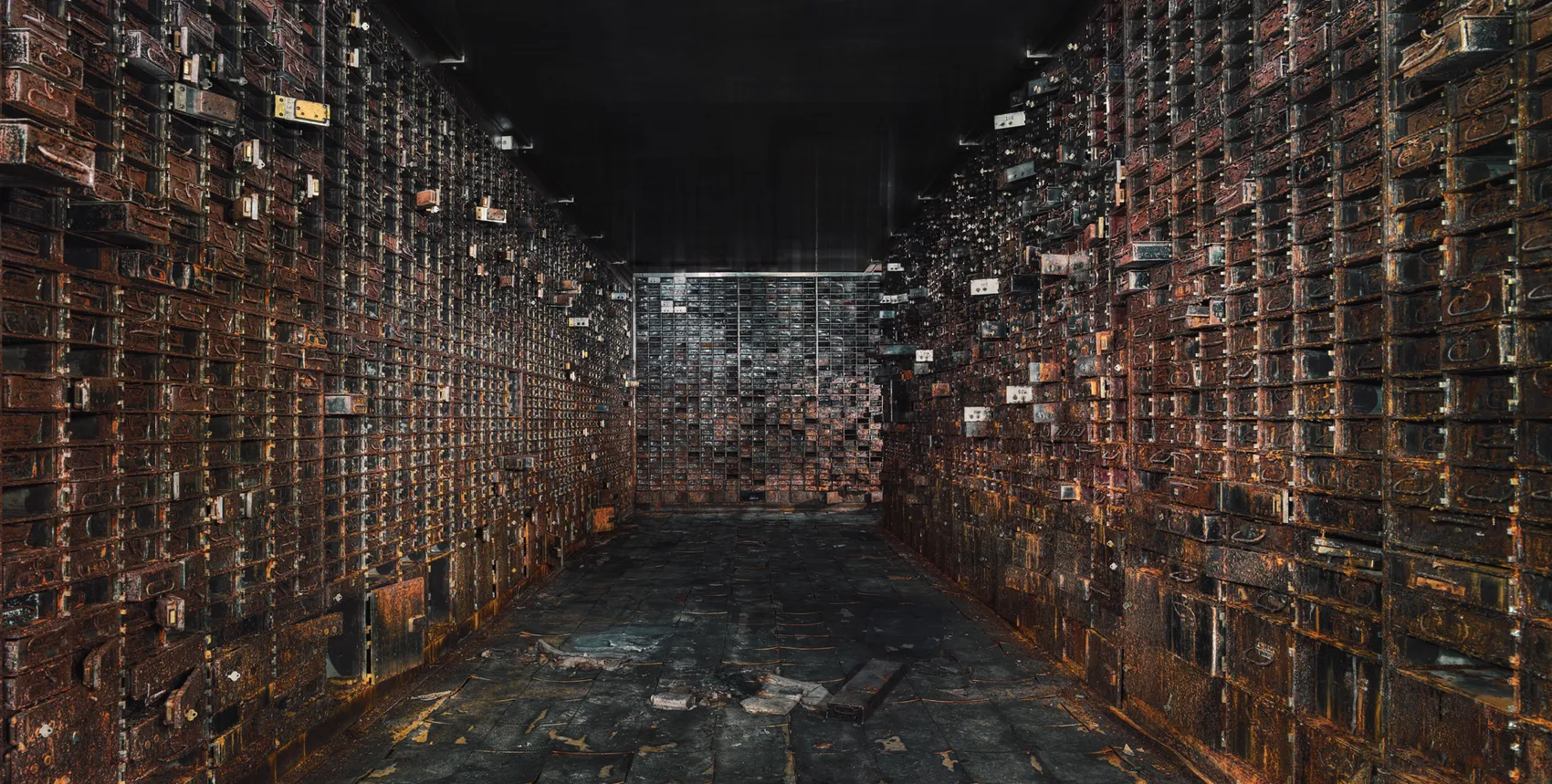
Vault Interior I

Chicago, USA, 2015
This antiquated bank vault in Chicago is both a historical and sociological piece, reminding us about the value that humanity places in materialism. Vaults are intended to keep monetary goods and other valuables safe from theft, unauthorized use, or other threats. Unlike a safe, a vault is integral to the structure in which it is built, and Voigt’s photograph cements this notion. The labyrinthine look of the vault interior draws the viewer in, despite its nature being to keep people at bay.
Banking secrets – An essay about the vault series by Christian Voigt
In the ‘Golden Twenties’, the vaults of the Mid-City Trust and Savings Bank on Chicago’s Near West Side must inevitably have harboured a fair quantity of dirty dollars. Following an extension in the year 1928, the bank shone out as a modern cathedral of high finance, with a light-bathed foyer redolent of power and money. It experienced its best days in the period when America was discovering the consumer culture, and nobody suspected that the Depression was just around the corner. Chicago shifted into the heady rhythm of jazz and the blues. Louis Armstrong was playing the country’s most advanced music in Chicago, and on Saturday evening crowds avid for entertainment flocked to legendary dance halls like the Aragon. Life was overblown and intoxicating, like one of Louis’s trumpet extravaganzas.
And it could be dangerous as well. Prohibition was in force between 1920 and 1933, and the smoky basement bar next door was open for illegal alcohol consumption on a daily basis. Irish and Italian gangs fought to the death for a market share of the enormously profitable bootlegging business. Al Capone, the best known of all Chicago’s hoodlums, was now the secret boss of the city. He actually popularised the term ‘money laundering’, when he invested his gigantic illegal takings in washeterias. So there must have been a whole lot of dirty money in circulation, and plenty of it will have ended up in the vaults of the Mid-City Bank. Half the city police took bribes from Capone’s underlings, and his backhanders made politicians and officials, up to and including the Mayor, bend to his bidding. Places like the Mid-City neighbourhood bank were universal clearing houses, bringing together members of the Socialist Party (which had its headquarters in the same building), local vegetable dealers and no doubt a fair number of gangsters eager to stow their bootlegging profits in the bank’s lockers.
Today the bank is no more. The original deposit boxes of the former vault, which Christian Voigt has copied in his monumental ‘Safe’, now contain nothing but rust and recollections of a former era. The original box – this simple metal container from the vault of the Mid-City Bank – would seem to be all that remains from those golden years. Entering the former vault of the decommissioned financial institute, the artist finds religious symbolism coming to mind. ‘The space is comparable with a Christian tabernacle – this is where in the old days they celebrated money as if it were a religion,’ says Christian Voigt. ‘Behind every deposit box there lurks a mysterious secret, a philosophy of moneymaking and accumulation and more than a few shady stories.’
Isn’t our whole idea of the past sometimes a bit like a room full of lockers? Each door conceals a little black box full of hidden recollections. Memory itself is a bank containing our most precious treasures and sinister secrets – all we have lived through in the way of experiences and emotions. With the right key, the right kind of access, this closely guarded world might open up to us and surrender the secrets it holds.
Lightjet Exposure on High Glossy Paper, Alu Dibond | Distance Frame, Tulipwood, Lacquered Matt Black, Museum Glass
-
Framed: 54.33" x 98.43" in (138 x 250 cm) - Edition of 12
We ship worldwide and use a multitude of providers to safely deliver your artwork. Domestic delivery and installation may also be available via Hilton Contemporary’s private art shuttle. Please inquire.

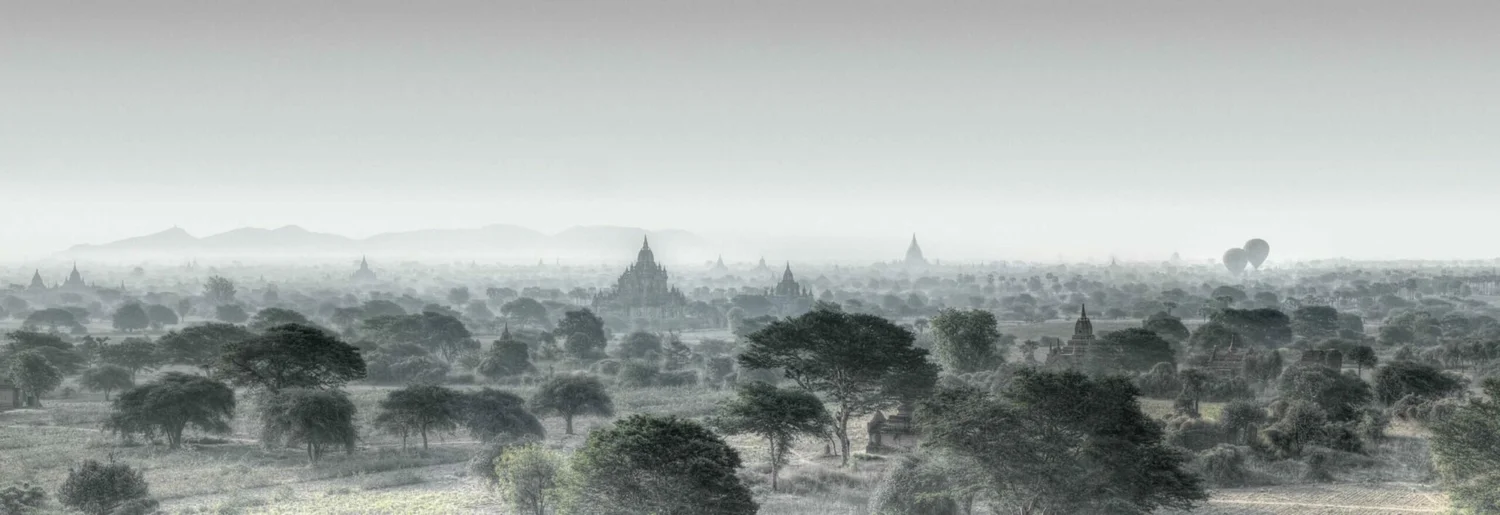
Bagan I
Bagan, Myanmar – 2014
Bagan is an ancient city and a UNESCO World Heritage Site in the Mandalay Region of Myanmar. From the 9th to 13th centuries, the city was the capital of the Pagan Kingdom, the first kingdom that unified the regions that would later constitute Myanmar. During the kingdom’s height between the 11th and 13th centuries, more than 10,000 Buddhist temples, pagodas and monasteries were constructed in the Bagan plains alone, of which the remains of over 2200 temples and pagodas survive.
Lightjet Exposure on High Glossy Paper, Alu Dibond | Distance Frame, Tulipwood, Lacquered Matt Black, Museum Glass
- Framed Size: 43.3" x 107.9" in (110 x 274 cm) - Edition of 12
We ship worldwide and use a multitude of providers to safely deliver your masterpiece. Domestic delivery and installation may also be available via Hilton Asmus Contemporary’s private art shuttle. Please inquire.
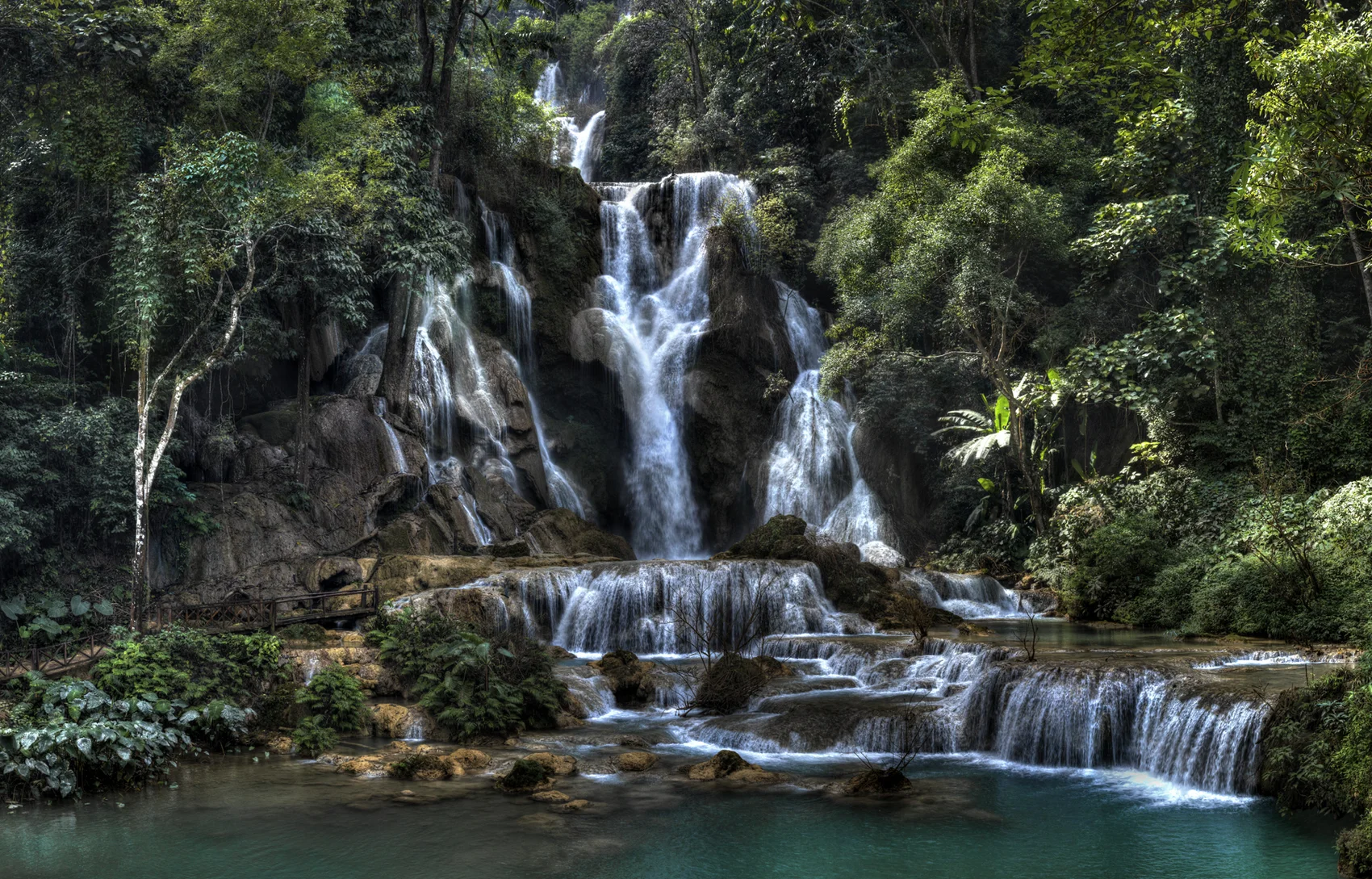
Kuang Si Waterfall
Luang Prabang, Laos – 2012
The Kuang Si Falls alternatively known as the Tat Kuang Si Waterfalls, is a multi-tiered waterfall about 29 kilometers (18 mi) south of Luang Prabang. The journey takes 53 minutes from Luang Prabang Night Market downtown. The waterfalls are a favorite side trip for tourists in Luang Prabang, and begin in shallow pools atop a steep hillside. These lead to the main fall with a drop of 60 meters (200 ft).
Kuang Si waterfall is located about 29 kilometers south of Luang Prabang city. The river that rises and flows into Tad Kuang Si waterfall is called Nam “Si” or Si River. The distance between its source and Tad Kuang Si waterfall is about 10 kilometers. The height of the waterfall is 60 meters. The water flows and falls in three cascade waterfalls over white limestone rocks into aquamarine turquoise pools surrounded by tropical trees.
The source of Nam SI is located at the foot of the mountains where the Hmong people and Lao Theung, Khmu hill tribes once lived. Their villages were called Ban Nong Thouk, Ban Hin Oih and Ban Nam Ork (Exited). At the bottom of the waterfall is the village called Ban Tad. Due to slash-and-burn rice farming in the mountains and valleys by Hmong and Khmu farmers, the Nam Si River experienced drought. After 1975, the Lao government relocated the hill tribes to other places in the area to restore natural resources. Only a few straw houses still remain around this place for foreign tourists.
Lightjet Exposure on High Glossy Paper, Alu Dibond | Distance Frame, Tulipwood, Lacquered Matt Black, Museum Glass
- Framed Size: 50.4" x 78.8" in (128 x 200 cm) - Edition of 7
We ship worldwide and use a multitude of providers to safely deliver your artwork. Domestic delivery and installation may also be available via Hilton Contemporary’s private art shuttle. Please inquire.
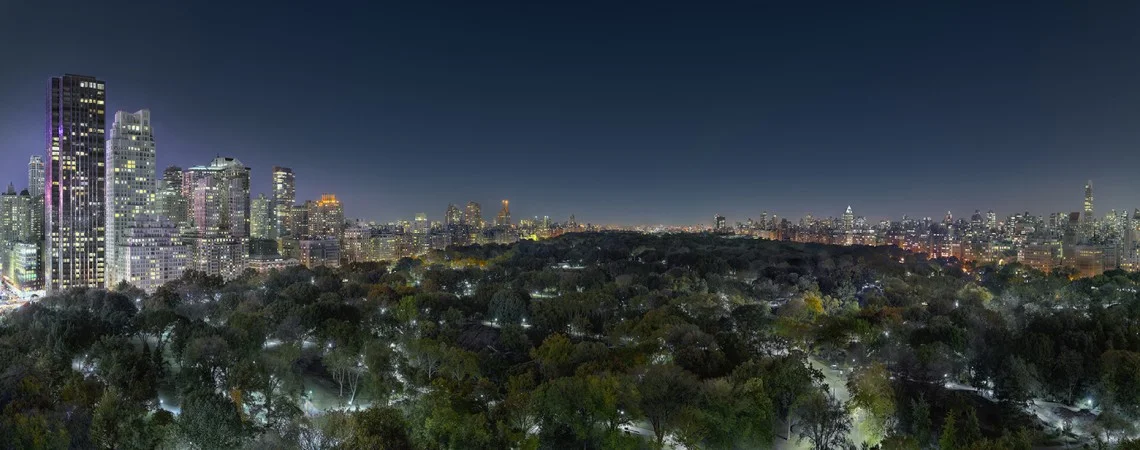
Central Park Night
New York City – 2015
Central Park’s history began in the 1850s as New York City sought a large public green space, leading to the winning “Greensward Plan” by Olmsted and Vaux to create a naturalistic landscape, involving massive earth-moving, blasting, and planting, and resulting in the park’s 1858-1876 construction on land that displaced communities like Seneca Village. It opened in the 1860s, becoming an iconic symbol of urban respite and recreation, and was revitalized in the 1980s by the Central Park Conservancy, making it a world-renowned urban park.
Central Park experiences significant light pollution from NYC’s omnipresent urban glow, creating a bright, whitish dome that obscures stars, disrupting wildlife and human sleep, though some darker spots like the Great Lawn offer slightly better, but still limited, views compared to truly dark skies, highlighting the park’s role as a “green lung” fighting pollution but still enveloped by artificial light.
Lightjet Exposure on High Glossy Paper, Alu Dibond | Distance Frame, Tulipwood, Lacquered Matt Black, Museum Glass
- Framed Size: 44.5" x 98.5" in (113 x 250 cm) - Edition of 12
We ship worldwide and use a multitude of providers to safely deliver your masterpiece. Domestic delivery and installation may also be available via Hilton Asmus Contemporary’s private art shuttle. Please inquire.
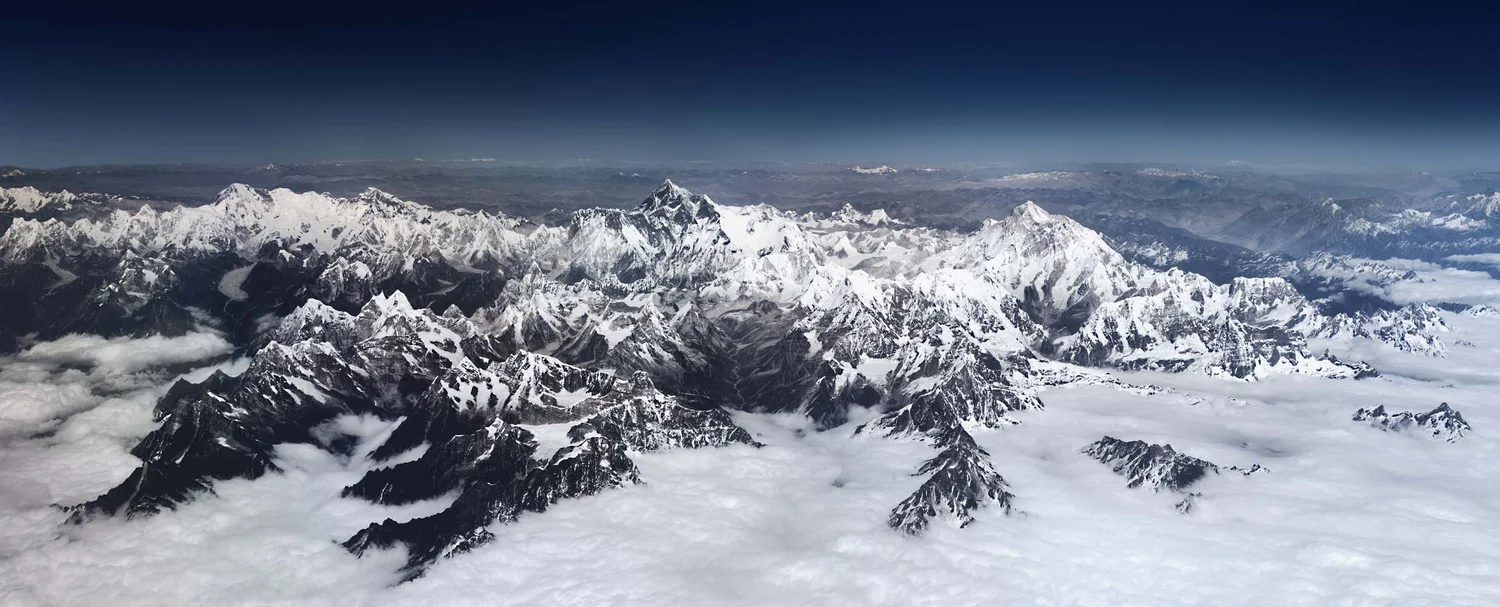
Himalaya
Nepal – 2010
The Himalayas are a mountain range in Asia separating the plains of the Indian subcontinent from the Tibetan Plateau. The range has some of the Earth’s highest peaks, including the highest, Mount Everest. More than 100 peaks exceeding elevations of 7,200 m (23,600 ft) above sea level lie in the Himalayas.
The Himalayas abut on or cross territories of six countries: Nepal, India, China, Bhutan, Pakistan and Afghanistan. The sovereignty of the range in the Kashmir region is disputed among India, Pakistan, and China. The Himalayan range is bordered on the northwest by the Karakoram and Hindu Kush ranges, on the north by the Tibetan Plateau, and on the south by the Indo-Gangetic Plain. Some of the world’s major rivers, the Indus, the Ganges, and the Tsangpo–Brahmaputra, rise in the vicinity of the Himalayas, and their combined drainage basin is home to some 600 million people; 53 million people live in the Himalayas. The Himalayas have profoundly shaped the cultures of South Asia and Tibet. Many Himalayan peaks are sacred in Hinduism and Buddhism. The summits of several—Kangchenjunga (from the Indian side), Gangkhar Puensum, Machapuchare, Nanda Devi, and Kailash in the Tibetan Transhimalaya—are off-limits to climbers.
Lightjet Exposure on High Glossy Paper, Alu Dibond | Distance Frame, Tulipwood, Lacquered Matt Black, Museum Glass
- Framed Size: 47.6" x 118.1" in (121 x 300 cm) - Edition of 7
We ship worldwide and use a multitude of providers to safely deliver your artwork. Domestic delivery and installation may also be available via Hilton Contemporary’s private art shuttle. Please inquire.
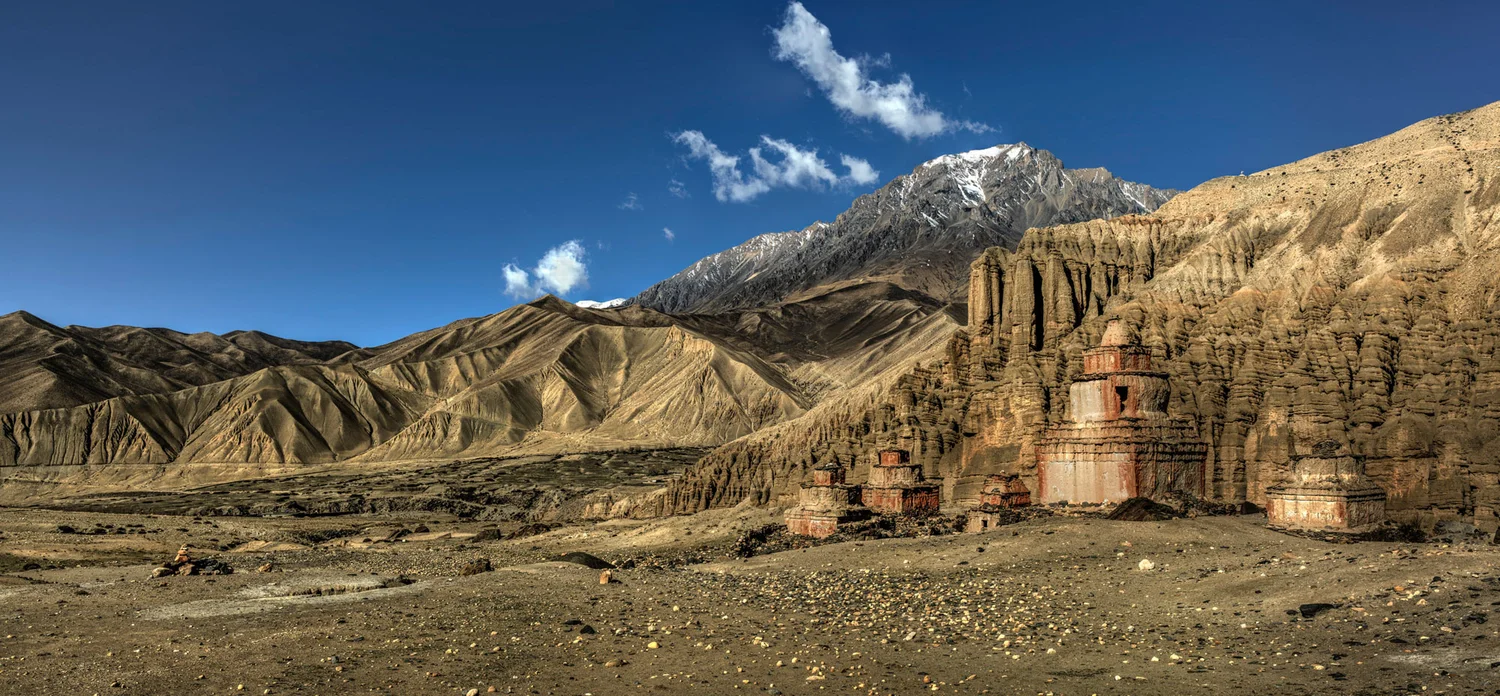
Dhakmar Monastery
Nepal – 2017
Dhakmar Monastery (or Dhakmar Gompa) refers to ancient, cliff-clinging monastery ruins and a village in the remote, high-altitude region of Upper Mustang, Nepal, known for its stark, red rock landscapes and historical significance, often linked with the arrival of Guru Rinpoche (Padmasambhava) and the development of Tibetan Buddhism, serving as a cultural gem amidst rugged Tibetan-style villages.
Lightjet Exposure on High Glossy Paper, Alu Dibond | Distance Frame, Tulipwood, Lacquered Matt Black, Museum Glass
- Framed Size: 50" x 98.4" in (124 x 250 cm) - Edition of 12
We ship worldwide and use a multitude of providers to safely deliver your artwork. Domestic delivery and installation may also be available via Hilton Contemporary’s private art shuttle. Please inquire.
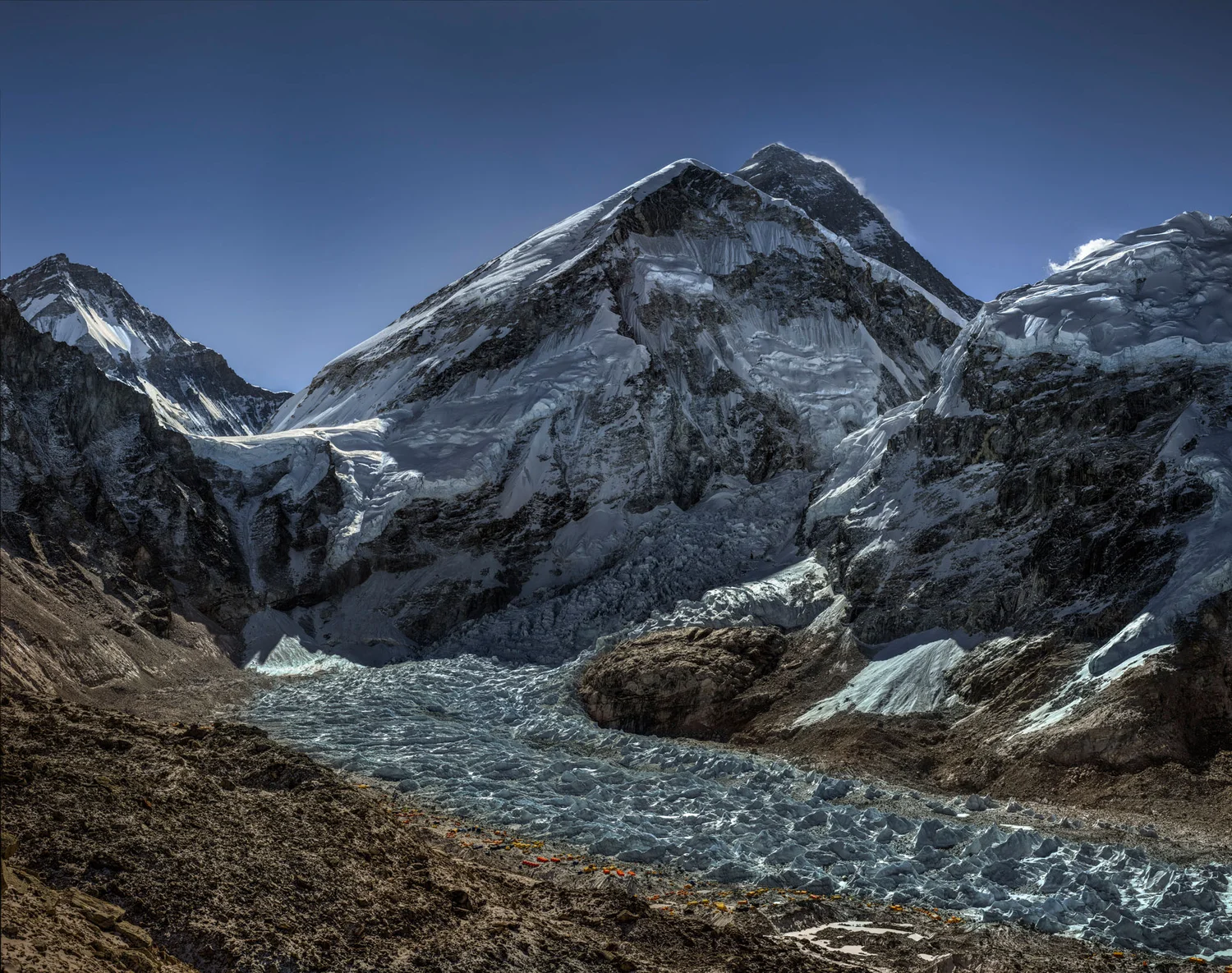
Basecamp Mount Everest
Nepal – 2017
The Everest Base Camp trek combines the convenience of well-maintained paths with the raw beauty of the Himalayas. The Everest region, located in the lap of the mighty Himalayas, is recognized for its beautiful scenery and welcoming Sherpa people. This adventure not only brings you to the base of the world’s highest peak but also immerses you in the rich culture and traditions of Nepal.
The 14 day Everest Base Camp trek will take you to a height of roughly 5,364 meters. It provides panoramic views of many 8,000-meter-high summits. You can witness the incredible view of Pumori, Lhotse, Nuptse, Lobuche, and other peaks, as well as the iconic Mt Everest itself.
The EBC trek journey begins with a breathtaking 35-minute flight from Kathmandu to Lukla in the month of (January, February, June, July, August and December) or a 20 minutes flight from Manthali/Ramechhap to Lukla including a 5 to 6 hours drive from Kathmandu to Manthali in the month of March, April, May, October and November.
The Mount Everest Base Camp trek begins and ends in Lukla. The journey starts along the Dudh Koshi River’s bank, passing through the Sagarmatha National Park on the way to Namche Bazaar. Namche is the main trading point in the Everest region, also popularly known as an acclimatization destination for Everest region treks.
The walk is challenging, but the beautiful scenery of verdant forests, farmland, hills, and mountains will inspire you to keep going. We will depart Namche Bazaar after a day of acclimatization and continue our trek to Tengboche.
Lightjet Exposure on High Glossy Paper, Alu Dibond | Distance Frame, Tulipwood, Lacquered Matt Black, Museum Glass
- Framed Size: 95.28" x 118.11" in (242 x 300 cm) - Edition of 5
We ship worldwide and use a multitude of providers to safely deliver your masterpiece. Domestic delivery and installation may also be available via Hilton Asmus Contemporary’s private art shuttle. Please inquire.
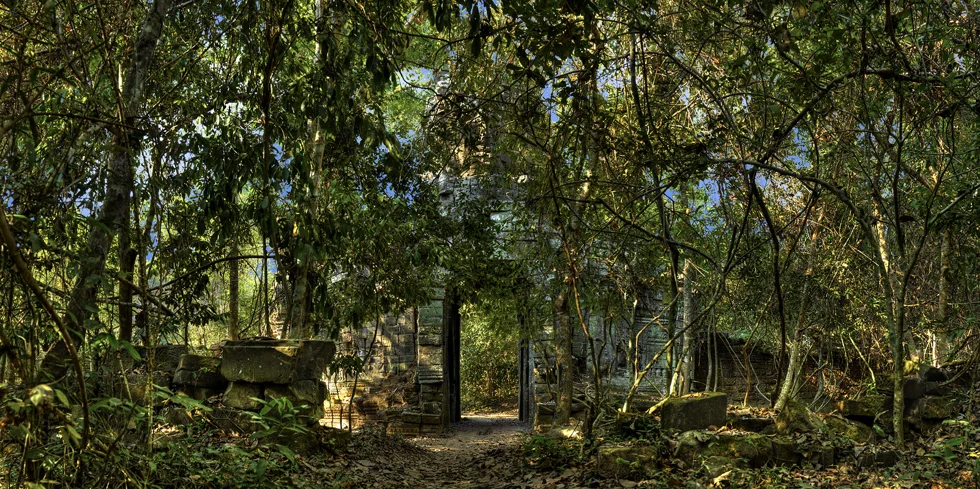
Ta Prohm II
Siem Reap, Cambodia – 2010
Ta Prohm is a famous, atmospheric temple within the Angkor complex near Angkor Wat, known as the “Tomb Raider Temple” for its giant trees reclaiming its ruins, built by King Jayavarman VII as a Mahayana Buddhist monastery dedicated to his mother, and notable for its “jungle-clad” state, unlike fully restored temples, featuring iconic roots strangling stonework, making it a dramatic symbol of nature vs. human creation.
It’s located near Angkor Thom, east of the main Angkor Wat complex, and is part of the UNESCO World Heritage Angkor Archaeological Park. French explorers chose not to fully restore it, preserving the unique spectacle of trees growing through and around the temple, creating a magical atmosphere.
Lightjet Exposure on High Glossy Paper, Alu Dibond | Distance Frame, Tulipwood, Lacquered Matt Black, Museum Glass
- Framed Size: 49.2" x 98.4" in (125 x 250 cm) - Edition of 7
We ship worldwide and use a multitude of providers to safely deliver your artwork. Domestic delivery and installation may also be available via Hilton Contemporary’s private art shuttle. Please inquire.
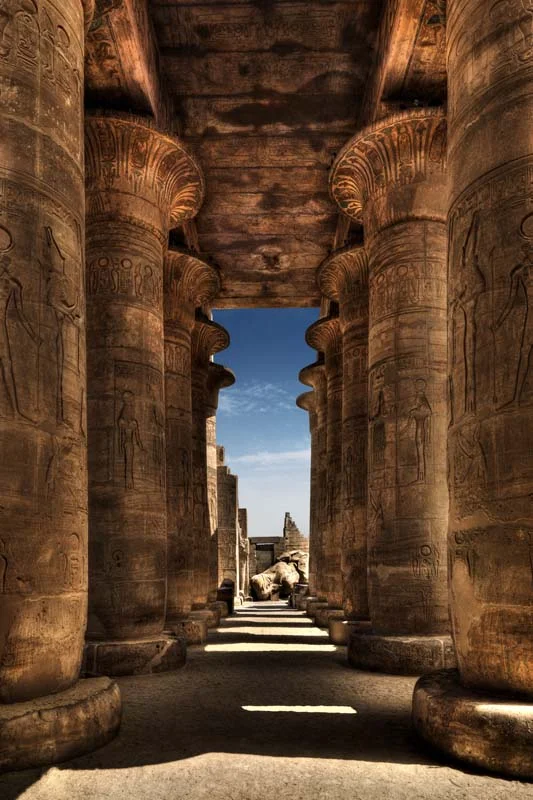
Ramesseum I
Luxor, Egypt – 2010
The Ramesseum is the mortuary temple of Pharaoh Ramesses II (“Ramesses the Great”). It is located in the Theban Necropolis in Upper Egypt, on the west of the River Nile, across from the modern city of Luxor.
Ramesses II modified, usurped, or constructed many buildings from the ground up, and the most splendid of these, in accordance with New Kingdom royal burial practices, would have been his memorial temple: a place of worship dedicated to pharaoh, god on earth, where his memory would have been kept alive after his death. Surviving records indicate that work on the project began shortly after the start of his reign and continued for 20 years.
It is the second largest temple in Egypt, occupying an area of c. 10 hectares (1,100,000 sq ft).
Lightjet Exposure on High Glossy Paper, Alu Dibond | Distance Frame, Tulipwood, Lacquered Matt Black, Museum Glass
- Framed Size: 70.9" x 47.3" in(180 x 120 cm) - Edition of 5
We ship worldwide and use a multitude of providers to safely deliver your artwork. Domestic delivery and installation may also be available via Hilton Contemporary’s private art shuttle. Please inquire.
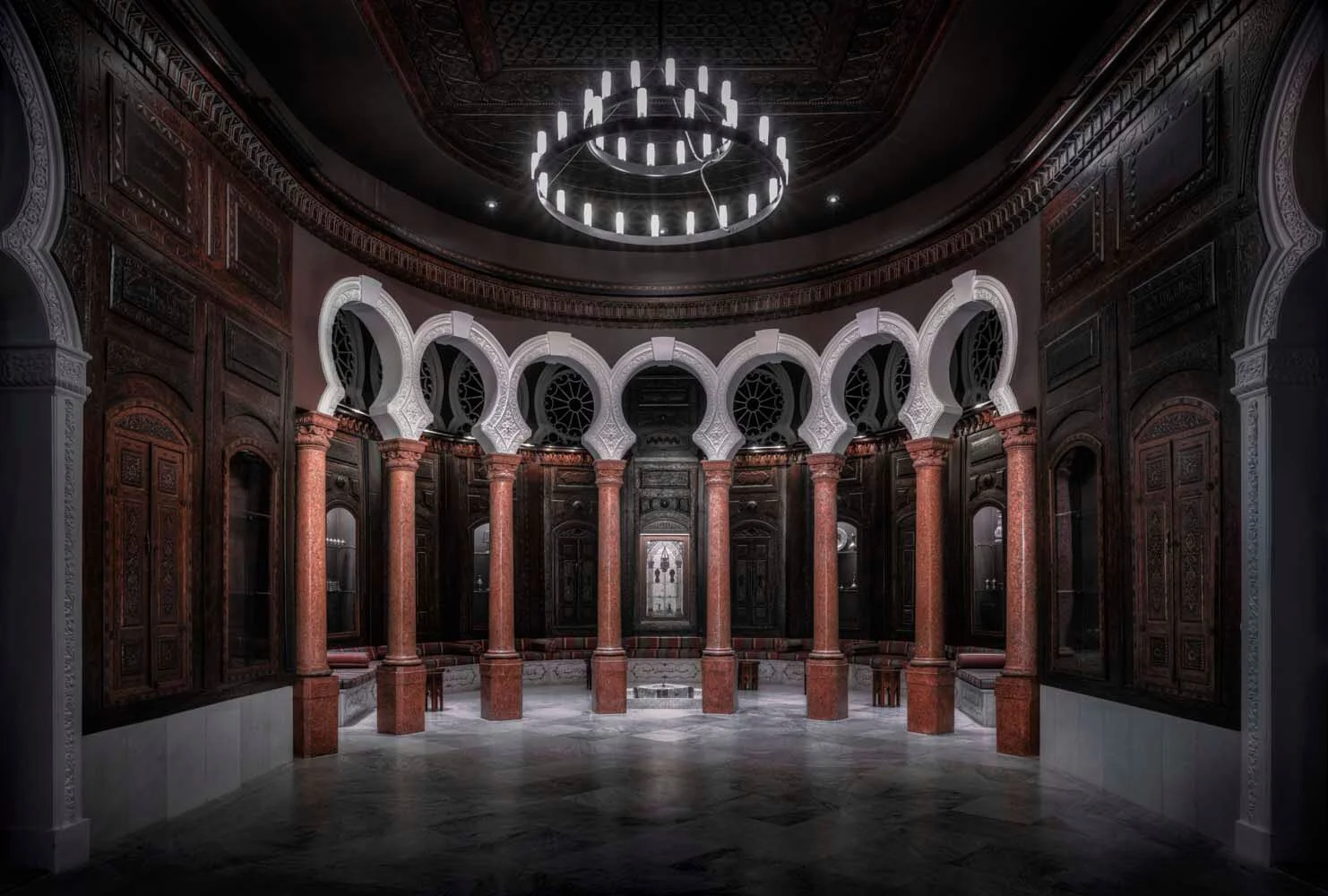
Salon Arab
Beirut, Lebanon – 2017
In 1912, the Lebanese aristocrat Nicolas Ibrahim Sursock built the private villa that now houses the museum. He decreed in his will that the villa be transformed into a museum. When he died in 1952, he bequeathed the villa to the city of Beirut. Between 1953 and 1957, President Camille Chamoun transformed the villa into a palais des hôtes—a presidential guesthouse designated to accommodate visiting heads of state, including the Shah of Iran and King Faisal of Iraq.
The museum opened in 1961, directed by Amine Beyhum, with an exhibit of works of contemporary Lebanese artists, setting a precedent for cultural events in Beirut.
The Sursock Museum building exemplifies Lebanese architecture, with its Italianate (specifically Venetian) and Ottoman architectural influences. It is one of the few remaining villas from its epoch in Beirut. It is located in the Rue Sursock in the Rmeil district of Beirut.
Lightjet Exposure on High Glossy Paper, Alu Dibond | Distance Frame, Tulipwood, Lacquered Matt Black, Museum Glass
- Framed Size: 52.8" x 78.8" in (134 x 200 cm) - Edition of 12
We ship worldwide and use a multitude of providers to safely deliver your artwork. Domestic delivery and installation may also be available via Hilton Contemporary’s private art shuttle. Please inquire.