
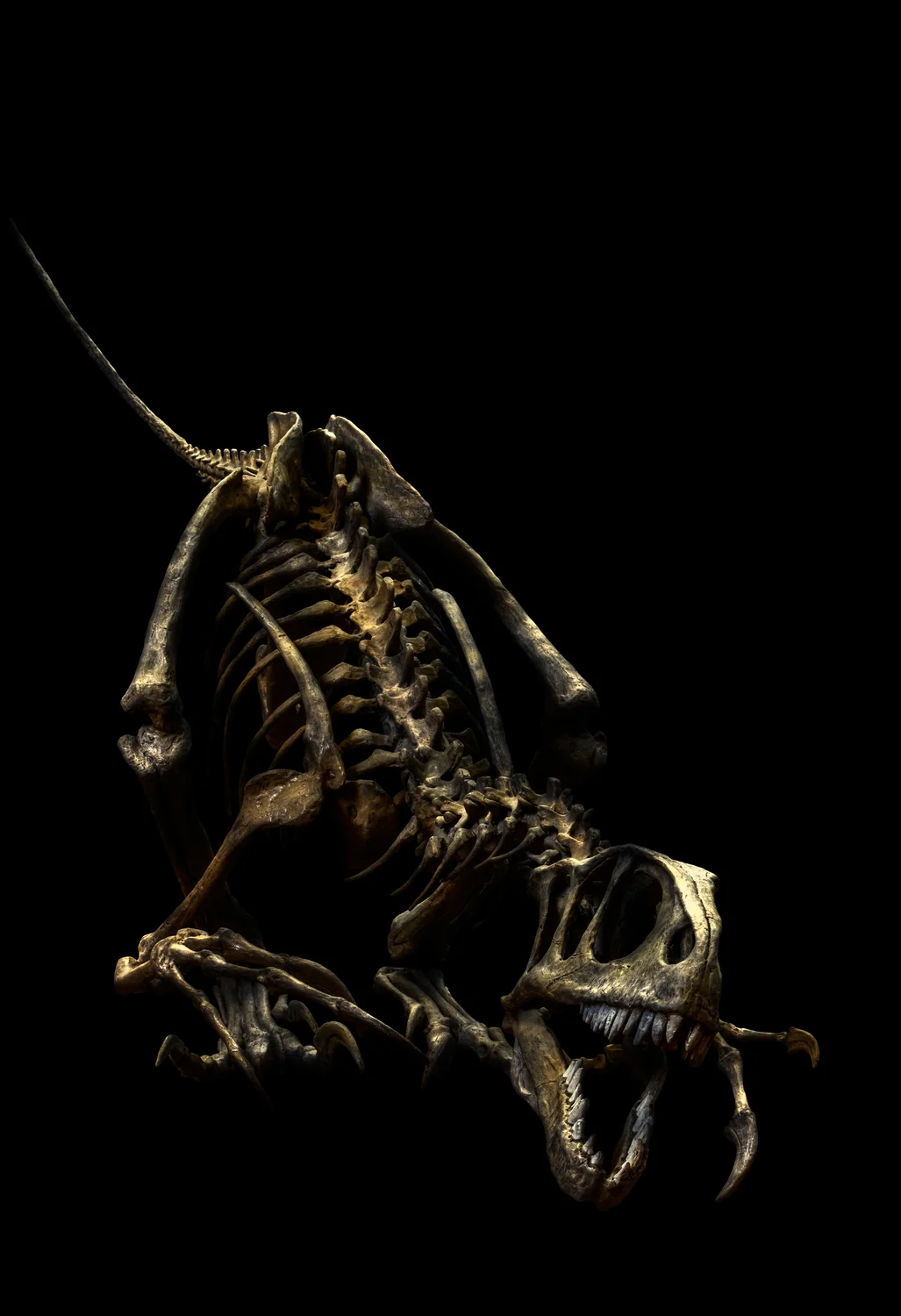
Unenlagia Comahuensis

Muséum National d’Histoire Naturelle, Paris, France, 2019
The Unenlagia Comahuensis of the Muséum National d’Histoire Naturelle in Paris is the most bird-like dinosaur found so far – it even had arms that were designed so they could flap like a bird’s wings. However, this dinosaur was much too large to fly, but it clearly shows how some dinosaurs were evolving to look and act like modern birds. Some scientists think that Unenlagia is a young Megaraptor, as the fossils were found in the same area. It is from the same general family that also includes many of the dinosaurs that exhibited bird-like traits, including those falling into the popular raptor category. Unenlagia had a shoulder structure that allowed its short arms to move forwards, backwards, inwards (for grasping prey), and up and down (for a flapping motion). This flapping motion was not used for flying as its wing-like arms were too short to support the heavy dinosaur. Perhaps these proto wings were used for balancing, turning, and a bit of lift during high-speed running. Although there is no fossil evidence of feathers from Unenlagia, it may well have had them, further adding lift to each upstroke of the proto wings. It could grasp prey with its clawed, short, wing-like forearms. This new fossil helps show how dinosaur forearms evolved into the wings of modern-day birds. Unenlagia shoulder and arm design provide evidence relating to the origins of flight. Paleontologists have debated about the origins of flight. Did animals first leap from trees and glide, or flap and rise from the ground? Unenlagia’s bone structure supports the latter theory, in which animals start from the ground up. On the other hand, Unenlagia might have evolved, like the ostrich, from an earlier flying dinosaur; after all, birds had existed for over 60 million years already when Unenlagia lived.
Lightjet Exposure on High Glossy Paper, Alu Dibond | Distance Frame, Tulipwood, Lacquered Matt Black, Museum Glass
- Framed Size: 83.8" x 61.02" in (213 x 155 cm) - Edition of 12
We ship worldwide and use a multitude of providers to safely deliver your artwork. Domestic delivery and installation may also be available via Hilton Contemporary’s private art shuttle. Please inquire.

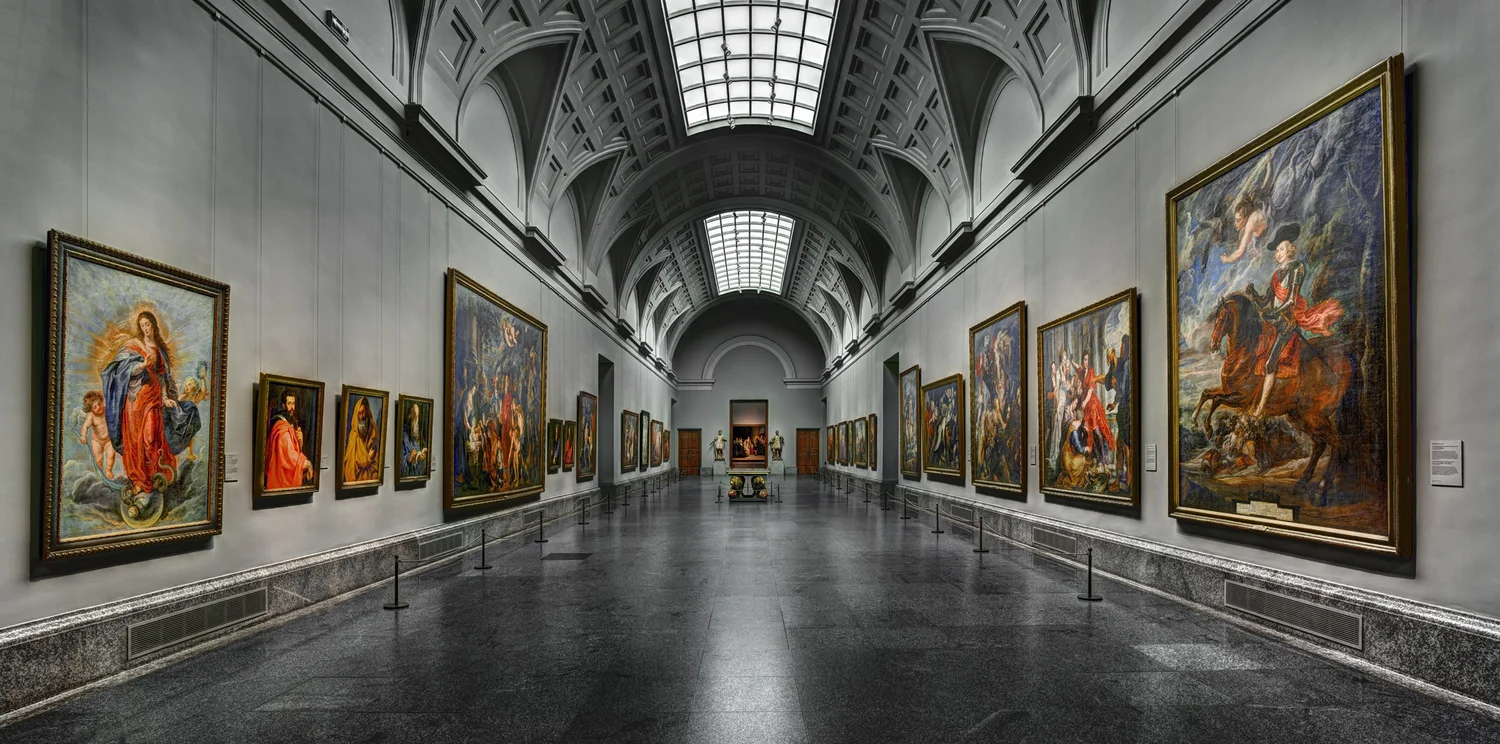
Prado II
Madrid, Spain, 2015
The Museo del Prado in Madrid, known as Prado for short (Spanish for “meadow”), is one of the largest and most important art museums in the world. Originally founded as a Pinacoteca and glyptotheca, the Prado today includes over 5000 drawings, 2000 prints, 1000 coins and medals, and nearly 2000 other art objects. The sculpture collection has more than 700 objects and other fragments. In addition to the world’s best collection of Spanish painters, including some of the main works by Velázquez, Dutch masters and works by Botticelli, Caravaggio, Albrecht Dürer and Rembrandt, among others, are also shown.
Lightjet Exposure on High Glossy Paper, Alu Dibond | Distance Frame, Tulipwood, Lacquered Matt Black, Museum Glass
- Framed Size: 48.4" x 88.2" in 123 x 224 cm) - Edition of 12
- Framed Size: 63.8" x 118.1" in (162 x 300 cm) - Edition of 5
We ship worldwide and use a multitude of providers to safely deliver your artwork. Domestic delivery and installation may also be available via Hilton Contemporary’s private art shuttle. Please inquire.
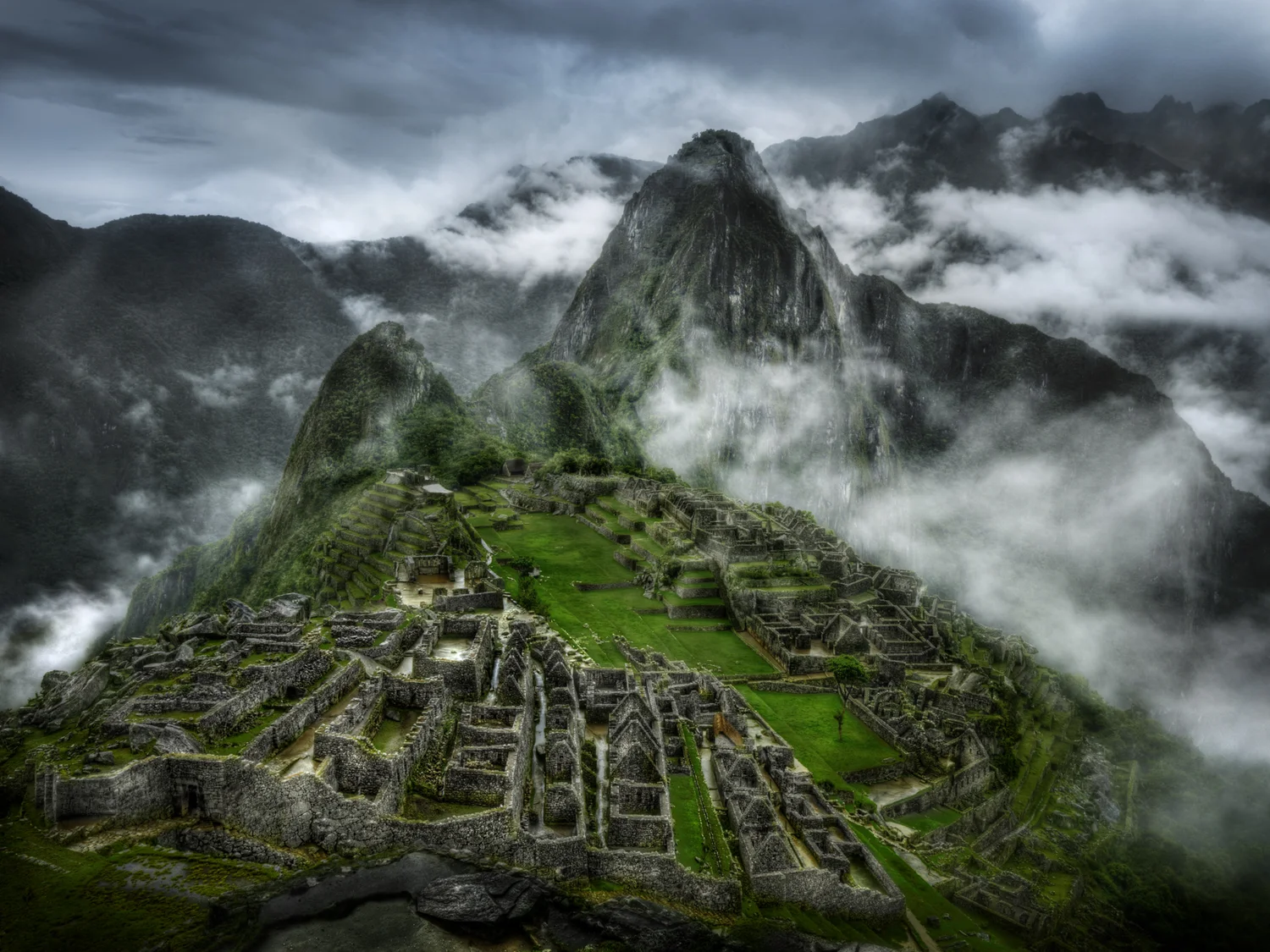
Machu Picchu I
Peru – 2009
Machu Picchu is a city founded by the Incas high in the Peruvian Andes above the valley of the Río Urubamba. The Incas built the city in the 15th century at an altitude of 2,430 meters on a ridge between the peaks of Huayna Picchu and the mountain of the same name Machu Picchu in the Andes above the Urubamba Valley of the Cusco region, 75 kilometers northwest of the city of Cusco. The site is famous for its ingenious dry-stone walls, to which huge blocks of stone were piled without mortar. The city included 216 stone structures, located on terraces and connected by a system of stairs. Most of the terraces with their small water drainage openings built into the walls and about 3,000 steps, have been preserved to this day, as have the canal connection from the water source outside the city complex to the cascading fountain basins, the outer walls of the temples, and the residential buildings, some of which are multi-story. Characteristic of the fascinating buildings is their relational astronomical orientation and the panoramic view offered from them. Their exact use remains a mystery.
Lightjet Exposure on High Glossy Paper, Alu Dibond | Distance Frame, Tulipwood, Lacquered Matt Black, Museum Glass
- Framed Size: 64.9" x 83.5" in (165 x 212 cm) - Edition of 12
We ship worldwide and use a multitude of providers to safely deliver your artwork. Domestic delivery and installation may also be available via Hilton Contemporary’s private art shuttle. Please inquire.
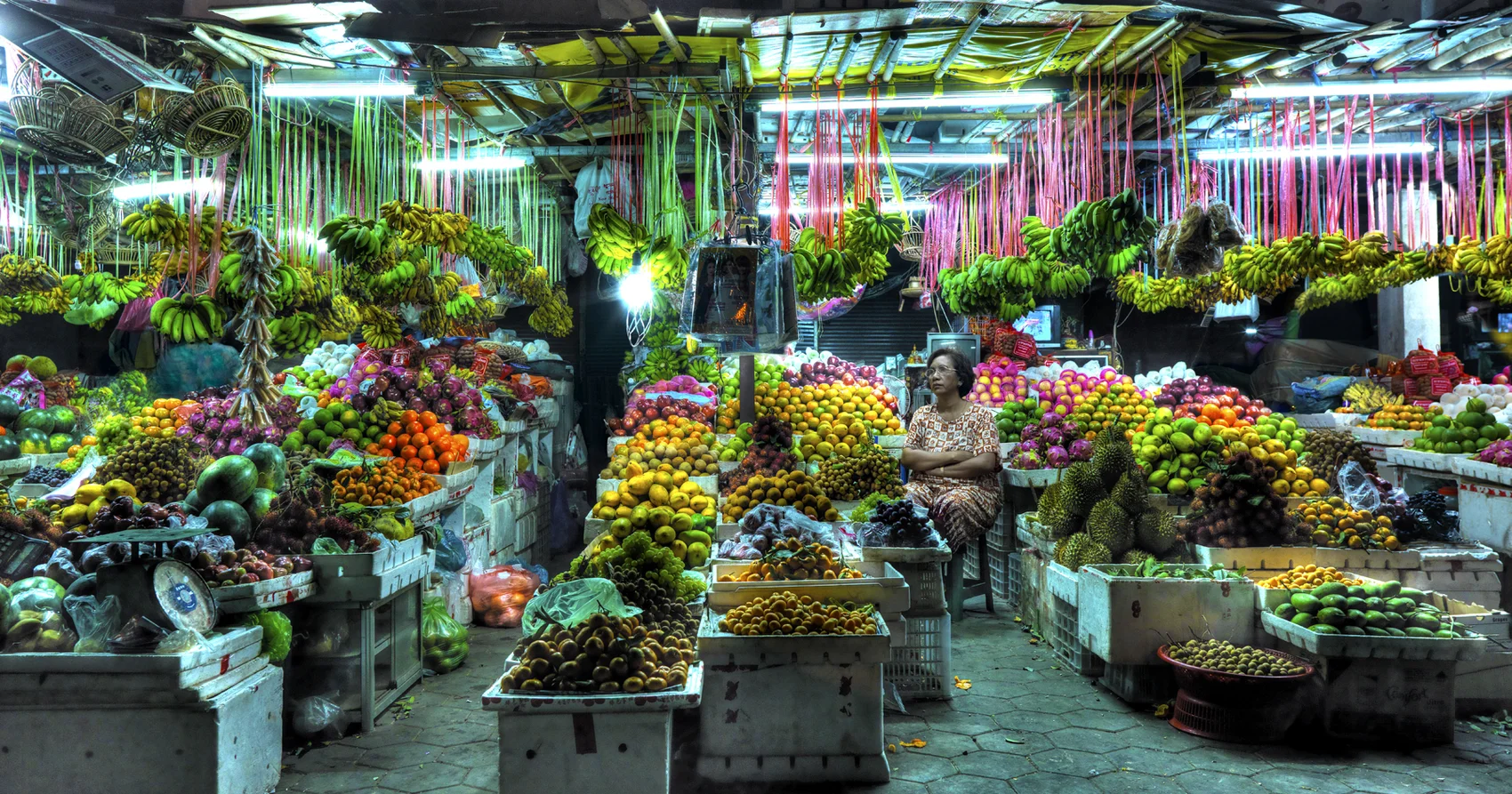
Fruit Market
Siem Reap, Cambodia – 2010
On his travels, Christian Voigt documented a fruit market in Cambodia. Siem Reap offers vibrant fruit markets, especially at Old Market (Psar Chas) for daily fresh picks and snacks like green mango with chili dip, and the Weekend Organic Market (Royal Independence Garden) for farm-fresh, organic produce. You’ll find tropical delights like mangosteen, rambutan, mangoes, and more, sold by locals for authentic taste experiences beyond fancy restaurants, perfect for sampling local flavors and buying fresh or dried fruits.
Lightjet Exposure on High Glossy Paper, Alu Dibond | Distance Frame, Tulipwood, Lacquered Matt Black, Museum Glass
- Framed Size: 35.8" x 62.9" in (91 x 160 cm) Edition size: 7
- Framed Size: 55.9" x 98.4" in (142 x 250 cm) - Edition size: 5
- Framed Size: 40.94" x 61.42" in (104 x 156 cm) - Edition of 7
We ship worldwide and use a multitude of providers to safely deliver your artwork. Domestic delivery and installation may also be available via Hilton Contemporary’s private art shuttle. Please inquire.
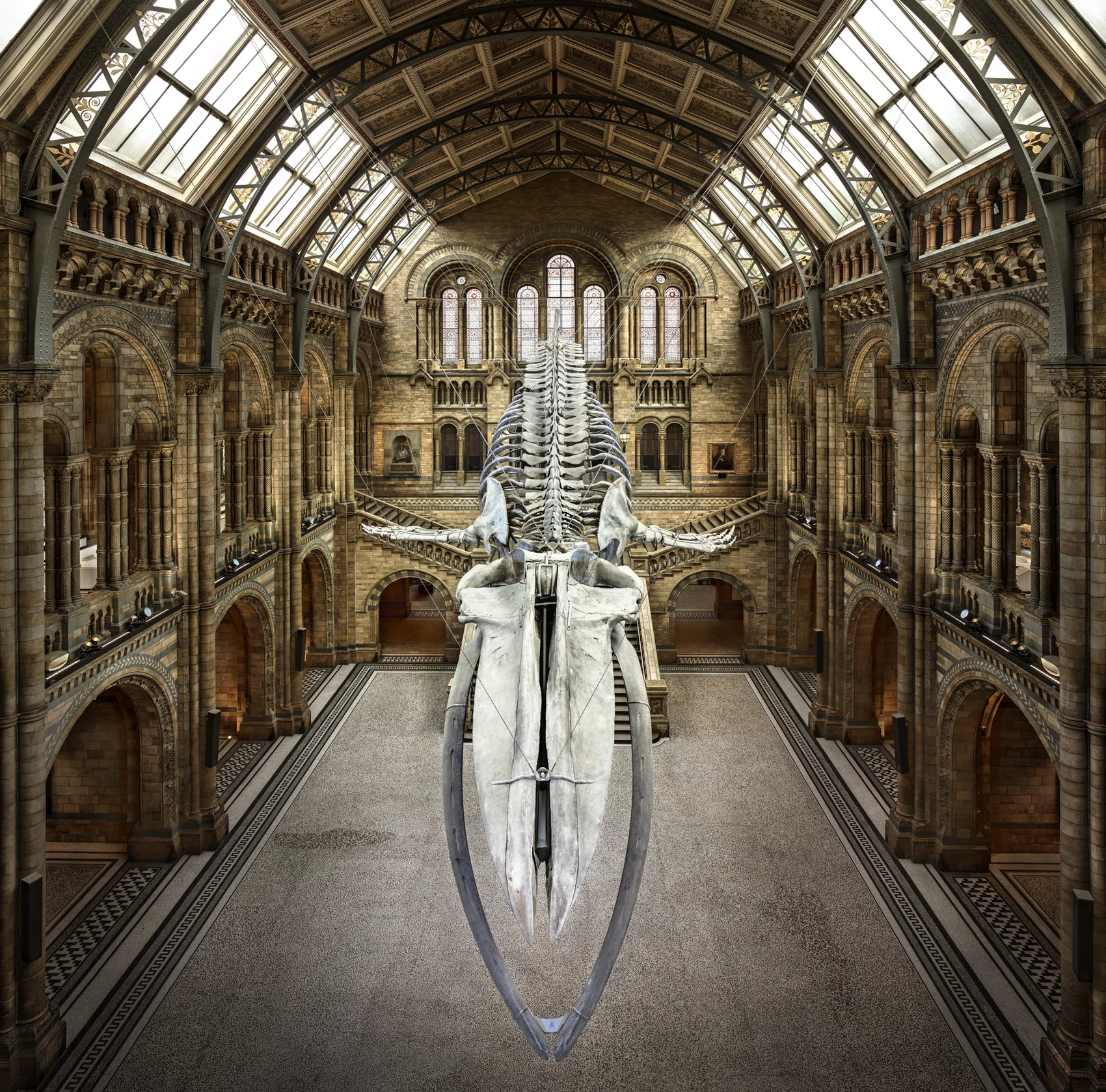
Balaenoptera Musculus
Natural History Museum, London, United Kingdom, 2017
This skeleton of a Blue Whale in the Natural History Museum of London represents the largest animal known to have ever existed and yet, one that feeds on only the smallest animals. Its diet consists almost exclusively of small crustaceans known as krill. This female Blue Whale skeleton has been named ‘Hope’ by the museum as a symbol of humanity’s power to shape a sustainable future. It is one of the first species that humans decided to save on a global scale. Consisting of 221 bones, it is hung in the exact diving lunge feeding position. This marine mammal can grow up to 29.9 meters (98 ft) in length and with the most significant recorded weight of 173 tons (190 short tons).
Lightjet Exposure on High Glossy Paper, Alu Dibond | Distance Frame, Tulipwood, Lacquered Matt Black, Museum Glass
- Framed Size: 66.9" x 66.9" in (170 x 170 cm) - Edition of 12
We ship worldwide and use a multitude of providers to safely deliver your masterpiece. Domestic delivery and installation may also be available via Hilton Asmus Contemporary’s private art shuttle. Please inquire.
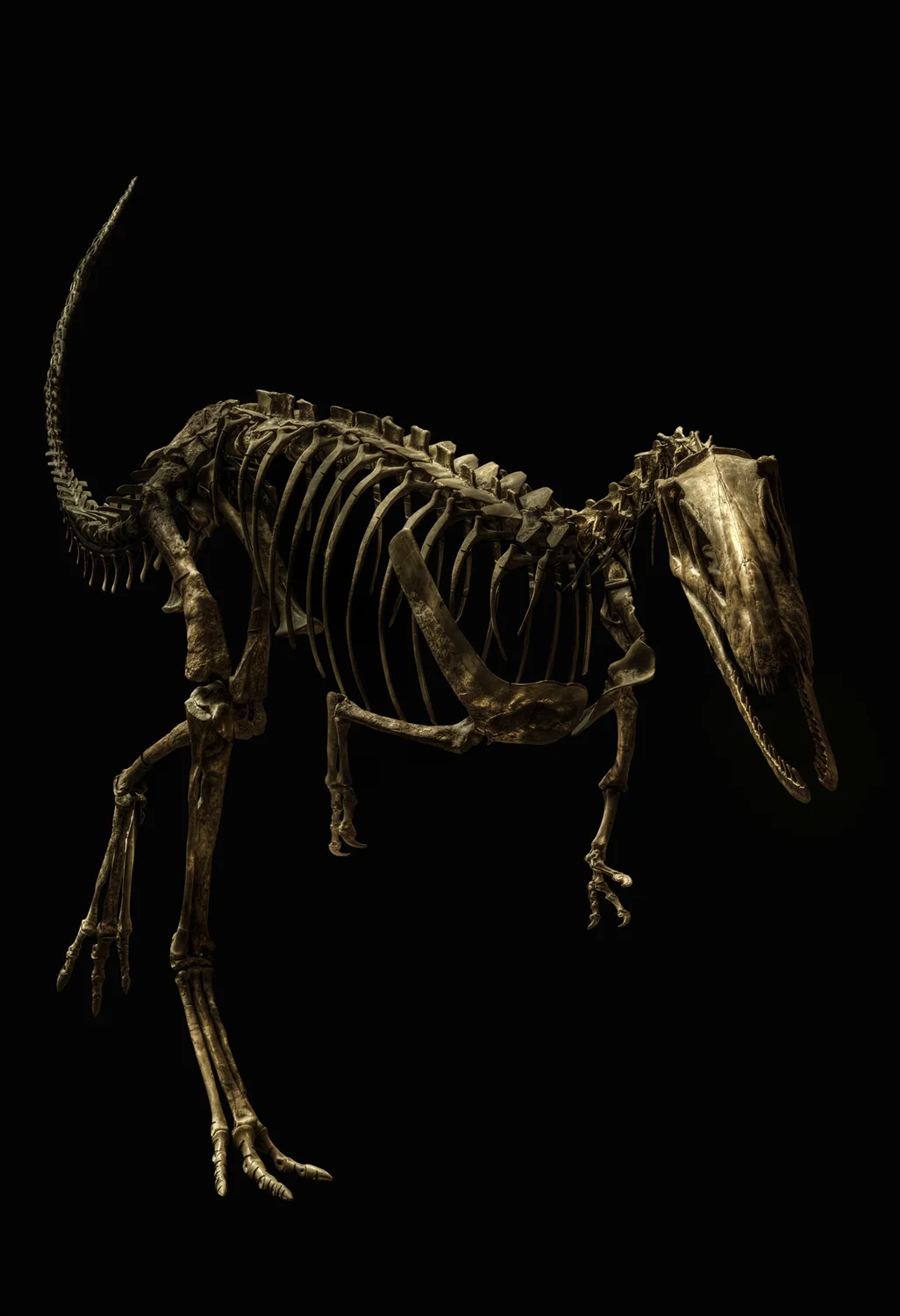
Elaphrosaurus Bambergi
Berlin – 2018
Elaphrosaurus is a genus of ceratosaurian theropod dinosaur that lived approximately 155 to 145 million years ago during the Late Jurassic Period in what is now Tanzania in Africa. Elaphrosaurus was a medium-sized but lightly built member of the group that could grow up to 6.2 m long.
The original skeleton of Elaphrosaurus bambergi, a light-footed theropod dinosaur from Tanzania, is housed and displayed at the Museum für Naturkunde (Natural History Museum) in Berlin, Germany, where its mounted skeleton is a key exhibit from the famous Tendaguru Expeditions. You can see the actual fossils and the reconstruction there, though the skull is missing, leading to different interpretations of its diet.
Lightjet Exposure on High Glossy Paper, Alu Dibond | Distance Frame, Tulipwood, Lacquered Matt Black, Museum Glass
- Framed Size: 83.86" x 61.02" in (213 x 155 cm) - Edition of 12
We ship worldwide and use a multitude of providers to safely deliver your artwork. Domestic delivery and installation may also be available via Hilton Contemporary’s private art shuttle. Please inquire.
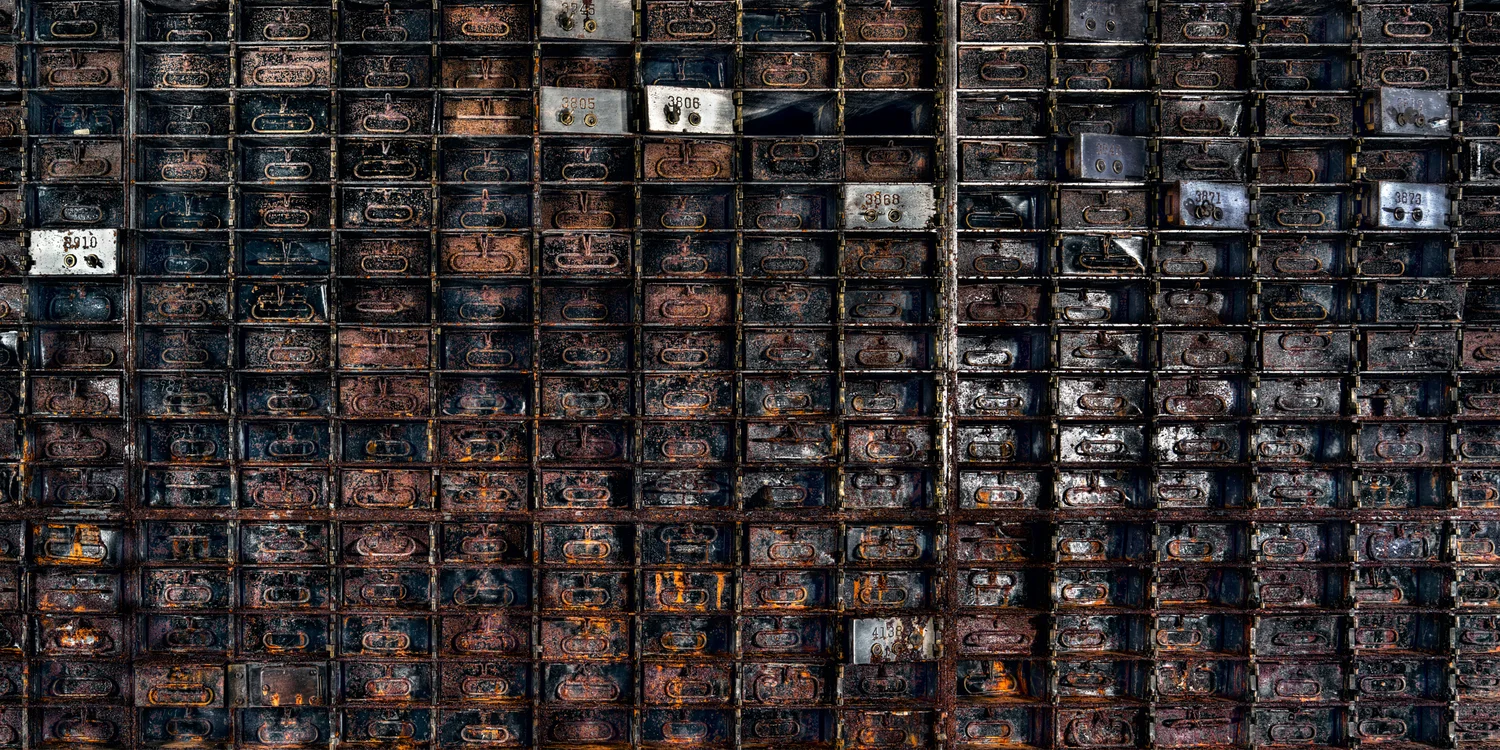
Safe 3280
Chicago, 2015
Banking secrets – An essay about the vault series by Christian Voigt
In the ‘Golden Twenties’, the vaults of the Mid-City Trust and Savings Bank on Chicago’s Near West Side must inevitably have harboured a fair quantity of dirty dollars. Following an extension in the year 1928, the bank shone out as a modern cathedral of high finance, with a light-bathed foyer redolent of power and money. It experienced its best days in the period when America was discovering the consumer culture, and nobody suspected that the Depression was just around the corner. Chicago shifted into the heady rhythm of jazz and the blues. Louis Armstrong was playing the country’s most advanced music in Chicago, and on Saturday evening crowds avid for entertainment flocked to legendary dance halls like the Aragon. Life was overblown and intoxicating, like one of Louis’s trumpet extravaganzas.
And it could be dangerous as well. Prohibition was in force between 1920 and 1933, and the smoky basement bar next door was open for illegal alcohol consumption on a daily basis. Irish and Italian gangs fought to the death for a market share of the enormously profitable bootlegging business. Al Capone, the best known of all Chicago’s hoodlums, was now the secret boss of the city. He actually popularised the term ‘money laundering’, when he invested his gigantic illegal takings in washeterias. So there must have been a whole lot of dirty money in circulation, and plenty of it will have ended up in the vaults of the Mid-City Bank. Half the city police took bribes from Capone’s underlings, and his backhanders made politicians and officials, up to and including the Mayor, bend to his bidding. Places like the Mid-City neighbourhood bank were universal clearing houses, bringing together members of the Socialist Party (which had its headquarters in the same building), local vegetable dealers and no doubt a fair number of gangsters eager to stow their bootlegging profits in the bank’s lockers.
Today the bank is no more. The original deposit boxes of the former vault, which Christian Voigt has copied in his monumental ‘Safe’, now contain nothing but rust and recollections of a former era. The original box – this simple metal container from the vault of the Mid-City Bank – would seem to be all that remains from those golden years. Entering the former vault of the decommissioned financial institute, the artist finds religious symbolism coming to mind. ‘The space is comparable with a Christian tabernacle – this is where in the old days they celebrated money as if it were a religion,’ says Christian Voigt. ‘Behind every deposit box there lurks a mysterious secret, a philosophy of moneymaking and accumulation and more than a few shady stories.’
Isn’t our whole idea of the past sometimes a bit like a room full of lockers? Each door conceals a little black box full of hidden recollections. Memory itself is a bank containing our most precious treasures and sinister secrets – all we have lived through in the way of experiences and emotions. With the right key, the right kind of access, this closely guarded world might open up to us and surrender the secrets it holds.
Lightjet Exposure on High Glossy Paper, Alu Dibond | Distance Frame, Tulipwood, Lacquered Matt Black, Museum Glass
- Framed Size: 48.8" x 88.2" in (124 x 224 cm) - Edition of 1
We ship worldwide and use a multitude of providers to safely deliver your artwork. Domestic delivery and installation may also be available via Hilton Contemporary’s private art shuttle. Please inquire.
Christian Voigt
Nothing found.
Christian Voigt
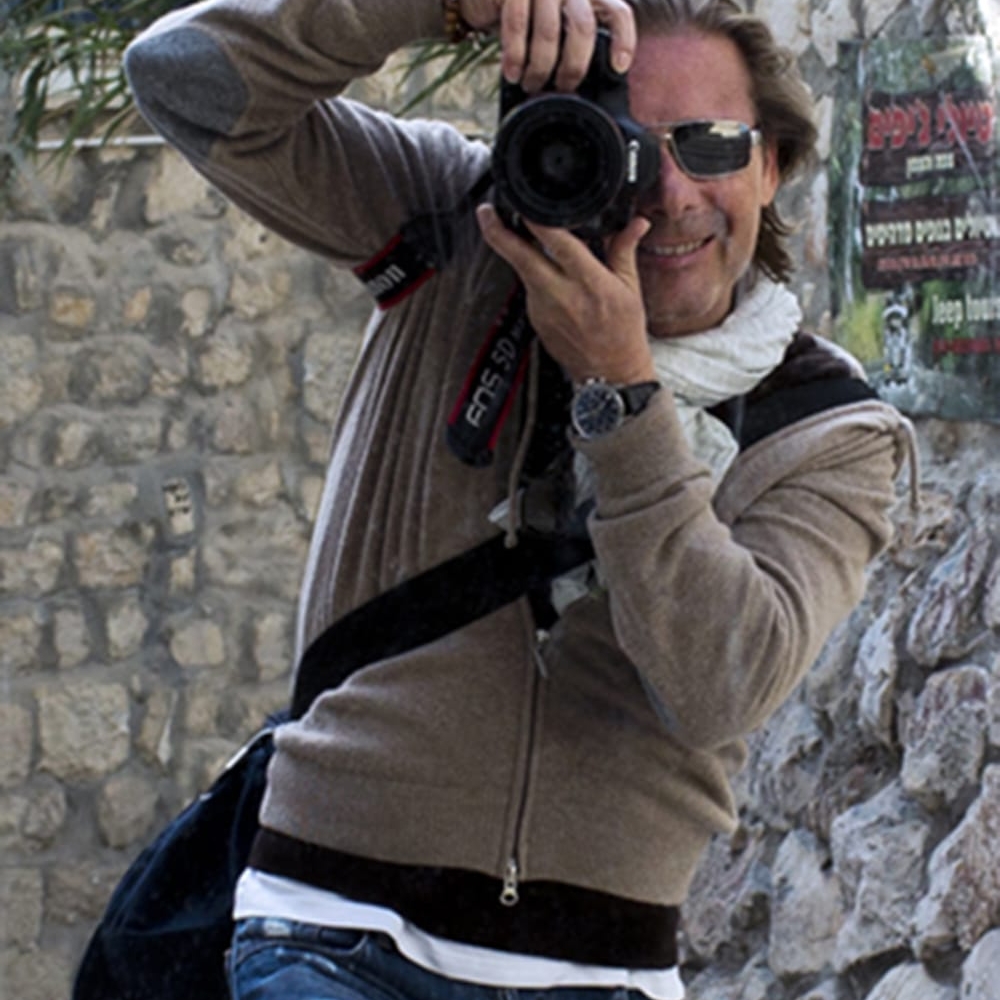
Born in Munich, Germany, Christian Voigt lives and works in Hamburg and The South of France. His current studio is situated in Hamburg.Christian Voigt works with large-format cameras, both digital and analogue. He experiments with new camera techniques and makes the best use of the digital medium. In the museum edition, his large-format pictures can measure as much as eight meters in width. But his strictly limited editions also come in sizes which customers and collectors can hang on walls of more modest sizes.
Christian Voigt has developed a language capable of telling new stories. He continually works to refine a pictorial idiom, the stories he wants to tell, the feelings he convey. This is visible in his pictures; Landscape and architecture are his principal areas of interest, but he also does portraits and nudes.
The travels associated with his projects and places call for concentration, for the ability to get to grips with people, with their history and their religion.
‘My pictures are created with the camera, not on the computer,’ he says, with a reference to the complicated technology and processing that goes into his creations. ‘But without the computer technology of today, the pictures couldn’t be crafted into their final form.’Solo shows and Art Fairs have been staged in Basel, Hamburg, New York, Los Angeles, London, Saint Tropez, Amsterdam, Madrid
Nothing found.
Nothing found.