
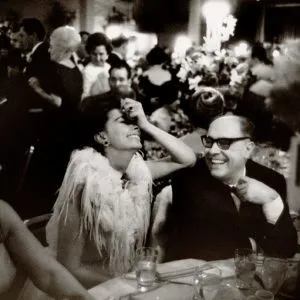
Sophia Loren and Carlo Ponti at the Academy Awards Dinner, 1962

Sophia Loren and Carlo Ponti at the Academy Awards Dinner, 1962
Sophia Loren and Carlo Ponti Academy Awards Dinner 1962 captures an intimate moment between one of cinema’s most iconic actresses and the influential producer who shaped much of her career. Photographed during an Academy Awards dinner in Hollywood, the image offers a rare glimpse into the social world behind the ceremony, where glamour softened into candid connection.
Sophia Loren appears relaxed and expressive, leaning back with an air of confidence and ease. Her posture reflects a woman fully aware of her place in cinema history, yet comfortable away from the spotlight of the stage. Carlo Ponti sits beside her, smiling with quiet satisfaction. His presence is understated but assured, reflecting his role as both creative partner and guiding force behind Loren’s international success.
The Academy Awards dinner was a pivotal space in Hollywood’s golden age. It functioned as a meeting ground for actors, directors, producers, and studio power brokers. In Sophia Loren and Carlo Ponti Academy Awards Dinner 1962, that environment is palpable. The background hum of conversation, formal attire, and table settings frames a moment that feels personal rather than performative.
This photograph speaks to the intersection of love, ambition, and artistry. Ponti was instrumental in helping Loren transition from Italian cinema to global stardom. By 1962, she had already become an international icon, and this image reflects the confidence of a career in full ascent. The relaxed intimacy between the pair suggests partnership rather than spectacle.
Compositionally, the photograph balances movement and stillness. Loren’s expressive pose contrasts with Ponti’s composed demeanor. The surrounding figures blur into atmosphere, drawing attention back to the central relationship. The soft lighting and grain emphasize texture and mood, anchoring the image firmly in its era.
As a limited edition photographic print, Sophia Loren and Carlo Ponti Academy Awards Dinner 1962 stands as a document of Hollywood history. It captures the quieter moments that shaped the industry as much as the awards themselves. The photograph preserves a fleeting exchange between two figures whose influence on cinema continues to resonate decades later.
Available sizes:
Limited Edition - Silver Gelatin Prints
- 16 x 20 inches
- 20 x 24 inches
- 30 x 40 inches
- 40 x 60 inches
We ship worldwide and use a multitude of providers to safely deliver your artwork. Domestic delivery and installation may also be available via Hilton Contemporary’s private art shuttle. Please inquire.

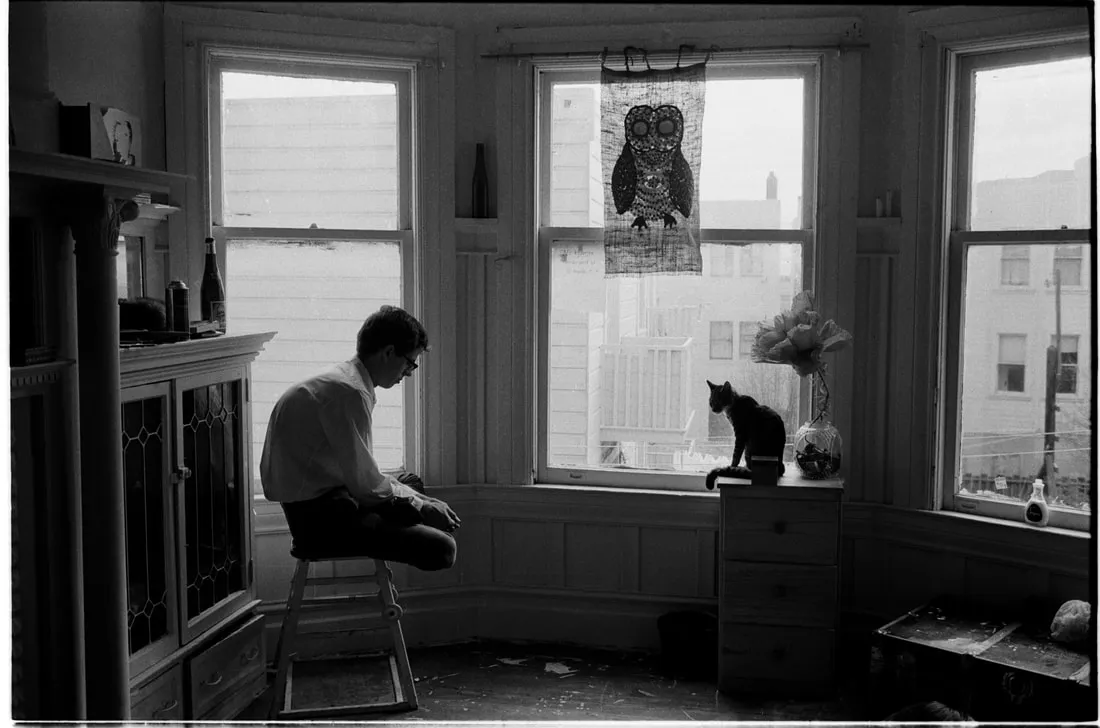
San Francisco Mathematician on LSD with His Cat, 1966
San Francisco Mathematician on LSD with His Cat, 1966
San Francisco LSD mathematician with cat 1966 is a rare and quietly unsettling photograph that captures the private interior of America’s psychedelic era. Taken inside a San Francisco apartment, the image shows a mathematician seated in stillness as his cat perches nearby. Both are participating in an LSD experience, part of a ritual the subject reportedly repeated every other week.
Unlike the public spectacles often associated with 1960s counterculture, this photograph documents an inward moment. There are no crowds, music, or visual theatrics. Instead, the scene unfolds in silence. The man sits hunched forward, absorbed in thought, while the cat gazes outward from the windowsill. Light filters through tall windows, framing the pair against the geometry of the room and the city beyond.
The photograph reflects the Bay Area’s unique role in the psychedelic movement. In San Francisco, LSD experimentation often intersected with academia, philosophy, and science. Mathematicians, engineers, artists, and writers explored altered states not as rebellion alone, but as tools for introspection, pattern recognition, and expanded perception. San Francisco LSD mathematician with cat 1966 embodies that quieter intellectual strain of the era.
The presence of the cat introduces an uncanny tension. Its calm posture mirrors the man’s stillness, blurring boundaries between human consciousness and animal instinct. The image raises questions without offering answers. Is the cat aware of the altered state? Is the ritual an experiment, a meditation, or a shared routine? The photograph allows space for interpretation rather than spectacle.
Compositionally, the image is restrained and deliberate. Strong vertical lines from the windows contrast with the soft organic forms of the seated figure and the animal. Objects in the room remain sparse, reinforcing the psychological isolation of the moment. Nothing distracts from the relationship between subject, space, and state of mind.
As a limited edition photographic print, San Francisco LSD mathematician with cat 1966 stands as an important historical document. It preserves an intimate side of the psychedelic era rarely seen in mainstream imagery. The photograph resists mythology and instead offers quiet observation, making it both unsettling and deeply human.
Available sizes:
Limited Edition - Silver Gelatin Prints
- 16 x 20 inches
- 20 x 24 inches
- 30 x 40 inches
- 40 x 60 inches
We ship worldwide and use a multitude of providers to safely deliver your artwork. Domestic delivery and installation may also be available via Hilton Contemporary’s private art shuttle. Please inquire.
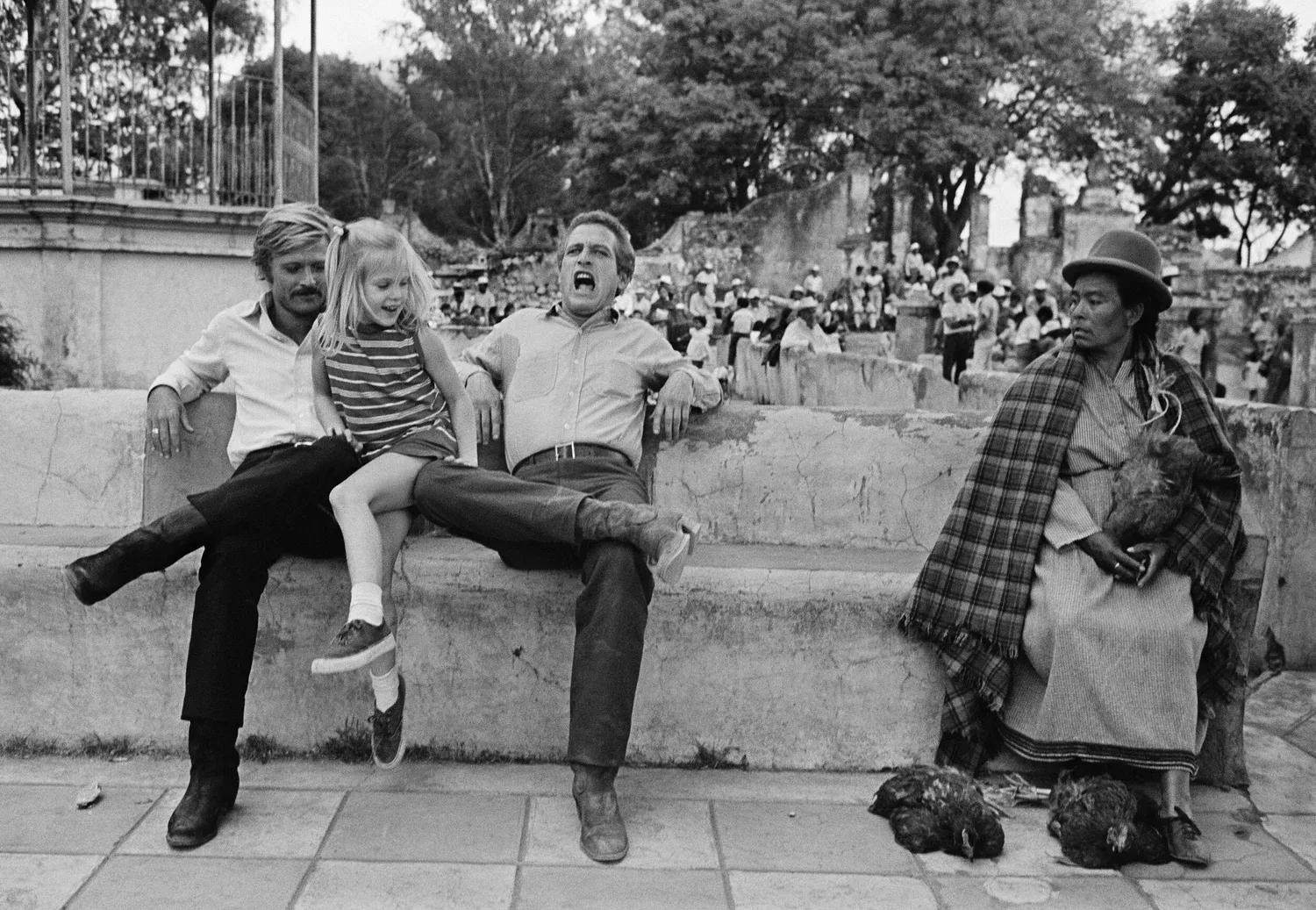
Robert Redford and Paul Newman on Set of Butch Cassidy, 1968
Robert Redford and Paul Newman on Set of Butch Cassidy, 1968
Robert Redford and Paul Newman Butch Cassidy 1968 captures an intimate and lighthearted moment between two of the most celebrated actors of their generation. Photographed in Durango, Mexico, during the production of Butch Cassidy and the Sundance Kid, the image shows Robert Redford and Paul Newman relaxing during a break on set, joined by Newman’s young daughter, Melissa.
The photograph was taken while the cast and crew paused from filming, revealing a candid glimpse behind the scenes of a landmark motion picture. Newman leans back casually, mid-expression, while Redford sits beside him, sharing the moment with ease and familiarity. Melissa Newman’s presence adds warmth and humanity, grounding the image in family life rather than performance or publicity.
Unlike staged promotional portraits, Robert Redford and Paul Newman Butch Cassidy 1968 conveys spontaneity and genuine camaraderie. The actors’ relaxed body language reflects the close bond that translated so powerfully to the screen. Their chemistry became one of the defining elements of the film and helped establish Butch Cassidy and the Sundance Kid as a cultural touchstone of late-1960s American cinema.
The setting in Durango, Mexico, played a crucial role in the film’s visual language. Its historic streets and open landscapes doubled for the American West and Bolivia, lending authenticity and texture to the story. This image situates the actors within that environment while pulling the viewer into an unguarded, human moment that exists beyond the narrative of the film itself.
Photographed for The London Sunday Times, the image also reflects a shift in editorial photography during the era. Publications increasingly favored honest, behind-the-scenes imagery over formal studio portraits. Lawrence Schiller’s approach emphasizes presence, timing, and emotional truth, allowing moments like this to unfold naturally.
As a limited edition photographic print, Robert Redford and Paul Newman Butch Cassidy 1968 stands as both a document of cinematic history and a portrait of friendship. It captures the intersection of family, work, and artistry at the height of New Hollywood, preserving a fleeting moment that continues to resonate with film lovers and collectors alike.
Available sizes:
Limited Edition - Silver Gelatin Prints
- 16 x 20 inches
- 20 x 24 inches
- 30 x 40 inches
- 40 x 60 inches
We ship worldwide and use a multitude of providers to safely deliver your artwork. Domestic delivery and installation may also be available via Hilton Contemporary’s private art shuttle. Please inquire.
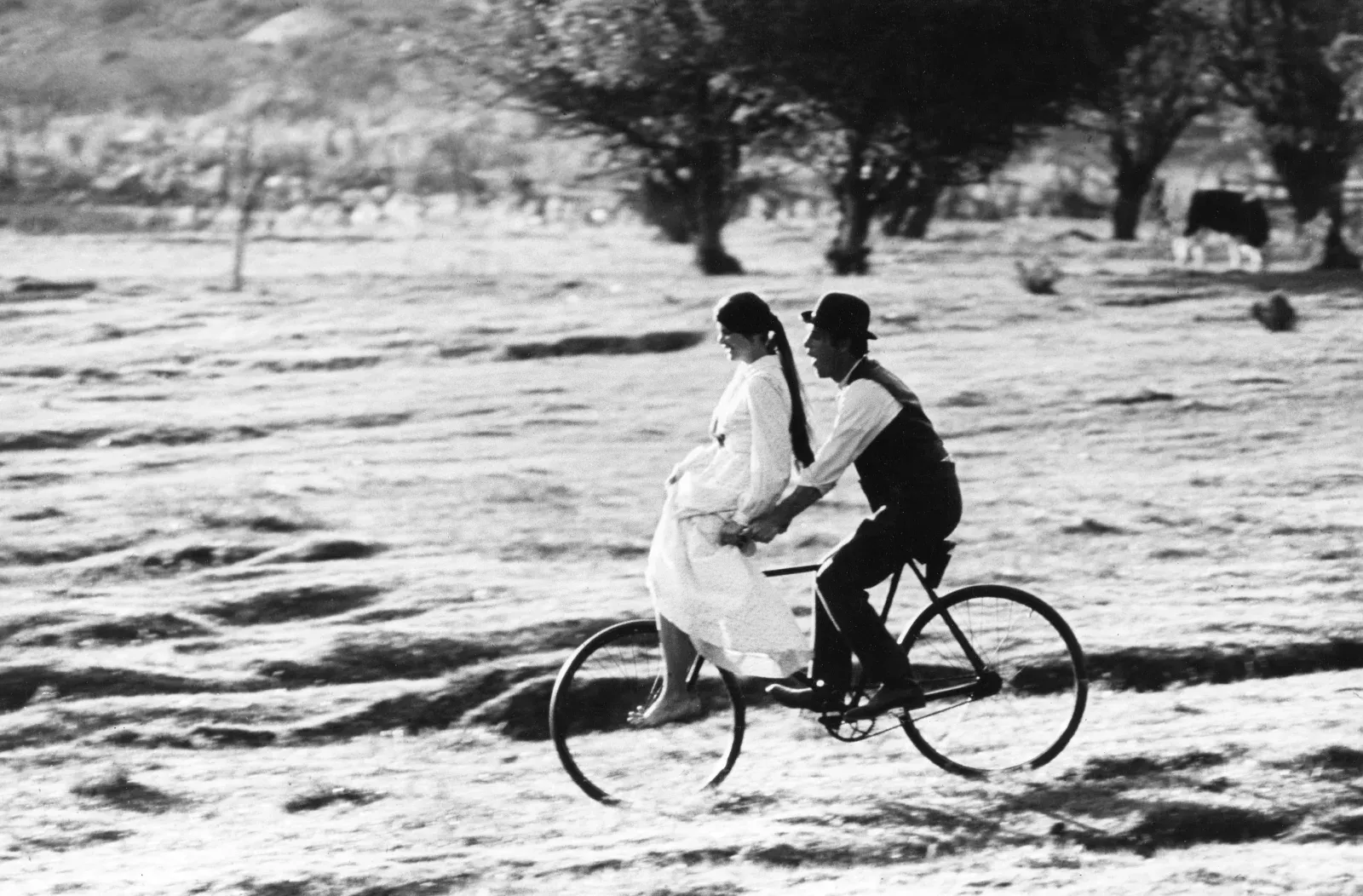
Paul Newman and Katharine Ross on Set of Butch Cassidy, 1968
Paul Newman and Katharine Ross on Set of Butch Cassidy, 1968
Paul Newman and Katharine Ross Butch Cassidy 1968 captures a rare and playful moment behind the scenes of one of the most celebrated films in American cinema. Photographed during the production of Butch Cassidy and the Sundance Kid, the image shows Paul Newman riding a bicycle while Katharine Ross sits casually on the handlebars. The photograph was taken in Mexico, where much of the film was shot in 1968.
The image reflects the easy chemistry that defined both the cast and the tone of the film. Newman, already an established star, brought charisma and humor to the role of Butch Cassidy. Ross, who portrayed Etta Place, added warmth and emotional depth. This candid moment mirrors the lightness and charm that made the film resonate with audiences worldwide.
Unlike formal publicity stills, Paul Newman and Katharine Ross Butch Cassidy 1968 feels spontaneous and unguarded. The open landscape stretches behind them, reinforcing the film’s themes of freedom, movement, and the fading myth of the Old West. The bicycle, an anachronistic and playful detail, underscores the off-camera nature of the moment and offers a glimpse into the relaxed atmosphere on set.
The photograph also speaks to a pivotal period in New Hollywood cinema. Butch Cassidy and the Sundance Kid would go on to redefine the Western genre, blending humor, modern sensibilities, and emotional nuance. The collaboration between Newman, Ross, and co-star Robert Redford became emblematic of a new era of filmmaking in the late 1960s.
As a limited edition photographic print, Paul Newman and Katharine Ross Butch Cassidy 1968 holds enduring appeal for film collectors and photography enthusiasts alike. It documents not only the making of a landmark film but also the human moments that occur between takes. The image stands as a timeless record of cinematic history, capturing joy, creativity, and the spirit of collaboration that helped shape one of the most beloved films of its generation.
Available sizes:
Limited Edition - Silver Gelatin Prints
- 16 x 20 inches
- 20 x 24 inches
- 30 x 40 inches
- 40 x 60 inches
We ship worldwide and use a multitude of providers to safely deliver your artwork. Domestic delivery and installation may also be available via Hilton Contemporary’s private art shuttle. Please inquire.
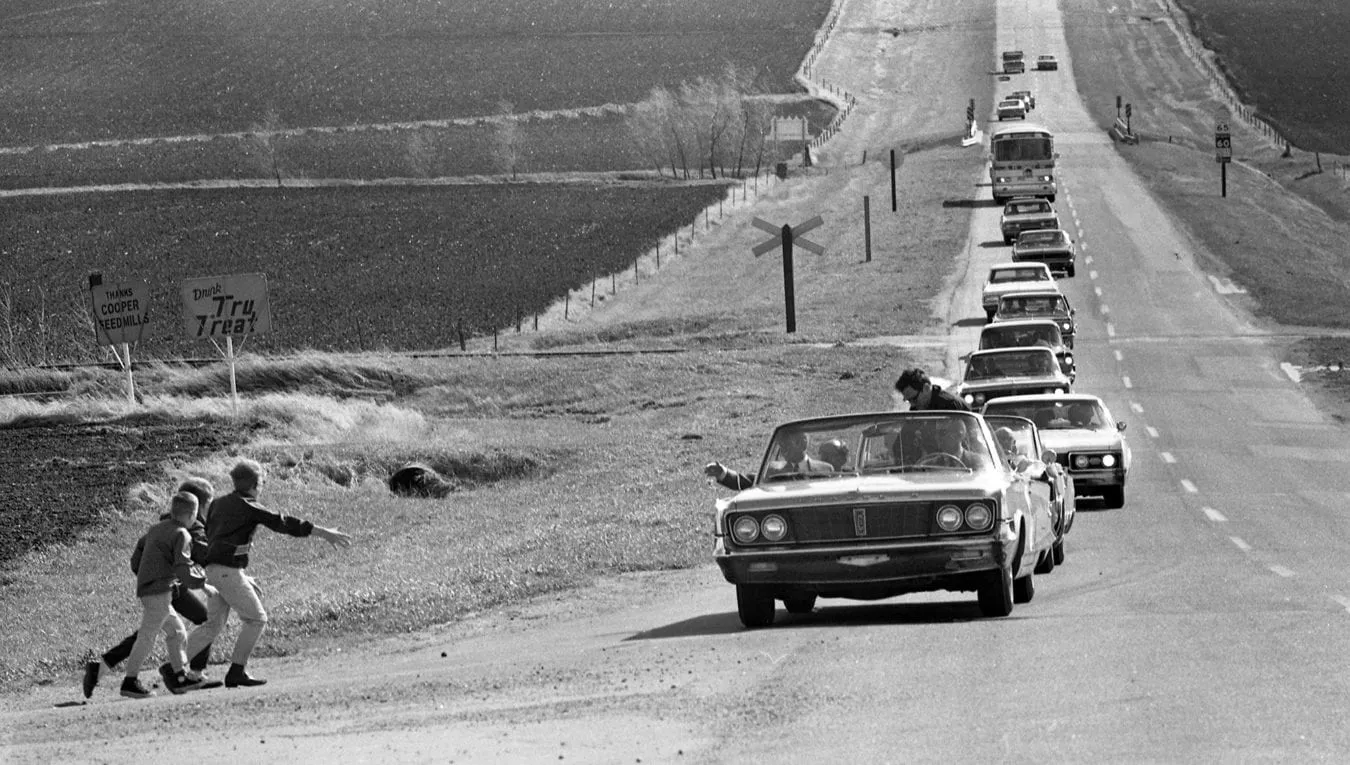
Robert F. Kennedy Campaigning, 1968
Robert F. Kennedy Campaigning, 1968
Robert F. Kennedy Campaigning 1968 captures a defining moment from one of the most consequential political campaigns in American history. Taken during his run for President of the United States, the photograph shows Robert F. Kennedy leaning from his car to greet supporters gathered along a rural roadside. The image reflects both the intimacy and urgency that defined his campaign.
The setting is unmistakably American. A long stretch of open road cuts through farmland as a line of cars follows closely behind Kennedy’s vehicle. Supporters run alongside, reaching out in spontaneous moments of connection. The composition emphasizes movement and momentum. Kennedy is not separated from the public by barriers or distance. Instead, he appears fully engaged, meeting voters face to face as his motorcade moves through the countryside.
The year 1968 was marked by political unrest, social change, and national grief. Kennedy’s campaign emerged during a period of deep division, following the assassination of his brother, President John F. Kennedy, and amid the escalating conflict in Vietnam. Robert F. Kennedy Campaigning 1968 reflects his belief that political leadership required presence, empathy, and direct engagement with ordinary citizens.
Unlike staged political imagery, this photograph feels immediate and unguarded. The supporters are not arranged. The road is not cleared. The moment unfolds naturally as Kennedy reaches outward, acknowledging individuals rather than crowds. This approach became a defining characteristic of his campaign and contributed to the powerful emotional connection many Americans felt toward him.
As a limited edition photographic print, Robert F. Kennedy Campaigning 1968 stands as both a historical document and a work of visual storytelling. It preserves the human dimension of a pivotal political movement and offers insight into Kennedy’s campaign style, which emphasized unity, social justice, and moral responsibility. The photograph remains a poignant reminder of a campaign that left a lasting imprint on American political history.
Available sizes:
Limited Edition - Silver Gelatin Prints
- 16 x 20 inches
- 20 x 24 inches
- 30 x 40 inches
- 40 x 60 inches
We ship worldwide and use a multitude of providers to safely deliver your artwork. Domestic delivery and installation may also be available via Hilton Contemporary’s private art shuttle. Please inquire.
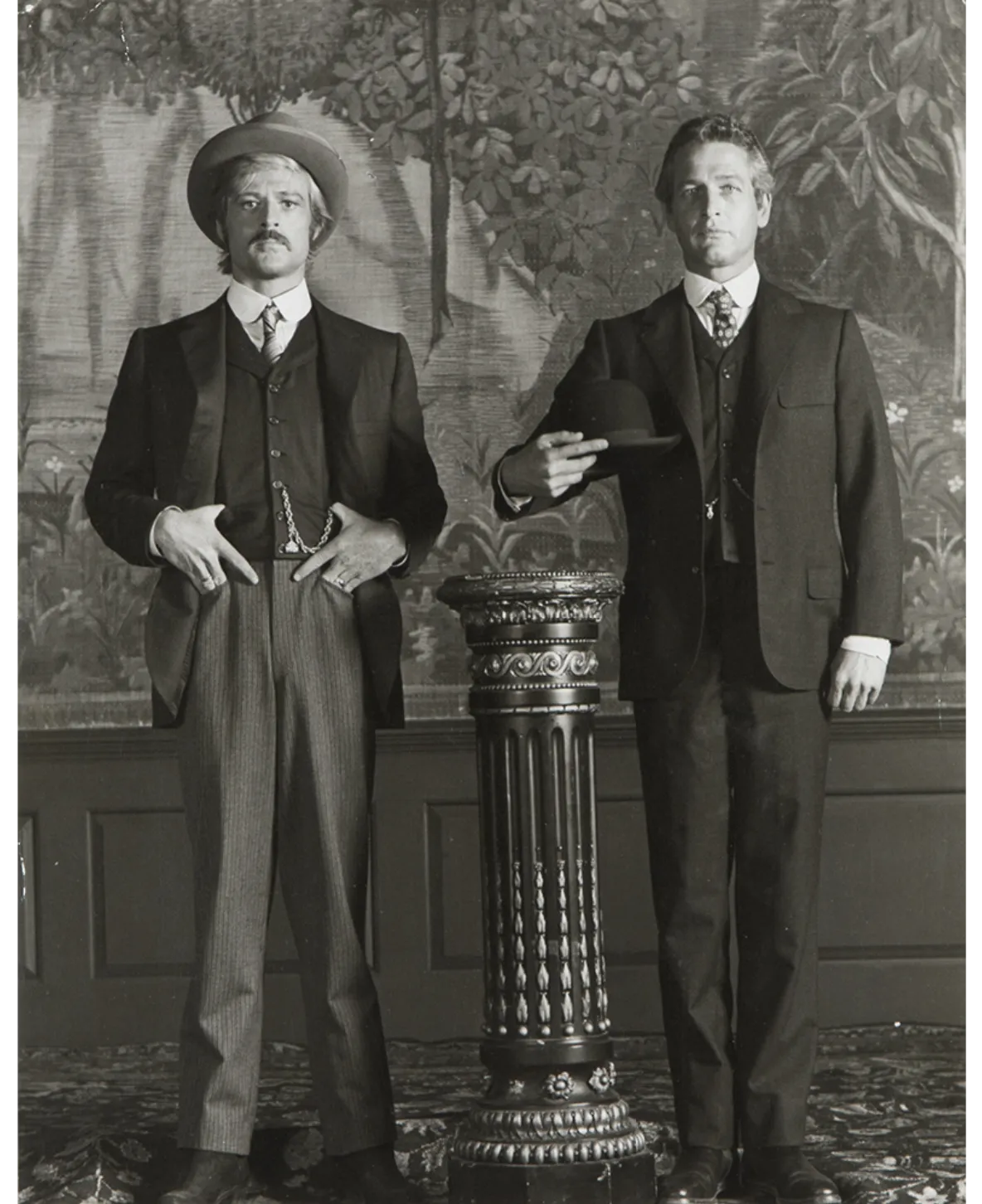
Paul Newman and Robert Redford, Butch Cassidy and the Sundance Kid, 1968
Paul Newman and Robert Redford, Butch Cassidy and the Sundance Kid, 1968
Paul Newman Robert Redford Butch Cassidy photo captures the two actors during production of Butch Cassidy and the Sundance Kid in 1968. Dressed in full period costume, Newman and Redford stand side by side, embodying the characters that would soon define one of the most celebrated partnerships in American film history.
Released in 1969, the film reimagined the Western genre through humor, style, and character-driven storytelling. Paul Newman’s portrayal of Butch Cassidy paired effortlessly with Robert Redford’s Sundance Kid, creating a dynamic that balanced charm, restraint, and quiet confidence. This photograph reflects that balance through its formal composition and understated expressions.
The studio-style backdrop and carefully arranged poses echo late nineteenth-century portrait photography. Their tailored suits, pocket watches, and hats reinforce the film’s historical setting while highlighting the actors’ distinct screen personas. Newman’s relaxed stance contrasts with Redford’s reserved posture, mirroring their on-screen relationship.
During the late 1960s, both actors stood at pivotal moments in their careers. Newman had already established himself as a leading man, while Redford emerged as a new Hollywood star. Butch Cassidy and the Sundance Kid elevated Redford’s career and cemented their status as an iconic duo.
Today, Paul Newman Robert Redford Butch Cassidy photo remains a sought-after image among film collectors and classic cinema enthusiasts. It represents a defining moment in Hollywood history and preserves the quiet confidence of two actors whose collaboration helped reshape the modern Western.
Available sizes:
Limited Edition - Silver Gelatin Prints
- 16 x 20 inches
- 20 x 24 inches
- 30 x 40 inches
- 40 x 60 inches
We ship worldwide and use a multitude of providers to safely deliver your artwork. Domestic delivery and installation may also be available via Hilton Contemporary’s private art shuttle. Please inquire.
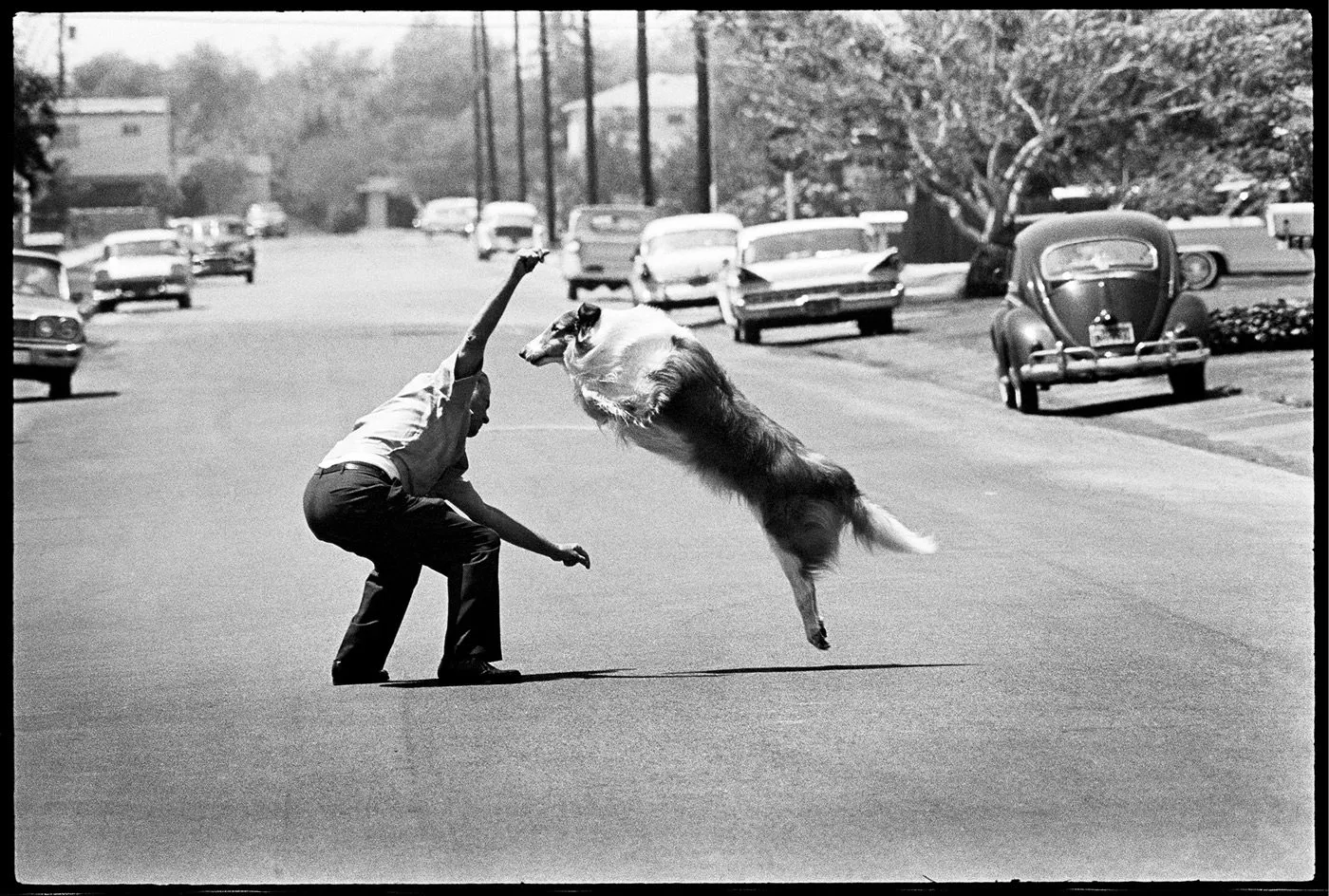
Frank Inn Training Lassie, 1964
Frank Inn Training Lassie, 1964
Frank Inn Training Lassie captures a rare behind-the-scenes moment from the golden age of American television and magazine photojournalism. Taken in 1964 during a commissioned shoot for the Saturday Evening Post, the photograph documents renowned animal trainer Frank Inn working with Lassie, the legendary collie who became one of the most recognizable animal actors in entertainment history.
The image freezes an instant of precise movement and trust. Lassie is suspended midair, leaping toward Inn as he braces himself in the center of a quiet suburban street. Parked cars line the road, anchoring the scene in everyday American life. The ordinary setting contrasts sharply with the extraordinary athleticism and discipline on display. This juxtaposition gives the photograph its enduring power.
Frank Inn was instrumental in shaping Lassie’s on-screen legacy. Known for his calm authority and deep bond with the animals he trained, Inn emphasized communication and repetition rather than spectacle. Frank Inn Training Lassie reflects that philosophy. The trainer’s posture is focused and deliberate. Lassie’s form is confident and controlled. Every element of the frame reinforces the collaboration between human and animal.
During the 1960s, the Saturday Evening Post often highlighted stories that celebrated craftsmanship, professionalism, and American ingenuity. This image fits squarely within that editorial tradition. It offers viewers insight into the unseen labor behind beloved television characters. Lassie appears not as a fictional hero, but as a working performer guided by years of training and trust.
As a limited edition print, Frank Inn Training Lassie stands as both a cultural artifact and a work of photographic art. It documents a pivotal era when magazine photography shaped public perception of entertainment, animals, and suburban life. More than a simple training exercise, the photograph honors the discipline and partnership that made Lassie an enduring symbol of loyalty and intelligence in American popular culture.
Available sizes:
Limited Edition - Silver Gelatin Prints
- 16 x 20 inches
- 20 x 24 inches
- 30 x 40 inches
- 40 x 60 inches
We ship worldwide and use a multitude of providers to safely deliver your artwork. Domestic delivery and installation may also be available via Hilton Contemporary’s private art shuttle. Please inquire.
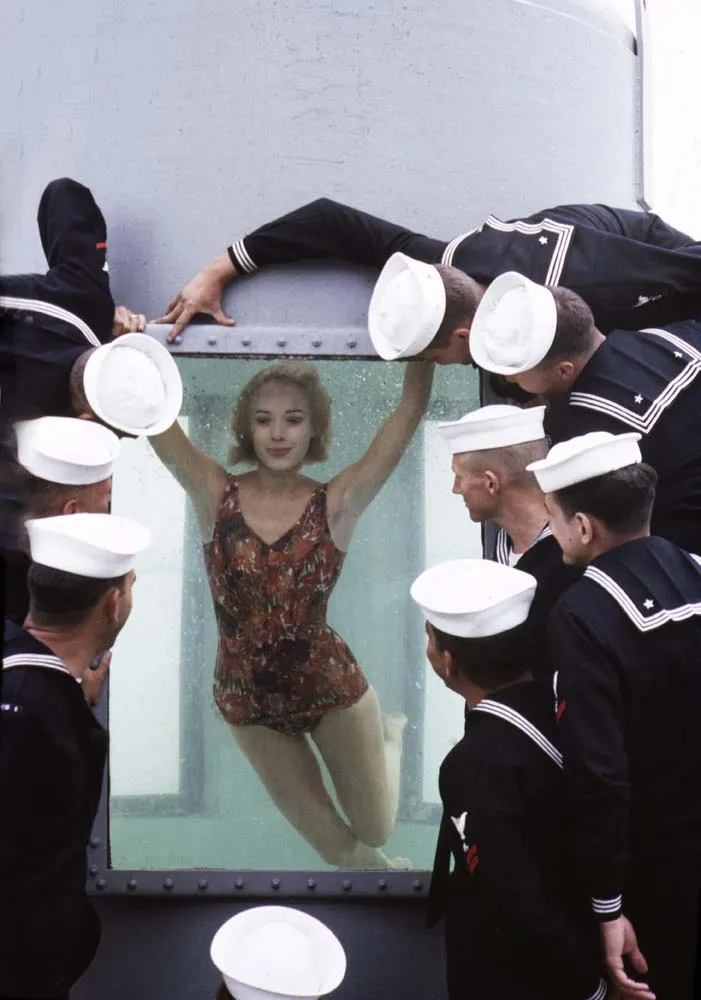
New Recruit, Girl in the Tube, 1964
New Recruit, Girl in the Tube, 1964
New Recruit Girl in the Tube is a striking and emblematic photograph taken in 1964 at the Naval Amphibious Training Base in San Diego, California. Created for publication in the Saturday Evening Post, the image reflects a moment when American popular media blended patriotism, spectacle, and visual storytelling into a single frame.
The photograph centers on a young woman submerged inside a transparent water tank while surrounded by uniformed U.S. Navy sailors. Their white caps form a visual ring around the glass enclosure, drawing the viewer’s attention inward. The composition is carefully balanced. The rigid geometry of the tank contrasts with the organic movement of the water and the relaxed posture of the woman inside. This tension between control and display defines the image.
During the early 1960s, the Saturday Evening Post frequently commissioned images that conveyed idealized views of American life, military pride, and cultural optimism. New Recruit Girl in the Tube fits squarely within that tradition. While playful in tone, the photograph also reflects broader themes of performance, observation, and mid-century media aesthetics. The sailors’ gazes turn the scene into a staged moment, blurring the line between documentation and entertainment.
The setting at the Naval Amphibious Training Base grounds the image in a real military environment. Yet the scenario itself is clearly orchestrated for the camera. This duality is part of what makes the photograph enduring. It captures not only a specific place and time, but also the visual language of American magazine culture in the 1960s.
As a limited edition print, New Recruit Girl in the Tube remains a compelling artifact of postwar visual history. It speaks to an era when magazines shaped national identity through bold imagery and carefully composed narratives. Today, the photograph invites viewers to reflect on how media, gender, and spectacle intersected during a formative period in American culture.
Available sizes:
Limited Edition - Silver Gelatin Prints
- 16 x 20 inches
- 20 x 24 inches
- 30 x 40 inches
- 40 x 60 inches
We ship worldwide and use a multitude of providers to safely deliver your artwork. Domestic delivery and installation may also be available via Hilton Contemporary’s private art shuttle. Please inquire.
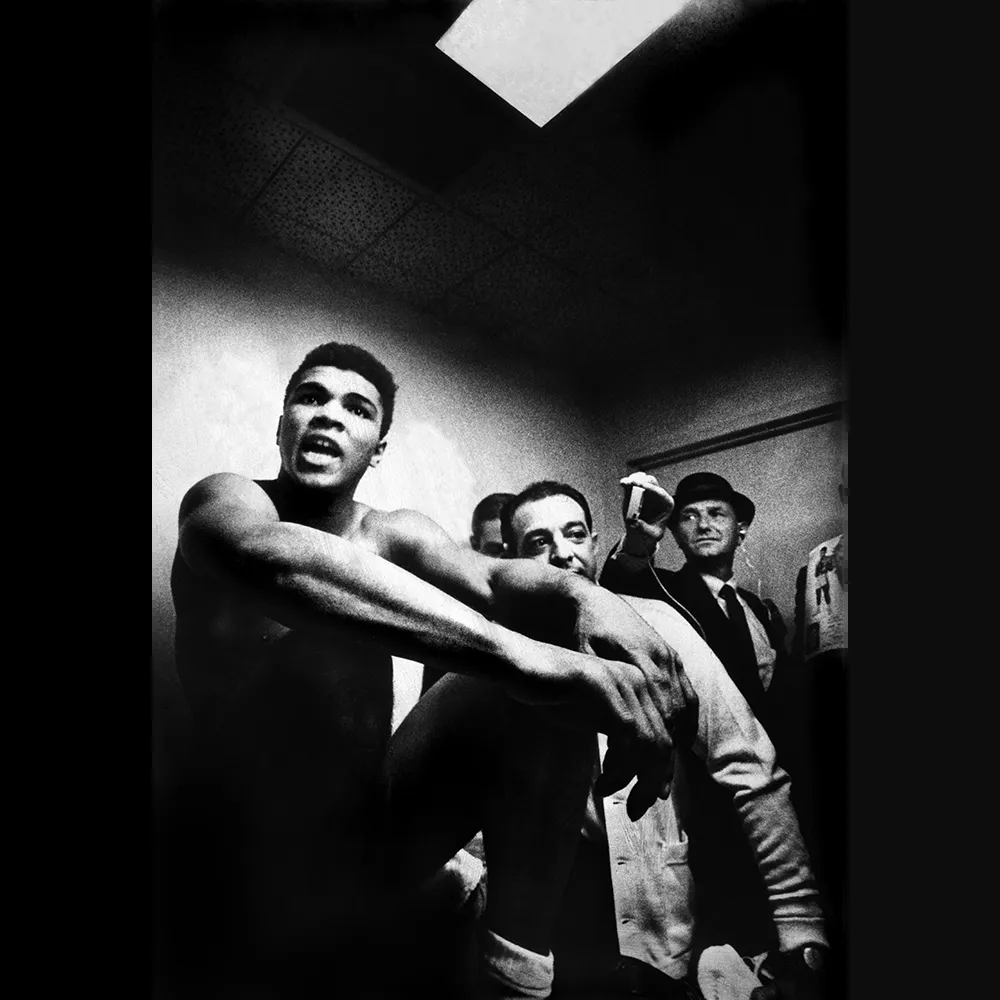
Muhammad Ali After Defeating Floyd Patterson, 1965
Muhammad Ali After Defeating Floyd Patterson, 1965
Muhammad Ali after defeating Floyd Patterson captures a rare and intimate moment immediately following one of the most significant victories of Ali’s early career. Photographed in Las Vegas in 1965, this image shows the heavyweight champion seated in his dressing room moments after securing the World Heavyweight Boxing Title. Removed from the roar of the crowd, Ali appears reflective, energized, and fully present in the aftermath of triumph.
At the time this photograph was taken, Muhammad Ali was redefining what it meant to be a champion. His athletic brilliance was matched by his charisma, political conviction, and cultural influence. The victory over Floyd Patterson marked a turning point, not only in Ali’s boxing legacy but also in his emergence as a global figure whose impact extended far beyond the ring.
Lawrence Schiller’s photograph strips away spectacle and ceremony. There are no flashing lights or raised belts. Instead, Ali’s posture and expression convey intensity and self-awareness. His body still bears the physical cost of the fight, yet his presence dominates the room. The surrounding figures fade into the background, emphasizing Ali as both athlete and individual at a moment of transition.
The composition reinforces the psychological weight of victory. Ali’s forward-leaning pose and open expression suggest both exhaustion and exhilaration. The image feels unguarded, offering a glimpse into the private space of a public figure at the precise moment when history settles in. This balance between strength and vulnerability defines much of Schiller’s work during this period.
As a limited edition photograph, Muhammad Ali after defeating Floyd Patterson stands as a powerful document of sports history and American culture in the mid-1960s. It captures Ali not as a distant icon, but as a man absorbing the magnitude of his achievement. The photograph remains one of the most compelling behind-the-scenes portraits of a champion at the height of transformation.
Available sizes:
Limited Edition - Silver Gelatin Prints
- 16 x 20 inches
- 20 x 24 inches
- 30 x 40 inches
- 40 x 60 inches
We ship worldwide and use a multitude of providers to safely deliver your artwork. Domestic delivery and installation may also be available via Hilton Contemporary’s private art shuttle. Please inquire.
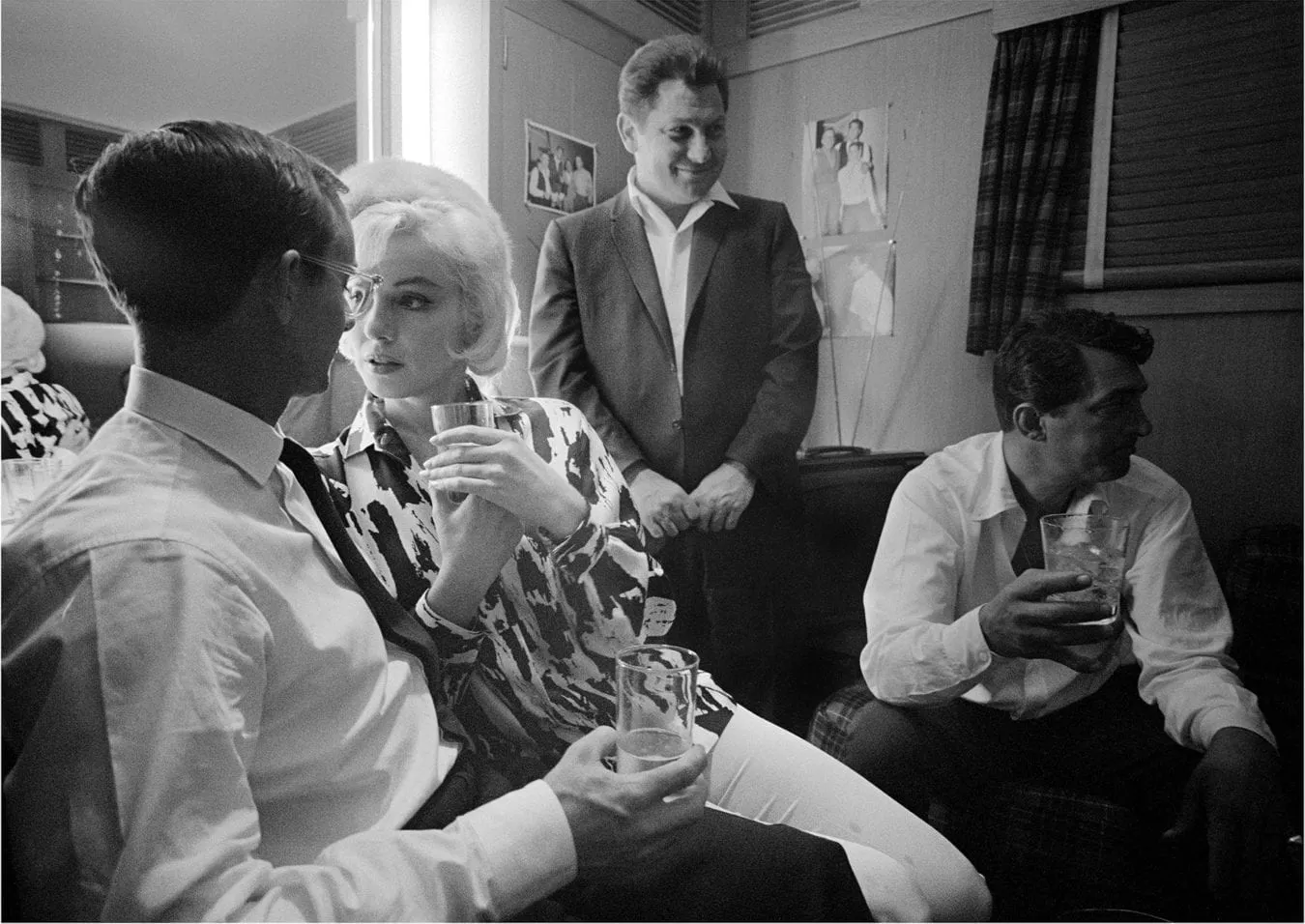
Marilyn Monroe Celebrating Her 36th Birthday, 1962
Marilyn Monroe Celebrating Her 36th Birthday, 1962
Marilyn Monroe celebrating her 36th birthday, 1962 captures a rare behind-the-scenes moment from the final film of her career, Something’s Got to Give. Photographed during a break in filming, the image shows Monroe seated closely with her co-stars, including Dean Martin, as they gather in a relaxed interior space. Drinks are raised. Conversation flows easily. The atmosphere feels informal and unguarded.
This photograph stands apart from Monroe’s highly stylized publicity portraits. Here, she appears present rather than posed. Her expression is attentive. Her body language is open. The camera records a fleeting moment of connection rather than performance. It is a glimpse into the off-screen world that surrounded Marilyn Monroe during one of the most turbulent periods of her life.
Taken in 1962, the image carries historical weight. Something’s Got to Give was never completed. Monroe died just months after this photograph was made. As a result, Marilyn Monroe celebrating her 36th birthday, 1962 has come to represent more than a simple celebration. It documents the last moments of camaraderie on a set that would soon become legendary for its collapse.
Lawrence Schiller’s approach is quiet and observational. He does not interrupt the moment. He allows the scene to unfold naturally. The composition draws the viewer into the group, making the photograph feel intimate rather than distant. Monroe remains the emotional center of the image, yet she is not isolated. She is part of a shared experience.
This photograph reflects the duality that defined Monroe’s public life. She was both an international icon and a woman searching for normalcy. The setting is modest. The celebration is subdued. There is no spectacle. That restraint gives the image its lasting power.
Today, Marilyn Monroe celebrating her 36th birthday, 1962 stands as a poignant visual record of Monroe’s final year. It preserves a moment of warmth, connection, and humanity. The photograph reminds us that even at the height of fame, Marilyn Monroe’s most compelling moments often occurred away from the spotlight.
Available sizes:
Limited Edition - Silver Gelatin Prints
- 16 x 20 inches
- 20 x 24 inches
- 30 x 40 inches
- 40 x 60 inches
We ship worldwide and use a multitude of providers to safely deliver your artwork. Domestic delivery and installation may also be available via Hilton Contemporary’s private art shuttle. Please inquire.