
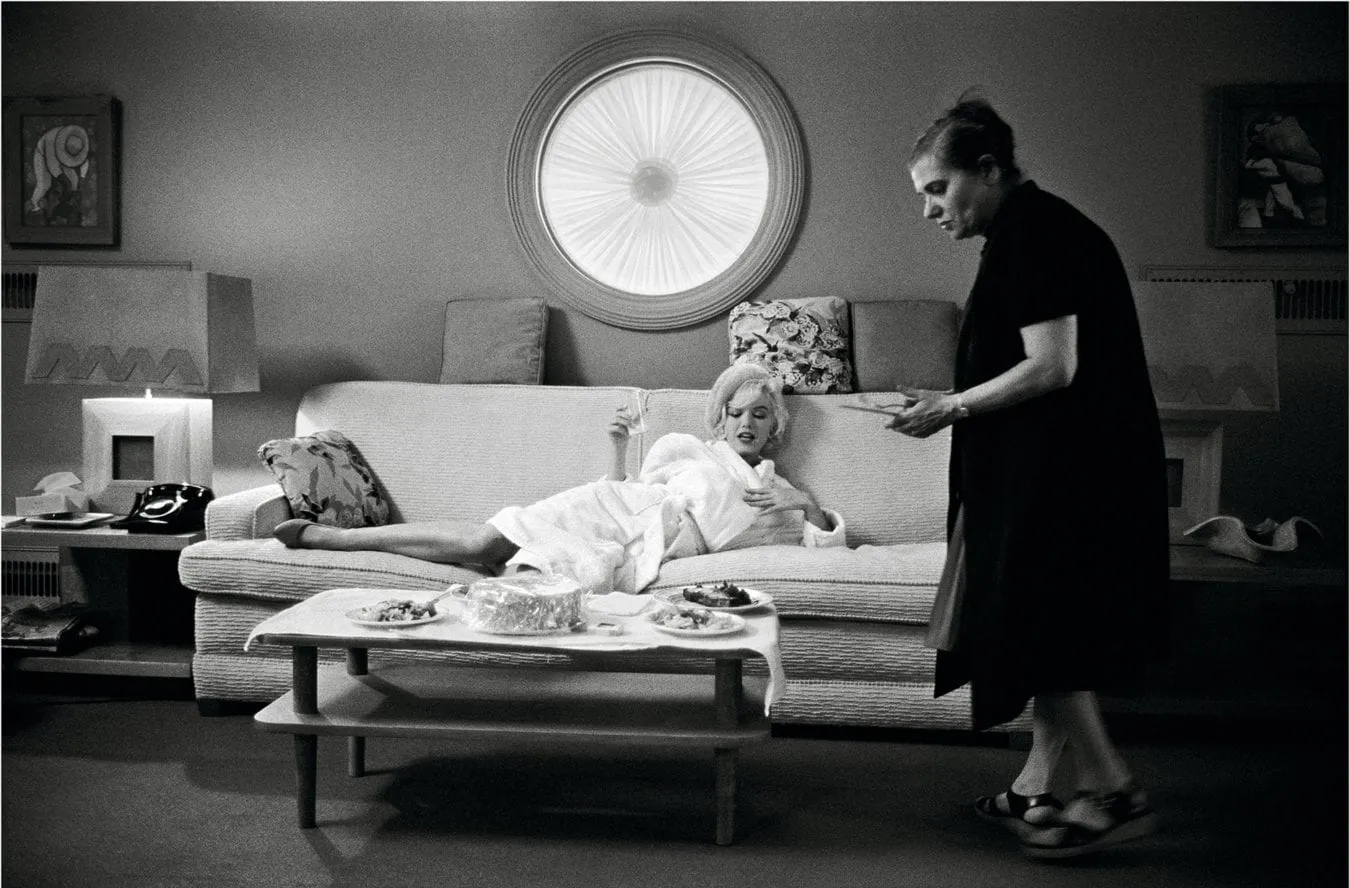
Marilyn Monroe and Paula Strasberg, 1962

Marilyn Monroe and Paula Strasberg, 1962
Marilyn Monroe and Paula Strasberg 1962 captures a rare and deeply intimate moment from the final chapter of Marilyn Monroe’s life. Photographed just months before her death, the image shows Monroe in a private interior, reclining on a sofa while Paula Strasberg, her longtime acting coach and confidante, stands nearby. The scene is quiet. The mood is restrained. There is no performance taking place.
This photograph strips away the constructed image of Marilyn Monroe as a Hollywood icon. In its place, it reveals a woman seeking stability, reassurance, and human connection. Monroe appears vulnerable and withdrawn. She is dressed casually, wrapped in a robe, holding a drink. Her posture suggests exhaustion rather than glamour.
Paula Strasberg played a crucial role in Monroe’s later years. As her acting coach and emotional anchor, Strasberg was often present on film sets, rehearsals, and private moments alike. Their relationship was both professional and deeply personal. Strasberg provided Monroe with a sense of security at a time when the pressures of fame, studio expectations, and personal struggles were overwhelming.
The photograph’s power lies in its stillness. Nothing dramatic unfolds. Yet the emotional weight is unmistakable. Monroe is not performing for the camera. She is simply existing. Strasberg’s presence reinforces the sense of dependence and trust that defined their bond.
Taken in 1962, Marilyn Monroe and Paula Strasberg 1962 now reads as a historical document as much as a portrait. It reflects the isolation Monroe experienced during her final months. The image offers a glimpse into the private spaces where Hollywood mythology dissolves.
This photograph stands as a reminder that behind the world’s most recognizable face was a woman grappling with vulnerability, fatigue, and the need for support. Marilyn Monroe and Paula Strasberg 1962 remains one of the most honest visual records of Monroe’s final year, capturing not fame, but fragility.
Available sizes:
Limited Edition - Silver Gelatin Prints
- 16 x 20 inches
- 20 x 24 inches
- 30 x 40 inches
- 40 x 60 inches
We ship worldwide and use a multitude of providers to safely deliver your artwork. Domestic delivery and installation may also be available via Hilton Contemporary’s private art shuttle. Please inquire.

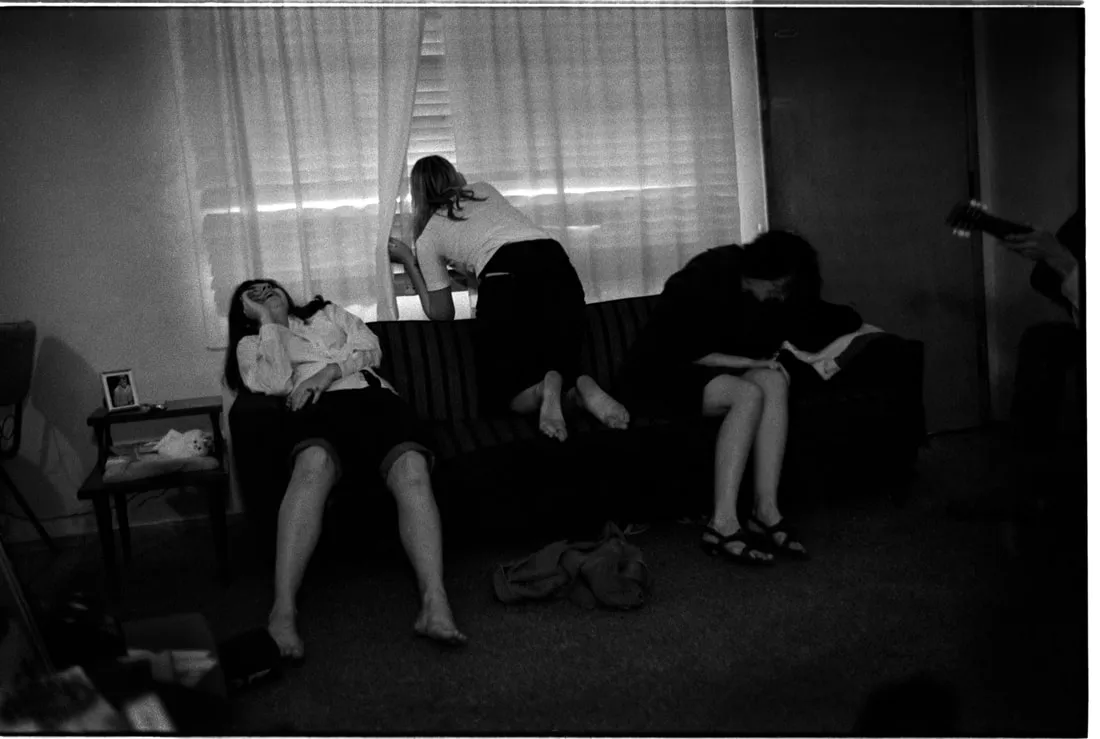
Morning After LSD in Hollywood Apartment, 1965
Morning After LSD in Hollywood Apartment, 1965
Morning after LSD Hollywood 1965 documents the quiet, unguarded hours following a long night on the Sunset Strip. The photograph was taken inside a small apartment in Hollywood, just as the effects of the night began to fade.
Several figures rest across a couch. Shoes are abandoned. Bodies are slumped. One person leans toward the window, searching for daylight. The room feels heavy and still.
There is no spectacle left. The intensity has passed. What remains is exhaustion, silence, and the emotional residue of the experience.
Photographed by Lawrence Schiller in 1965, the image reflects the private side of the psychedelic era. It avoids performance and mythology. Instead, it shows reality as it unfolds the next morning.
The composition is intimate and observational. Schiller does not intervene. He allows the moment to exist as it is.
Morning after LSD Hollywood 1965 stands as a rare document of counterculture life away from crowds and music. It captures the human cost of excess and experimentation during a defining moment in American cultural history.
Available sizes:
Limited Edition - Silver Gelatin Prints
- 16 x 20 inches
- 20 x 24 inches
- 30 x 40 inches
- 40 x 60 inches
We ship worldwide and use a multitude of providers to safely deliver your artwork. Domestic delivery and installation may also be available via Hilton Contemporary’s private art shuttle. Please inquire.
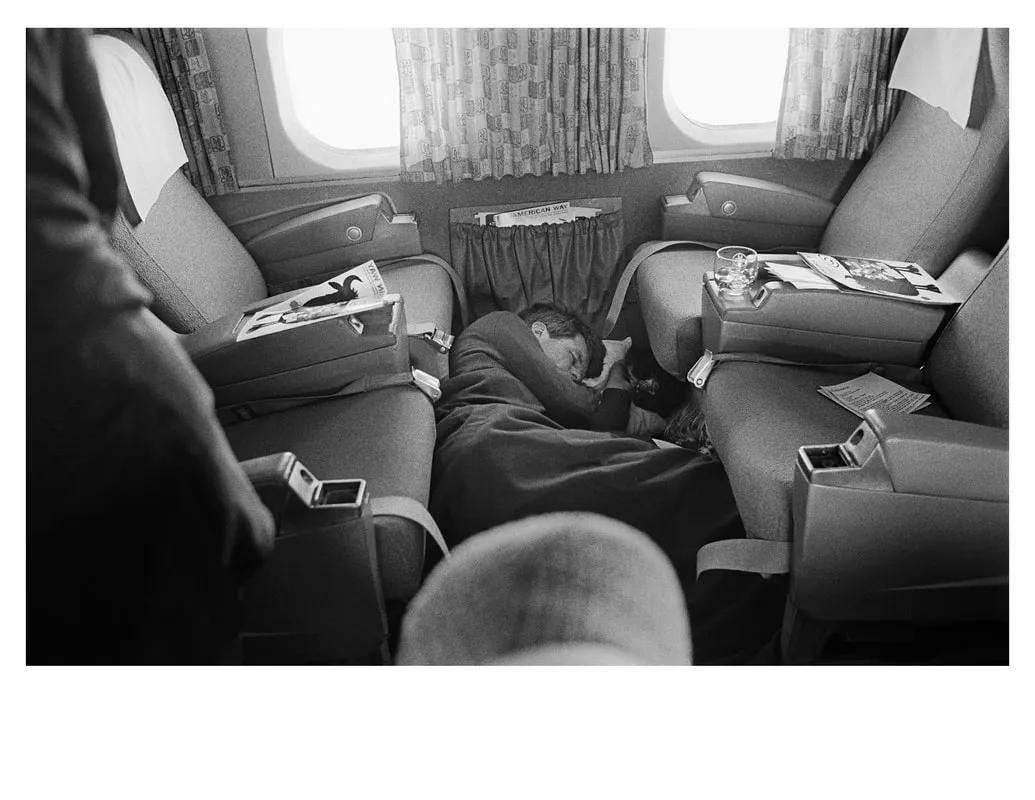
Robert F. Kennedy Asleep on Campaign Flight, 1968
Robert F. Kennedy Asleep on Campaign Flight, 1968
Robert F. Kennedy asleep campaign flight 1968 captures a quiet and revealing moment from the final months of his presidential campaign. The photograph shows Kennedy sleeping on the floor of a campaign airplane during a late-night flight to Portland.
Exhaustion defines the scene. The cabin is dim. Seats surround him. Campaign materials sit untouched. Kennedy lies curled between rows, using the narrow space available to rest.
The image strips away ceremony and politics. It shows a man worn down by relentless travel and constant public demands. There is no audience. There is no performance.
Photographed by Lawrence Schiller, the composition emphasizes vulnerability. The camera remains distant and unobtrusive. The moment feels observed rather than staged.
Taken in 1968, the photograph gains weight with historical hindsight. Kennedy would be assassinated only weeks later. This image now stands as one of the last intimate records of his campaign.
Robert F. Kennedy asleep campaign flight 1968 remains a powerful document of political life behind the scenes. It captures the human cost of leadership during one of the most turbulent periods in American history.
Available sizes:
Limited Edition - Silver Gelatin Prints
- 16 x 20 inches
- 20 x 24 inches
- 30 x 40 inches
- 40 x 60 inches
We ship worldwide and use a multitude of providers to safely deliver your artwork. Domestic delivery and installation may also be available via Hilton Contemporary’s private art shuttle. Please inquire.
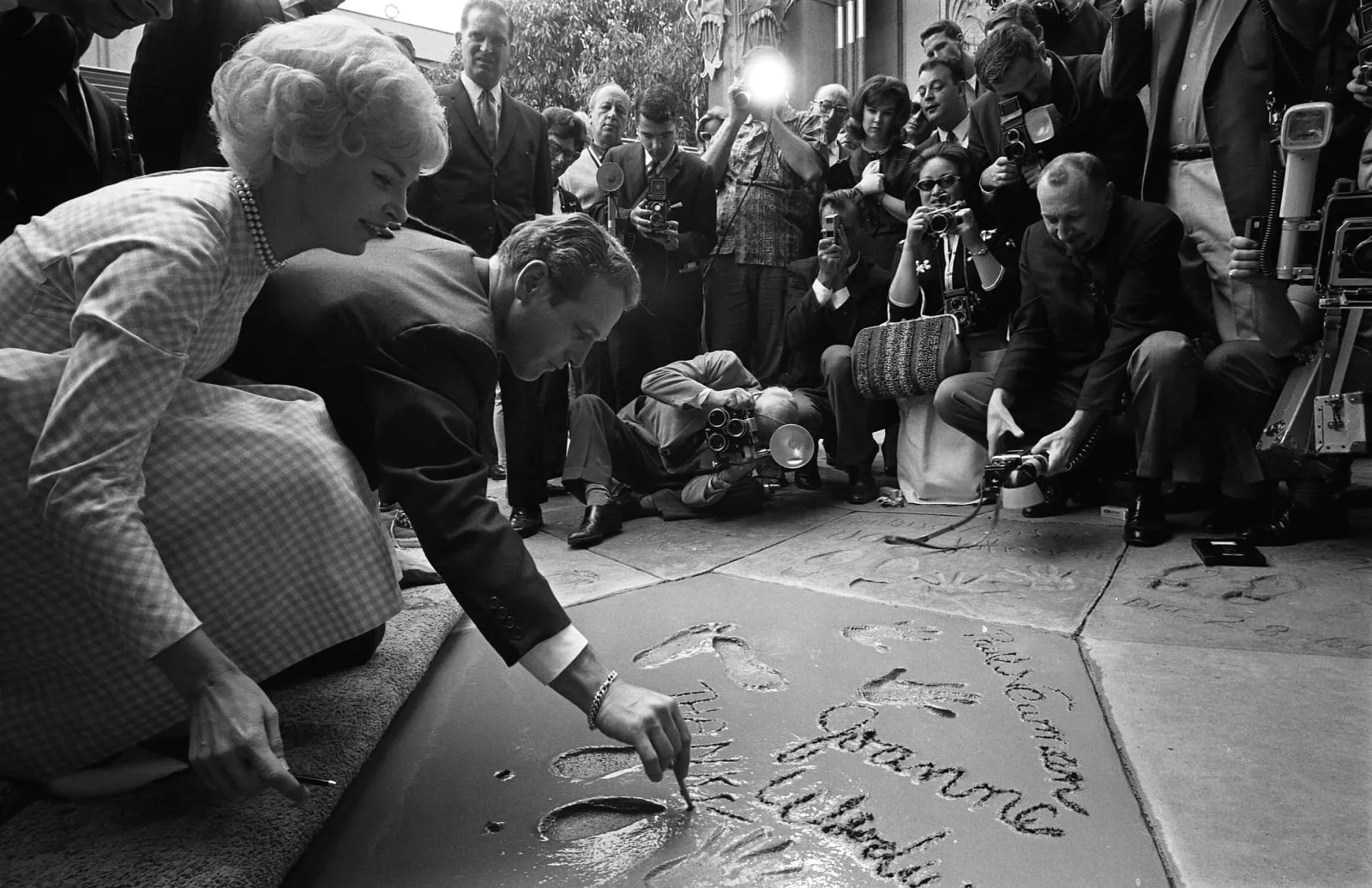
Paul Newman and Joanne Woodward Handprints, Hollywood Boulevard, 1963
Paul Newman and Joanne Woodward Handprints, Hollywood Boulevard, 1963
Paul Newman and Joanne Woodward handprints 1963 documents a defining Hollywood moment. The photograph captures the couple as they place their handprints into wet cement on Hollywood Boulevard. The ceremony took place outside Grauman’s Chinese Theatre in Los Angeles.
Surrounded by photographers and onlookers, Paul Newman and Joanne Woodward lean forward together. Their gestures are calm and focused. The scene feels intimate despite the crowd.
The image captures more than a public ritual. It shows a partnership built on mutual respect and quiet confidence. Their body language reflects a shared moment rather than a performance for the cameras.
Shot in black and white by Lawrence Schiller, the photograph balances spectacle with restraint. The composition keeps attention on the couple while the surrounding press fades into the background.
Paul Newman and Joanne Woodward handprints 1963 stands as a lasting record of Hollywood recognition. It preserves a moment when personal legacy and public history intersected on one of cinema’s most iconic sidewalks.
Available sizes:
Limited Edition - Silver Gelatin Prints
- 16 x 20 inches
- 20 x 24 inches
- 30 x 40 inches
- 40 x 60 inches
We ship worldwide and use a multitude of providers to safely deliver your artwork. Domestic delivery and installation may also be available via Hilton Contemporary’s private art shuttle. Please inquire.
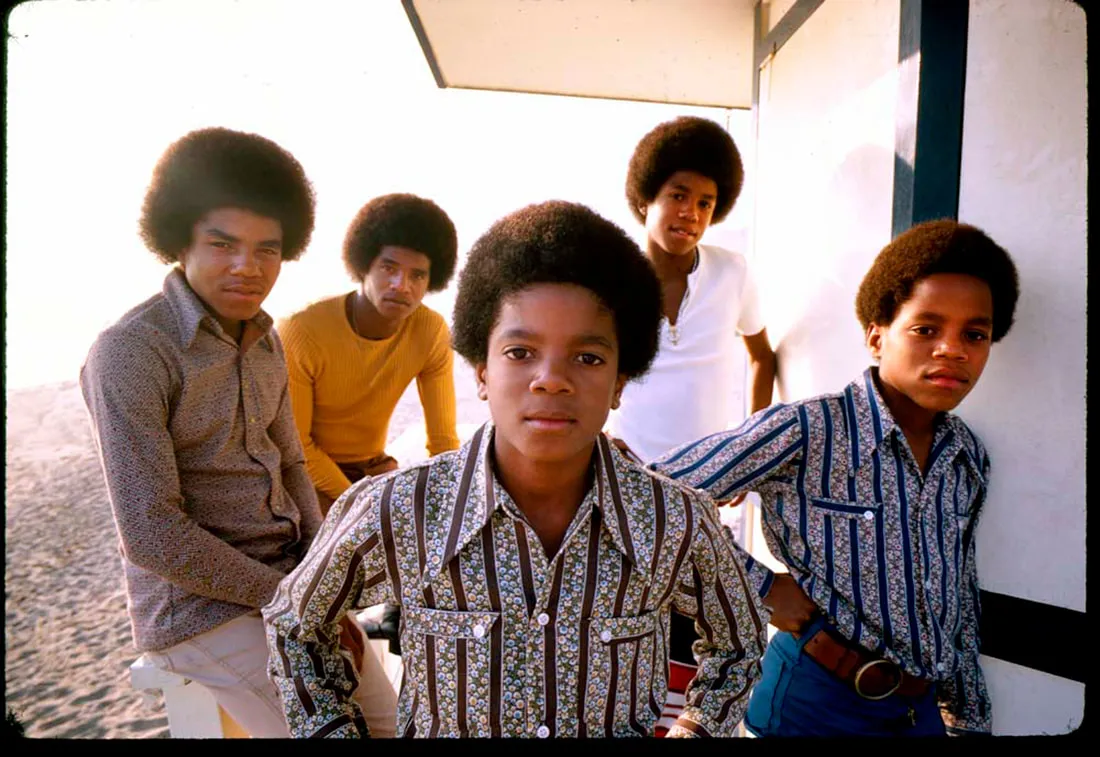
The Jackson 5 in Malibu, California, 1969
The Jackson 5 in Malibu, California, 1969
Jackson 5 Malibu 1969 shows the group during their earliest days in California. Photographed by Lawrence Schiller, the image captures the brothers standing together near the beach in Malibu. The moment is quiet but significant.
This photograph was taken during the Jackson 5’s first trip to California. At the time, the brothers had never seen the Pacific Ocean. The setting adds a sense of discovery and transition. Fame was approaching, but it had not yet arrived.
Michael Jackson stands at the center of the composition. His expression is calm and direct. The other brothers frame him closely, creating a strong sense of unity. Their clothing reflects the era, but their presence feels timeless.
The light is soft and natural. The background remains simple. Attention stays focused on the group rather than the setting. Schiller’s approach avoids spectacle and staging. The image feels observational and unforced.
Jackson 5 Malibu 1969 documents a turning point. It captures the group at the edge of a new life, moments before international success reshaped their world. The photograph preserves a sense of youth, closeness, and anticipation that would soon become part of music history.
Available sizes:
Limited Edition - Silver Gelatin Prints
- 16 x 20 inches
- 20 x 24 inches
- 30 x 40 inches
- 40 x 60 inches
We ship worldwide and use a multitude of providers to safely deliver your artwork. Domestic delivery and installation may also be available via Hilton Contemporary’s private art shuttle. Please inquire.
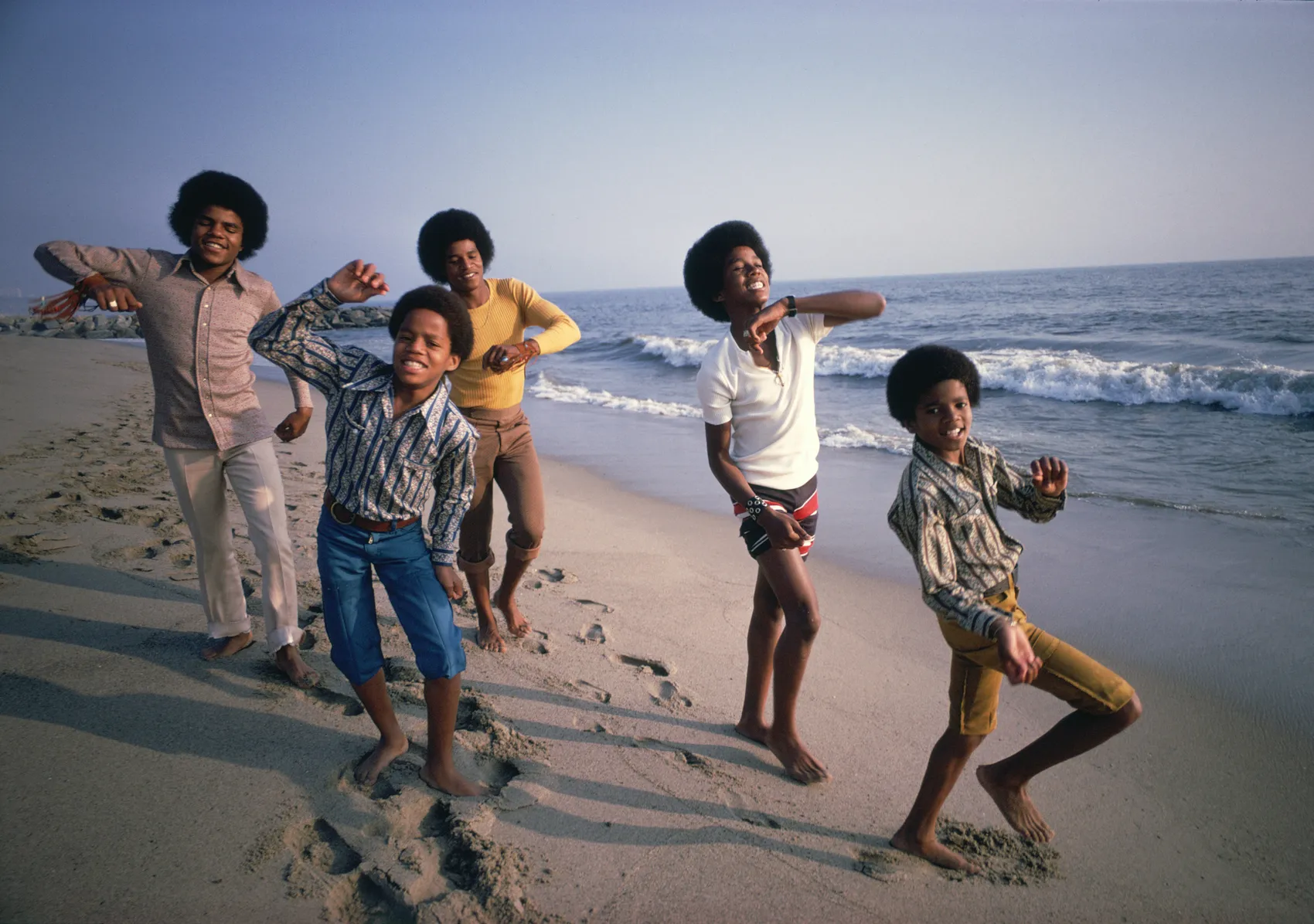
The Jackson 5 in Malibu, California, 1969
The Jackson 5 in Malibu, California, 1969
The Jackson 5 Malibu 1969 captures the group in a rare moment of ease and movement. Photographed on the beach in Malibu, California, the image shows the brothers dancing barefoot along the shoreline. The ocean stretches behind them. The setting feels open and unguarded.
Taken during a pivotal year in their rise, the photograph presents the Jackson 5 away from the stage and recording studio. Their choreography appears playful rather than rehearsed. Each gesture feels spontaneous. The mood is relaxed and youthful.
Michael Jackson stands at the center of the composition. His movement is energetic and expressive. The other brothers mirror his rhythm while maintaining their own presence. Their coordinated motion hints at the discipline that would soon define their performances.
The late-afternoon light softens the scene. Shadows stretch across the sand. The image balances motion with stillness. It captures the tension between childhood freedom and growing fame.
Unlike promotional portraits of the era, this photograph emphasizes joy rather than spectacle. There are no costumes or props. The beach becomes a temporary stage. The brothers appear fully at ease with one another.
The Jackson 5 Malibu 1969 stands as a portrait of transition. It documents a moment before global superstardom fully reshaped their lives. The image preserves a sense of innocence, movement, and brotherhood that would soon become history.
Available sizes:
Limited Edition - Silver Gelatin Prints
- 16 x 20 inches
- 20 x 24 inches
- 30 x 40 inches
- 40 x 60 inches
We ship worldwide and use a multitude of providers to safely deliver your artwork. Domestic delivery and installation may also be available via Hilton Contemporary’s private art shuttle. Please inquire.
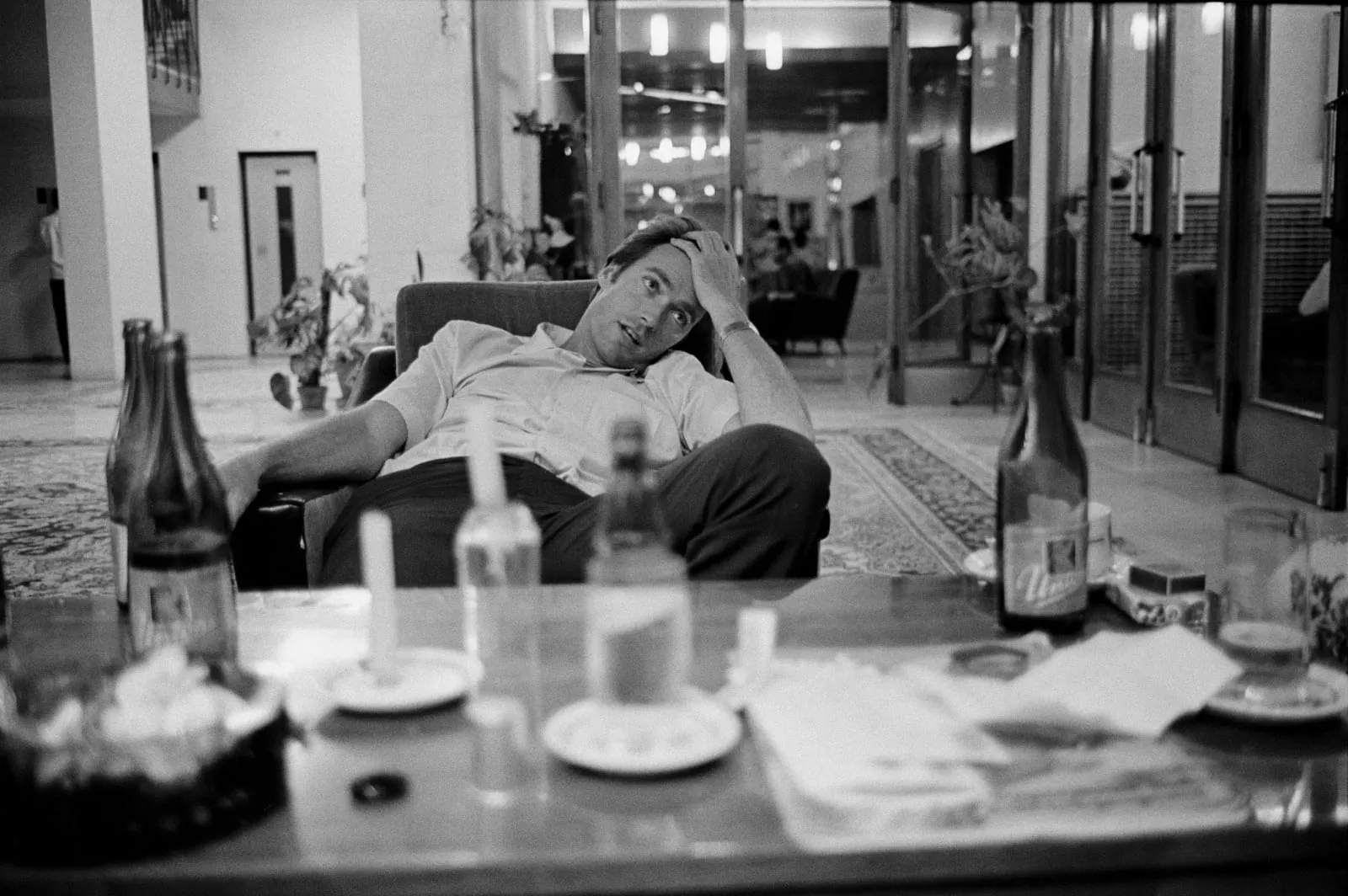
Clint Eastwood During Kelly’s Heroes, 1969
Clint Eastwood During Kelly’s Heroes, Yugoslavia 1969
Clint Eastwood Kelly’s Heroes captures the actor during a pause in filming in Zagreb, Yugoslavia, in 1969. Seated in a hotel lobby, Eastwood appears relaxed yet withdrawn. His posture suggests fatigue rather than performance.
The photograph was taken during the production of Kelly’s Heroes, the World War II film directed by Brian G. Hutton. Eastwood plays a disillusioned American officer, a role that aligns closely with the mood of this image. The line between character and private moment feels deliberately blurred.
Eastwood reclines in an armchair, one hand resting on his head. Bottles and glasses sit on the table in the foreground. They anchor the scene in everyday reality. The setting feels informal and unguarded. Nothing appears arranged for the camera.
The depth of the composition pulls the viewer inward. The cluttered table contrasts with the open space behind him. Light from the lobby reflects softly across the room. The image favors atmosphere over action.
Rather than presenting a star at work, the photograph documents waiting. It captures the in-between hours of filmmaking. These moments are rarely seen but deeply human.
Clint Eastwood Kelly’s Heroes stands as a portrait of restraint and stillness. It reveals an actor between takes, between roles, and between movement. The image offers a quiet counterpoint to the toughness often associated with Eastwood’s screen presence.
Available sizes:
Limited Edition - Silver Gelatin Prints
- 16 x 20 inches
- 20 x 24 inches
- 30 x 40 inches
- 40 x 60 inches
We ship worldwide and use a multitude of providers to safely deliver your artwork. Domestic delivery and installation may also be available via Hilton Contemporary’s private art shuttle. Please inquire.
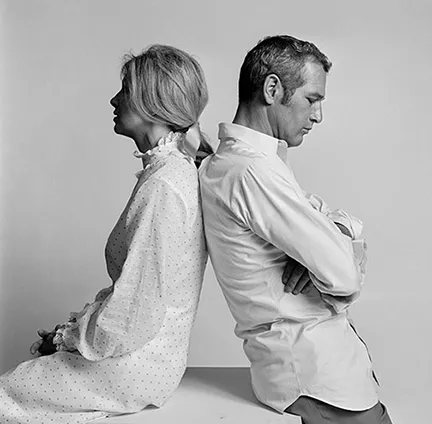
Joanne Woodward and Paul Newman, 1970
Joanne Woodward and Paul Newman, 1970
Joanne Woodward and Paul Newman is a restrained portrait photographed in Los Angeles, California, in 1970. The image presents two figures seated back to back, separated by posture rather than distance. The composition emphasizes balance, contrast, and emotional proximity.
Woodward faces away from Newman, her posture composed and still. Newman sits opposite, arms folded, his expression introspective. Neither looks toward the other, yet the physical closeness suggests connection rather than distance. The photograph relies on gesture and body language rather than interaction.
By 1970, Woodward and Newman were already established as one of Hollywood’s most respected partnerships. Their collaboration extended beyond marriage into film, theater, and shared creative life. This image avoids public spectacle. It focuses instead on quiet presence and mutual gravity.
The simplicity of the setting strengthens the photograph. The neutral background removes distraction. Clothing remains understated. Attention stays fixed on form and expression. The symmetry of their seated positions creates tension without drama.
Rather than presenting a romantic ideal, the photograph captures something more complex. It reflects familiarity, independence, and shared history. The absence of eye contact invites interpretation. The image feels observational rather than staged.
Joanne Woodward and Paul Newman stands as a study of partnership and individuality. It documents two artists defined by both personal and professional bonds. The photograph preserves a moment of calm introspection, offering a portrait shaped by time, trust, and restraint.
Available sizes:
Limited Edition - Silver Gelatin Prints
- 16 x 20 inches
- 20 x 24 inches
- 30 x 40 inches
- 40 x 60 inches
We ship worldwide and use a multitude of providers to safely deliver your artwork. Domestic delivery and installation may also be available via Hilton Contemporary’s private art shuttle. Please inquire.
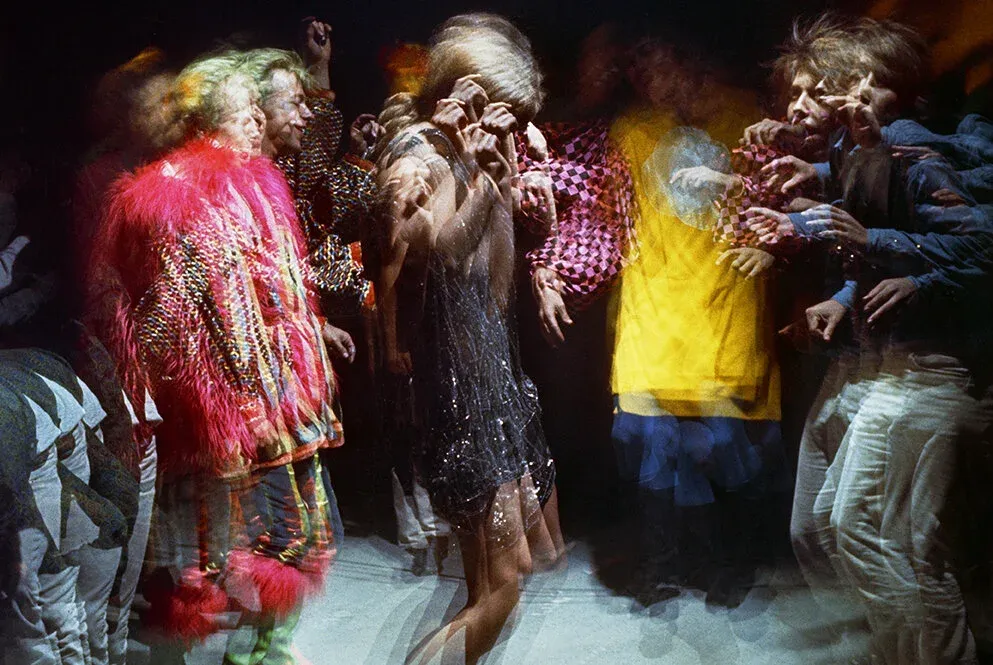
Hollywood Acid Test, 1966
Hollywood Acid Test, 1966
Hollywood Acid Test is a landmark photograph taken on February 25, 1966 by Lawrence Schiller. The image documents one of the earliest large-scale psychedelic gatherings in Los Angeles. It captures the visual energy of the acid test movement at its peak.
The acid tests were immersive events built around sensation rather than spectacle. Live music, projected film, experimental lighting, and performance happened at once. Audiences were participants, not observers. Schiller’s photograph reflects this atmosphere. Figures blur and overlap as dancers move through the frame.
Costumed revelers dominate the composition. Feathers, sequins, bold patterns, and saturated colors collide under stage lights. The layered exposure suggests motion and sensory overload. Instead of isolating individuals, the photograph presents the crowd as a single shifting presence. Movement becomes the subject.
Hollywood Acid Test is among Schiller’s most recognized images from his documentation of the LSD scene. Its impact extended beyond photography. The image later appeared on the cover of the Capitol Records LP Hollywood Acid Test, released the same year. That use cemented its place in music and counterculture history.
Schiller’s photograph functions as both record and artifact. It preserves a moment when performance, technology, and experimentation merged. The image captures a collective experience rather than a staged scene.
Hollywood Acid Test remains a defining visual document of 1960s psychedelic culture. It stands as one of the clearest photographic expressions of the movement’s communal spirit. The photograph continues to resonate as a symbol of cultural transformation.
Available sizes:
Limited Edition - Silver Gelatin Prints
- 16 x 20 inches
- 20 x 24 inches
- 30 x 40 inches
- 40 x 60 inches
We ship worldwide and use a multitude of providers to safely deliver your artwork. Domestic delivery and installation may also be available via Hilton Contemporary’s private art shuttle. Please inquire.
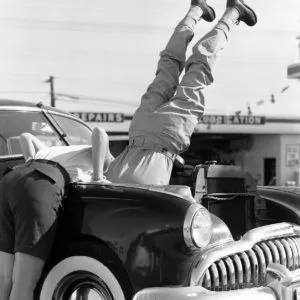
Head Over Heels in Work, San Diego, 1956
Head Over Heels in Work, San Diego, 1956
Head over heels car repair photo captures a moment of humor and physical effort inside a San Diego auto shop in 1956. Originally published in Life magazine, the image shows two mechanics working on a car engine, with one figure nearly vertical and upside down as he leans deep into the vehicle. The unusual posture immediately draws attention and adds visual energy to an otherwise routine task.
During the 1950s, Life magazine frequently highlighted everyday American labor through candid photography. Auto repair shops offered photographers a chance to document movement, teamwork, and ingenuity. This photograph reflects that tradition by transforming mechanical work into a dynamic visual moment rather than a static scene.
The composition emphasizes contrast between structure and motion. The solid body of the car anchors the frame, while the mechanic’s inverted stance introduces tension and balance. His hidden upper torso suggests total immersion in the task, reinforcing the physical demands of hands-on labor. The second figure provides grounding, both visually and narratively.
San Diego’s mid-century car culture forms an important backdrop. Postwar America saw automobiles become central to daily life, and repair shops served as essential community spaces. Images like this documented the people who kept that culture running behind the scenes.
Today, head over heels car repair photo remains memorable for its spontaneity and humor. It stands as a snapshot of working-class ingenuity in 1950s America, capturing a fleeting, almost playful moment that feels both authentic and timeless.
Available sizes:
Limited Edition - Silver Gelatin Prints
- 16 x 20 inches
- 20 x 24 inches
- 30 x 40 inches
- 40 x 60 inches
We ship worldwide and use a multitude of providers to safely deliver your artwork. Domestic delivery and installation may also be available via Hilton Contemporary’s private art shuttle. Please inquire.