
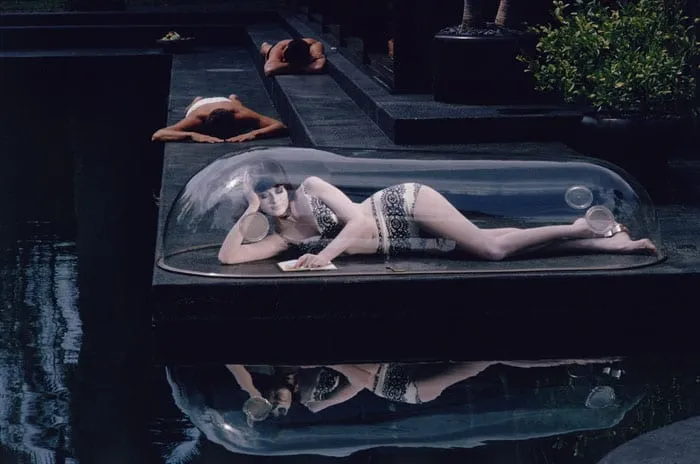
Girl in a Bubble, Hancock Park, Los Angeles, 1964

Girl in a Bubble, Hancock Park, Los Angeles, 1964
Girl in a Bubble photography captures a striking example of surreal fashion imagery from Los Angeles in 1964. Created for The Saturday Evening Post, the photograph shows a woman reclining inside a transparent dome placed above a still, reflective pool in Hancock Park. The image blends fashion, architecture, and conceptual design into a scene that feels both futuristic and serene.
During the early 1960s, Los Angeles emerged as a center for visual experimentation in editorial photography. Photographers increasingly pushed beyond traditional compositions, introducing bold concepts that reflected changing ideas about lifestyle and modernity. This image reflects that shift by using an unconventional structure to isolate the subject while emphasizing her relationship to the surrounding space.
The setting plays a critical role in the photograph’s impact. Dark water, clean lines, and controlled lighting create a calm yet slightly surreal atmosphere. Figures resting in the background contrast with the central subject, reinforcing the sense of separation created by the clear dome. The composition suggests themes of privacy, leisure, and controlled luxury.
Published in a major American magazine, the photograph balances accessibility with imagination. It reflects a period when fashion imagery began to tell stories rather than simply document clothing. The model’s relaxed pose and enclosed environment convey a sense of detachment that resonated with mid-century ideas of sophistication.
Today, Girl in a Bubble photography remains an enduring image from 1964. It continues to stand out for its originality, elegant restraint, and ability to capture a moment when editorial photography embraced innovation and visual storytelling.
Available sizes:
Limited Edition - Silver Gelatin Prints
- 16 x 20 inches
- 20 x 24 inches
- 30 x 40 inches
- 40 x 60 inches
We ship worldwide and use a multitude of providers to safely deliver your artwork. Domestic delivery and installation may also be available via Hilton Contemporary’s private art shuttle. Please inquire.

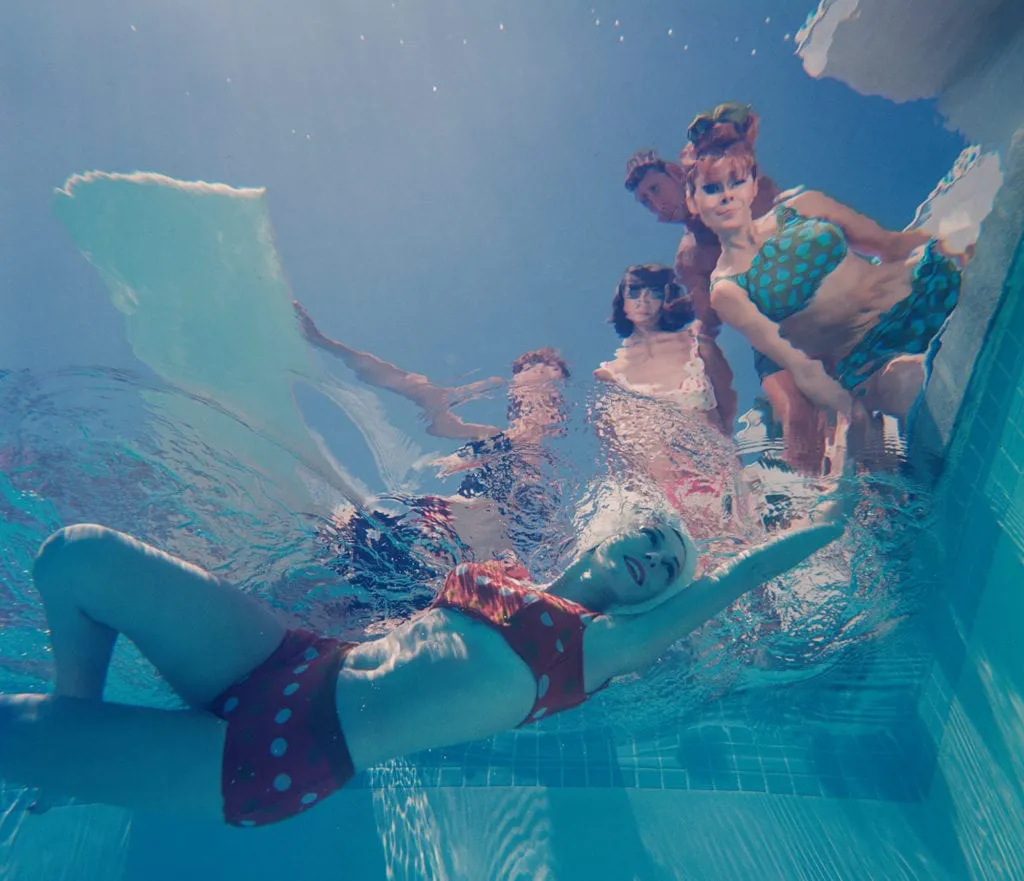
Palm Springs Underwater Fashion, 1964
Palm Springs Underwater Fashion, 1964
Palm Springs underwater fashion captures a playful and innovative moment in mid-century editorial photography. Taken in Palm Springs, California in 1964, the image presents an underwater view looking up toward a group of swimwear models gathered in and around a swimming pool. The photograph was created for an issue of The Saturday Evening Post, reflecting the era’s fascination with leisure, glamour, and modern lifestyles.
During the early 1960s, Palm Springs had become a symbol of relaxed luxury and desert modernism. Swimming pools functioned not only as architectural centerpieces but also as cultural icons of California living. This photograph embraces that identity, using water as both a setting and a visual device. The refraction of light and movement of the surface distort the figures above, creating a dreamlike composition.
The models’ patterned swimsuits and casual poses emphasize a sense of ease rather than formality. Instead of rigid styling, the image favors spontaneity and motion. The underwater perspective introduces a fresh point of view that feels experimental for its time, aligning fashion photography with the era’s broader spirit of creative exploration.
Commissioned for a mainstream publication, the photograph balances commercial appeal with artistic ambition. It reflects how fashion imagery in the 1960s increasingly embraced unconventional angles and environments. The pool becomes a stage, while the water transforms the scene into something immersive and kinetic.
Today, Palm Springs underwater fashion stands as a vivid example of vintage editorial photography. The image endures for its color, composition, and ability to capture the optimism and visual playfulness that defined American fashion imagery in the mid-twentieth century.
Available sizes:
Limited Edition - Silver Gelatin Prints
- 16 x 20 inches
- 20 x 24 inches
- 30 x 40 inches
- 40 x 60 inches
We ship worldwide and use a multitude of providers to safely deliver your artwork. Domestic delivery and installation may also be available via Hilton Contemporary’s private art shuttle. Please inquire.
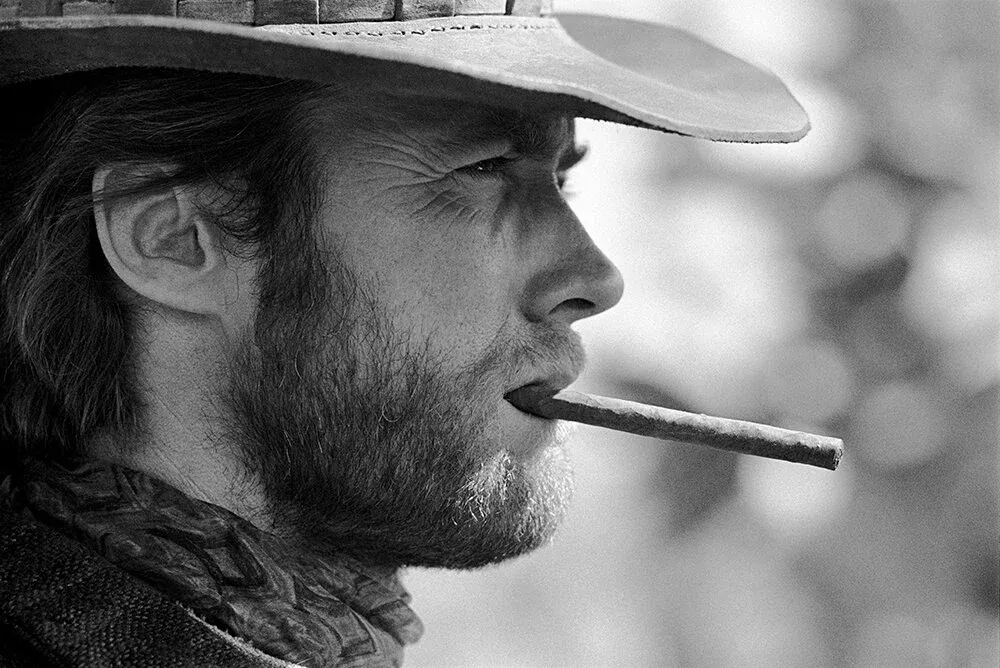
Clint Eastwood Cigar, Two Mules for Sister Sara, 1969
Clint Eastwood Cigar, Two Mules for Sister Sara, 1969
Clint Eastwood cigar captures a defining image of the actor during the filming of Two Mules for Sister Sara, photographed on location in Durango, Mexico in 1969. Shot in close profile, the photograph emphasizes Eastwood’s restrained intensity, with a cigar resting between his lips and his expression fixed in quiet focus.
By the late 1960s, Eastwood had refined a screen presence built on minimal dialogue and strong visual cues. The cigar functions as part of that visual language, reinforcing the toughness and self-possession that defined his western roles. This image reflects that persona without exaggeration, allowing posture and expression to do the work.
Two Mules for Sister Sara, directed by Don Siegel, marked another collaboration between the director and Eastwood following Coogan’s Bluff. Filmed largely in Mexico, the production embraced real locations and natural light. The setting contributes to the photograph’s authenticity, grounding the image in the physical reality of the shoot rather than a staged publicity moment.
The composition feels observational rather than posed. Eastwood appears absorbed in the moment, separated from the background by shallow focus. Details such as the texture of his beard and the curve of the cigar draw the viewer closer, creating an intimate portrait that feels unguarded.
Today, Clint Eastwood cigar remains a striking representation of the actor at the height of his western era. The photograph endures for its simplicity, confidence, and timeless portrayal of one of cinema’s most enduring figures.
Available sizes:
Limited Edition - Silver Gelatin Prints
- 16 x 20 inches
- 20 x 24 inches
- 30 x 40 inches
- 40 x 60 inches
We ship worldwide and use a multitude of providers to safely deliver your artwork. Domestic delivery and installation may also be available via Hilton Contemporary’s private art shuttle. Please inquire.
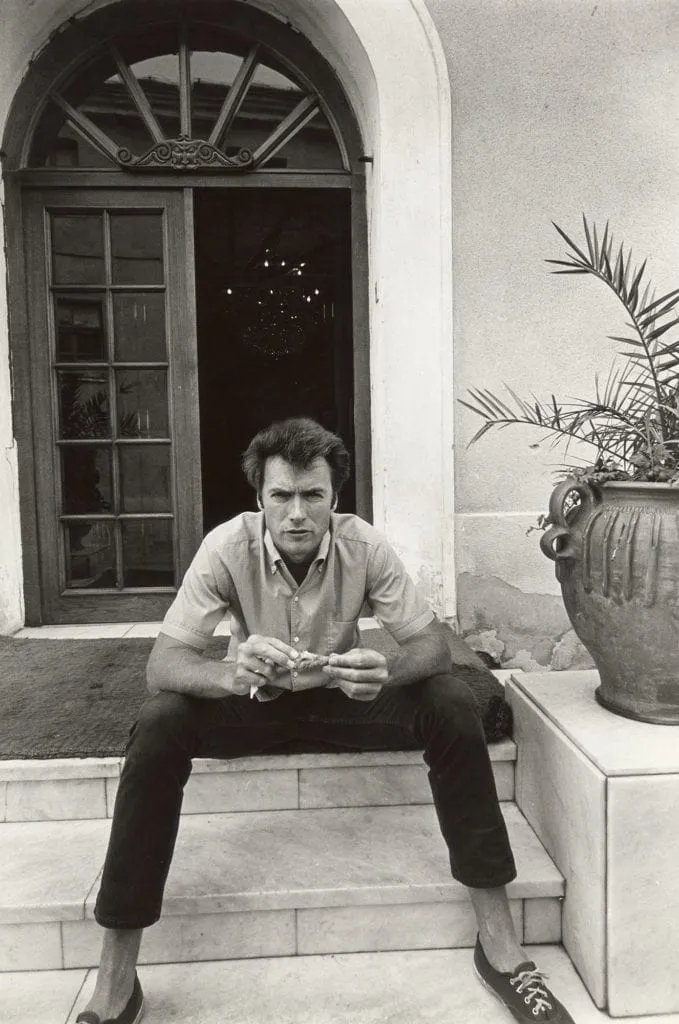
Clint Eastwood on His Day Off, Kelly’s Heroes, 1969
Clint Eastwood on His Day Off, Kelly’s Heroes, 1969
Clint Eastwood Kelly’s Heroes day off captures the actor in a rare moment of stillness while on location in the Istrian village of Vižinada, Yugoslavia, in 1969. Seated on the stone steps of a villa, Eastwood appears relaxed yet introspective, far removed from the action and spectacle of the film set.
The photograph reflects the quiet rhythm of production days between scenes. Dressed simply and barefoot, Eastwood holds a cigarette and looks directly toward the camera, conveying a sense of ease and self-possession. The image feels unguarded, offering a glimpse of the actor as himself rather than in character.
At this point in his career, Eastwood had already become an international star through his work in Sergio Leone’s Man with No Name trilogy. Kelly’s Heroes marked a tonal shift, blending war-film conventions with humor and ensemble storytelling. This photograph mirrors that balance, showing Eastwood comfortable within a collaborative environment rather than a rigid studio setting.
The architectural details and potted plants frame the image with a distinctly European atmosphere. Yugoslavia’s locations played a key role in shaping the visual identity of Kelly’s Heroes, and moments like this reveal how deeply the cast lived within those environments during production.
Today, Clint Eastwood Kelly’s Heroes day off stands as a quietly powerful portrait. It captures a pause in a legendary career and preserves a candid moment that feels personal, grounded, and timeless. For collectors, the photograph offers rare insight into Eastwood’s off-screen presence during a defining era of late-1960s cinema.
Available sizes:
Limited Edition - Silver Gelatin Prints
- 16 x 20 inches
- 20 x 24 inches
- 30 x 40 inches
- 40 x 60 inches
We ship worldwide and use a multitude of providers to safely deliver your artwork. Domestic delivery and installation may also be available via Hilton Contemporary’s private art shuttle. Please inquire.
Clint Eastwood Behind the Scenes of Kelly’s Heroes, 1969
Clint Eastwood Behind the Scenes of Kelly’s Heroes, 1969
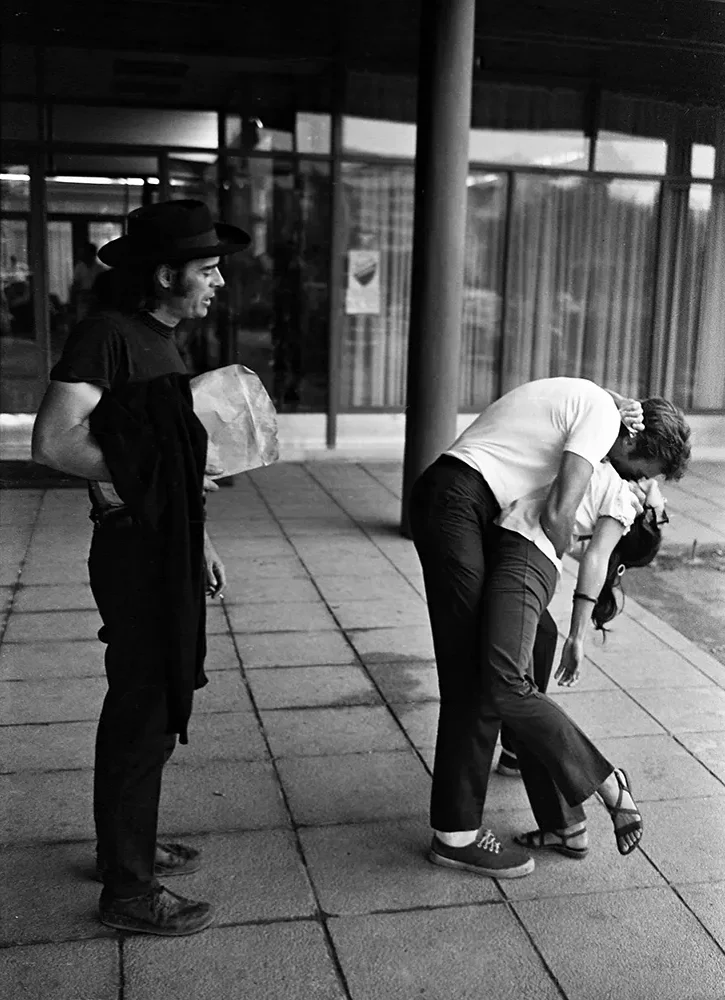
Clint Eastwood Kelly’s Heroes behind the scenes captures a candid moment during filming in Vizinada, Yugoslavia, in 1969. The photograph shows Eastwood dipping and kissing a woman while director Brian G. Hutton stands nearby, observing the scene with calm focus.
Rather than a staged publicity image, the photograph feels spontaneous and unguarded. Eastwood’s relaxed body language reflects the informal atmosphere that often surrounded location shoots during the late 1960s. The moment offers a glimpse into the rhythm of filmmaking between takes, when performance and real life briefly overlap.
By this point in his career, Eastwood had already established himself as an international star. Kelly’s Heroes allowed him to step into a lighter, ensemble-driven role that blended war film conventions with humor and character-driven storytelling. This image reflects that tonal shift, balancing ease with professionalism.
Brian G. Hutton’s presence anchors the composition. Known for a collaborative directing style, Hutton often allowed space for organic interaction on set. His posture suggests quiet supervision rather than interruption, reinforcing the candid nature of the scene.
The architectural backdrop situates the photograph firmly in its European setting. Yugoslavia’s urban environments contributed to the visual authenticity of the film, and this location became an integral part of its production identity.
Today, Clint Eastwood Kelly’s Heroes behind the scenes remains a compelling document of late-1960s cinema. It reveals the human moments behind a classic film and offers collectors an intimate view of Eastwood at work during a pivotal period of his career.
Available sizes:
Limited Edition - Silver Gelatin Prints
- 16 x 20 inches
- 20 x 24 inches
- 30 x 40 inches
- 40 x 60 inches
We ship worldwide and use a multitude of providers to safely deliver your artwork. Domestic delivery and installation may also be available via Hilton Contemporary’s private art shuttle. Please inquire.
Clint Eastwood Behind the Scenes of Kelly’s Heroes, 1969
Clint Eastwood Behind the Scenes of Kelly’s Heroes, 1969
Clint Eastwood Kelly’s Heroes behind the scenes captures a candid moment during filming in Vizinada, Yugoslavia, in 1969. The photograph shows Eastwood dipping and kissing a woman while director Brian G. Hutton stands nearby, observing the scene with calm focus.
Rather than a staged publicity image, the photograph feels spontaneous and unguarded. Eastwood’s relaxed body language reflects the informal atmosphere that often surrounded location shoots during the late 1960s. The moment offers a glimpse into the rhythm of filmmaking between takes, when performance and real life briefly overlap.
By this point in his career, Eastwood had already established himself as an international star. Kelly’s Heroes allowed him to step into a lighter, ensemble-driven role that blended war film conventions with humor and character-driven storytelling. This image reflects that tonal shift, balancing ease with professionalism.
Brian G. Hutton’s presence anchors the composition. Known for a collaborative directing style, Hutton often allowed space for organic interaction on set. His posture suggests quiet supervision rather than interruption, reinforcing the candid nature of the scene.
The architectural backdrop situates the photograph firmly in its European setting. Yugoslavia’s urban environments contributed to the visual authenticity of the film, and this location became an integral part of its production identity.
Today, Clint Eastwood Kelly’s Heroes behind the scenes remains a compelling document of late-1960s cinema. It reveals the human moments behind a classic film and offers collectors an intimate view of Eastwood at work during a pivotal period of his career.
Available sizes:
Limited Edition - Silver Gelatin Prints
- 16 x 20 inches
- 20 x 24 inches
- 30 x 40 inches
- 40 x 60 inches
We ship worldwide and use a multitude of providers to safely deliver your artwork. Domestic delivery and installation may also be available via Hilton Contemporary’s private art shuttle. Please inquire.
Clint Eastwood in Car, Zagreb Yugoslavia, 1969
Clint Eastwood in Car, Zagreb Yugoslavia, 1969
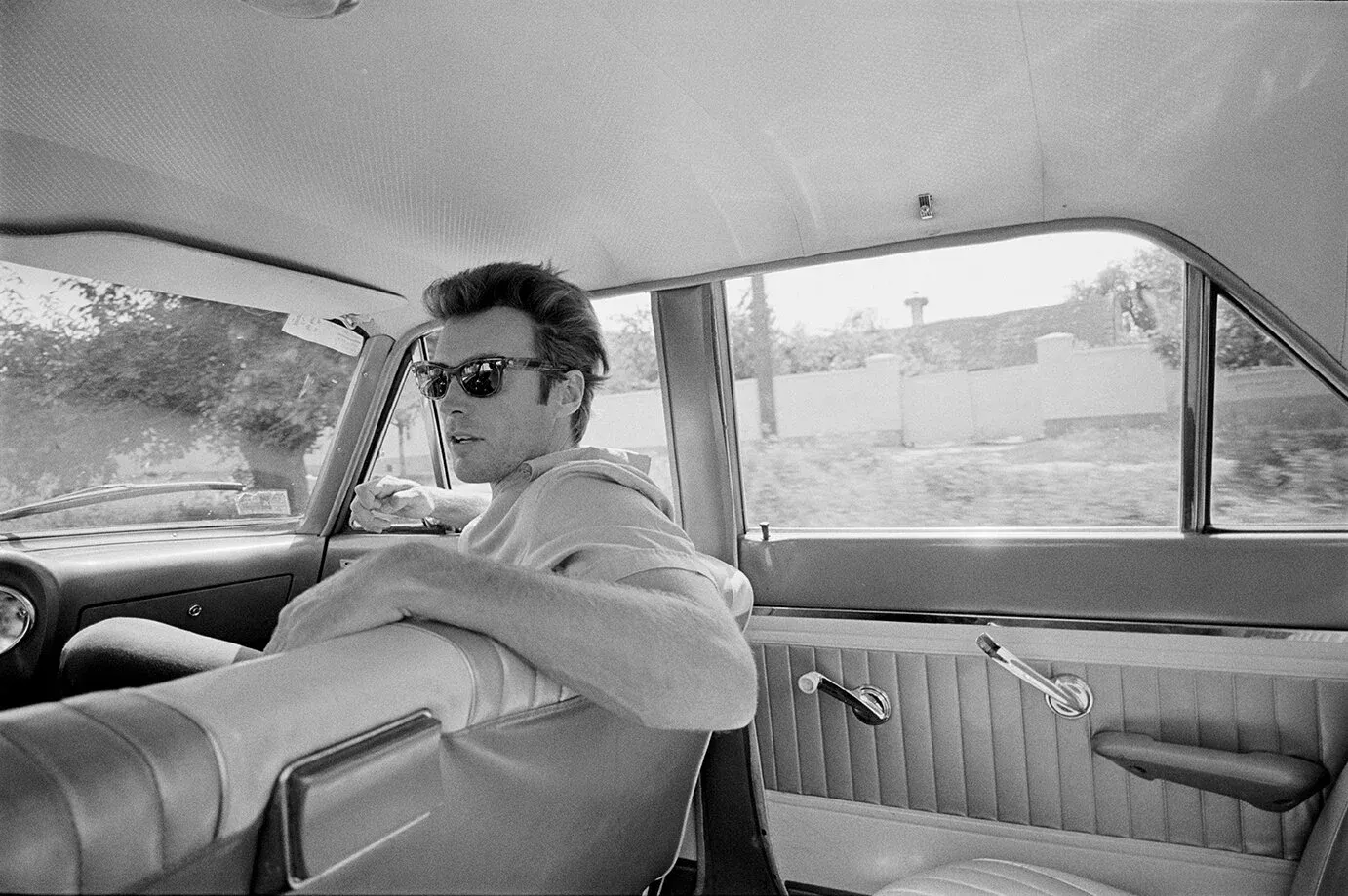
Captured in 1969, Clint Eastwood car photograph 1969 presents the actor in a candid moment while traveling through Zagreb, Yugoslavia. Seated in the front of a car, Eastwood turns toward the camera wearing dark sunglasses, his posture casual yet attentive. The setting suggests motion and transition rather than performance.
At the time, Eastwood stood at a pivotal point in his career. He had already achieved global recognition through Sergio Leone’s Dollars Trilogy and was emerging as a defining figure of the modern screen antihero. This photograph reflects that transformation, showing him between destinations rather than on set.
Lawrence Schiller’s approach emphasizes proximity and immediacy. The camera occupies the intimate space of the vehicle, eliminating distance between subject and viewer. Natural light filters through the windows, framing Eastwood against passing architecture and blurred streetscapes.
The interior details matter. Upholstery, door handles, and glass form a contained environment that contrasts with the expansive mythology surrounding Eastwood’s public image. Instead of grandeur, the photograph offers restraint and realism.
Zagreb provides a subtle historical context. During the late 1960s, Yugoslavia occupied a unique position between East and West. Eastwood’s presence there underscores the international reach of American cinema during this period.
Today, Clint Eastwood car photograph 1969 endures as a study in quiet confidence. It captures a moment of pause within a rapidly accelerating career. The image resonates for its simplicity, its observational tone, and its ability to humanize an actor often defined by larger-than-life roles.
Available sizes:
Limited Edition - Silver Gelatin Prints
- 16 x 20 inches
- 20 x 24 inches
- 30 x 40 inches
- 40 x 60 inches
We ship worldwide and use a multitude of providers to safely deliver your artwork. Domestic delivery and installation may also be available via Hilton Contemporary’s private art shuttle. Please inquire.
Barbra Streisand and Cecil Beaton on Set, On a Clear Day (1969)
Barbra Streisand in Headdress With Glass, 1969
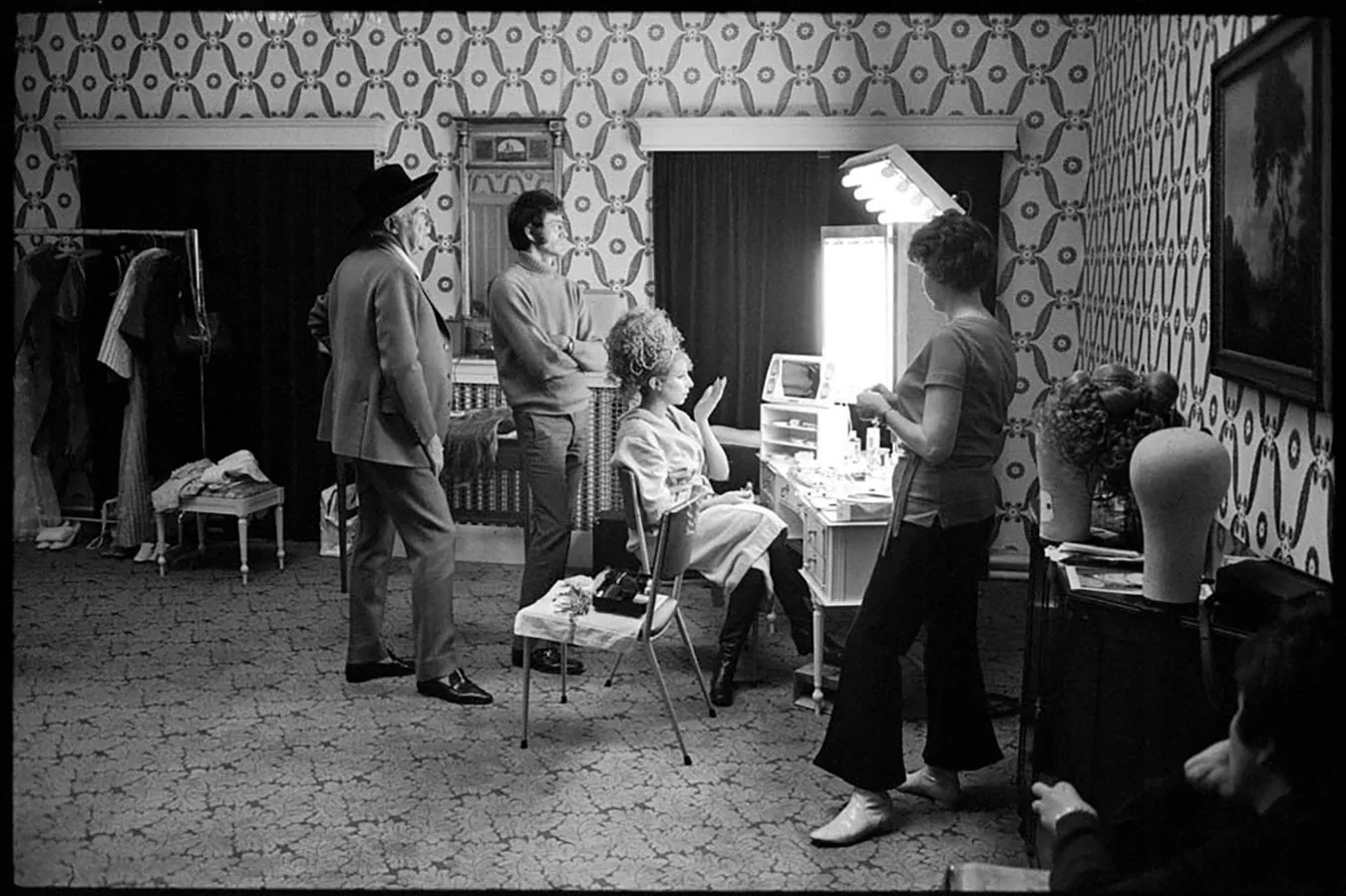
Captured in 1969, this portrait presents Barbra Streisand headdress with glass 1969 in an elaborate costume designed for On a Clear Day You Can See Forever. Streisand appears poised and self-assured as she lifts a glass toward the camera. The jeweled headdress frames her face with theatrical precision, blending elegance with spectacle.
At this point in her career, Streisand had already achieved remarkable success across music and film. Her work consistently challenged expectations of female stardom. This portrait reflects that confidence. Rather than relying on excess, the image balances ornamentation with control.
The costume was designed by Cecil Beaton, whose work shaped some of the most iconic visual moments in twentieth-century cinema and fashion. The intricate detailing of the headdress adds texture and luminosity, while Streisand’s expression remains calm and intentional. The contrast between embellishment and restraint gives the image its strength.
Lawrence Schiller approached the portrait with a cinematic sensibility. He emphasized clarity and presence rather than theatrical gesture. Streisand’s gaze engages directly, yet without performance. The glass in her hand introduces a subtle narrative element, suggesting celebration, ritual, or reflection.
The composition avoids distraction. Soft background tones allow costume and expression to dominate the frame. Light moves gently across the surface of the jewels, reinforcing depth without overpowering the subject. Every element feels measured.
Today, Barbra Streisand headdress with glass 1969 endures as a striking example of late-1960s portraiture. The photograph resonates for its balance of glamour and discipline. It captures an artist at ease with her image, navigating fame through intention rather than spectacle.
Available sizes:
Limited Edition - Silver Gelatin Prints
- 16 x 20 inches
- 20 x 24 inches
- 30 x 40 inches
- 40 x 60 inches
We ship worldwide and use a multitude of providers to safely deliver your artwork. Domestic delivery and installation may also be available via Hilton Contemporary’s private art shuttle. Please inquire.

Barbra Streisand in Headdress With Glass, 1969
Barbra Streisand in Headdress With Glass, 1969
Captured in 1969, this portrait presents Barbra Streisand headdress with glass 1969 in an elaborate costume designed for On a Clear Day You Can See Forever. Streisand appears poised and self-assured as she lifts a glass toward the camera. The jeweled headdress frames her face with theatrical precision, blending elegance with spectacle.
At this point in her career, Streisand had already achieved remarkable success across music and film. Her work consistently challenged expectations of female stardom. This portrait reflects that confidence. Rather than relying on excess, the image balances ornamentation with control.
The costume was designed by Cecil Beaton, whose work shaped some of the most iconic visual moments in twentieth-century cinema and fashion. The intricate detailing of the headdress adds texture and luminosity, while Streisand’s expression remains calm and intentional. The contrast between embellishment and restraint gives the image its strength.
Lawrence Schiller approached the portrait with a cinematic sensibility. He emphasized clarity and presence rather than theatrical gesture. Streisand’s gaze engages directly, yet without performance. The glass in her hand introduces a subtle narrative element, suggesting celebration, ritual, or reflection.
The composition avoids distraction. Soft background tones allow costume and expression to dominate the frame. Light moves gently across the surface of the jewels, reinforcing depth without overpowering the subject. Every element feels measured.
Today, Barbra Streisand headdress with glass 1969 endures as a striking example of late-1960s portraiture. The photograph resonates for its balance of glamour and discipline. It captures an artist at ease with her image, navigating fame through intention rather than spectacle.
Available sizes:
Limited Edition - Silver Gelatin Prints
- 16 x 20 inches
- 20 x 24 inches
- 30 x 40 inches
- 40 x 60 inches
We ship worldwide and use a multitude of providers to safely deliver your artwork. Domestic delivery and installation may also be available via Hilton Contemporary’s private art shuttle. Please inquire.
Barbra Streisand at Claridge’s Hotel in London, 1969
Barbra Streisand at Claridge’s Hotel in London, 1969
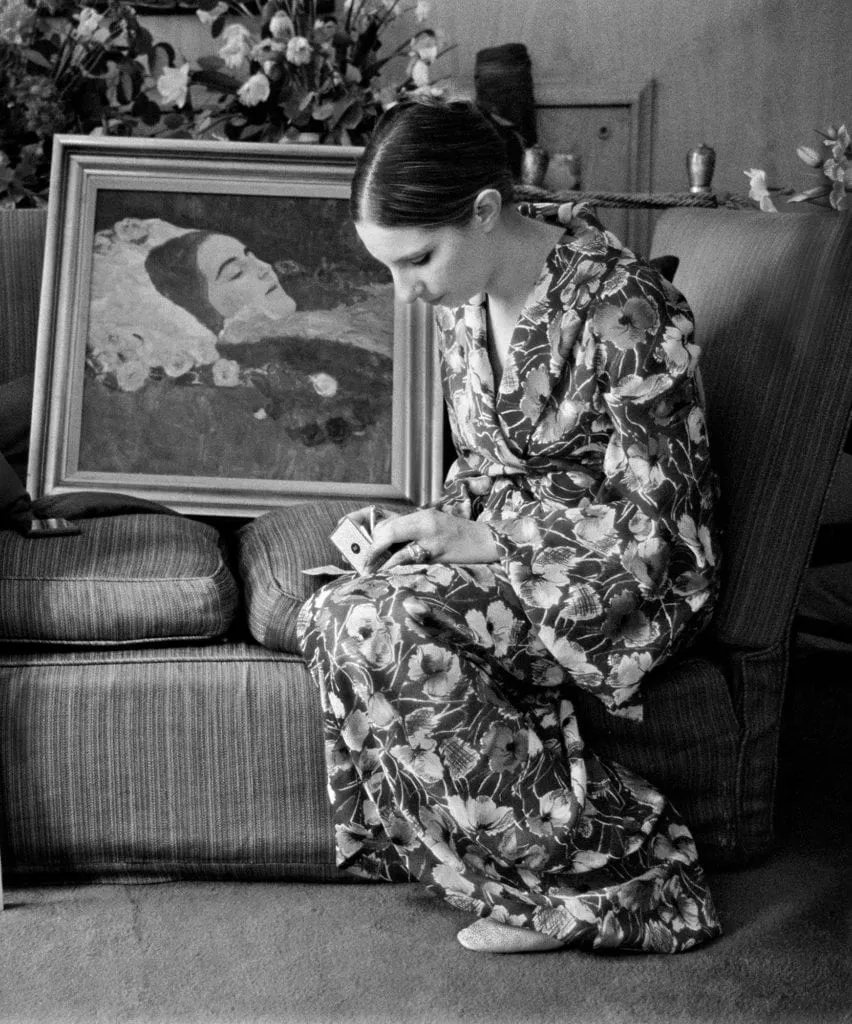
Captured in Mayfair, London in 1969, this photograph presents Barbra Streisand at Claridge’s Hotel Klimt 1969 during a quiet moment inside her suite at Claridge’s Hotel. Seated on a sofa, Streisand concentrates as she writes a check to purchase a painting by Gustav Klimt. The scene feels private, deliberate, and removed from public performance.
At this point in her career, Streisand had already achieved extraordinary success across music and film. Her creative interests extended beyond the stage and screen. Art collecting formed part of her broader engagement with culture and aesthetics. This photograph reflects that dimension of her life with unusual intimacy.
The composition emphasizes stillness and focus. Streisand’s posture leans inward. Her attention remains fixed on the task at hand. Behind her, the framed artwork introduces a quiet dialogue between past and present. The moment feels personal rather than transactional.
Lawrence Schiller captured the image with a documentary eye. Rather than directing the scene, he observed it unfold naturally. That approach preserves authenticity. Streisand appears unaware of the camera, absorbed in thought and action.
The hotel setting reinforces the atmosphere. Claridge’s, long associated with refinement and discretion, provides a subdued backdrop. Soft furnishings and restrained light allow the subject to remain central. Nothing distracts from gesture or expression.
Today, Barbra Streisand Claridge’s Hotel Klimt 1969 endures as a rare glimpse into an artist’s private world. The photograph resonates for its calm clarity and cultural significance. It records a moment where celebrity, creativity, and personal taste intersect quietly, without spectacle.
Available sizes:
Limited Edition - Silver Gelatin Prints
- 16 x 20 inches
- 20 x 24 inches
- 30 x 40 inches
- 40 x 60 inches
We ship worldwide and use a multitude of providers to safely deliver your artwork. Domestic delivery and installation may also be available via Hilton Contemporary’s private art shuttle. Please inquire.