
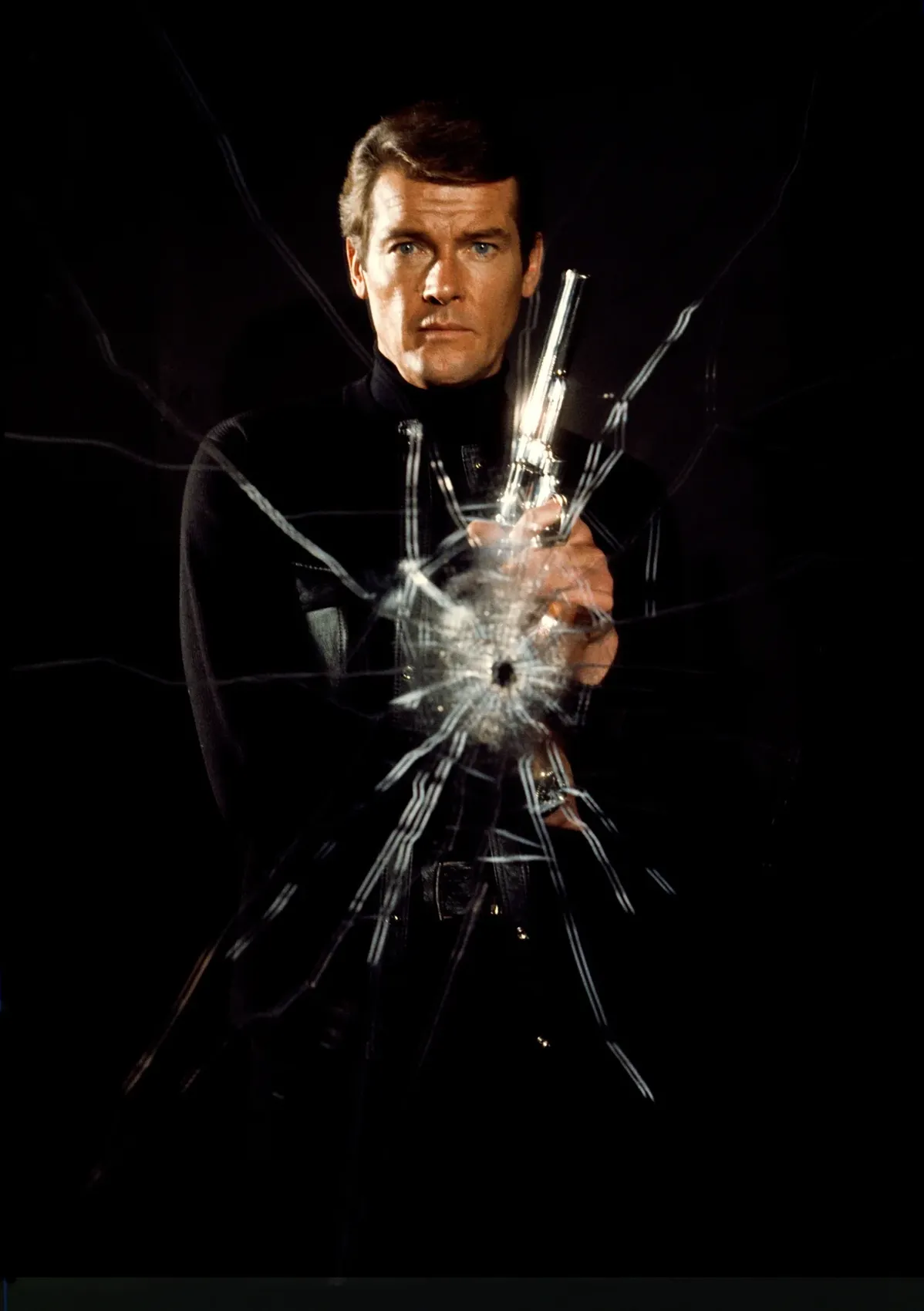
Roger Moore as James Bond, 1973

Roger Moore as James Bond, 1973
This photograph presents Roger Moore as James Bond in 1973, marking the beginning of a new chapter in the long-running film franchise. Moore had recently assumed the role, stepping into one of cinema’s most closely guarded icons. His interpretation introduced a different tone, defined by composure, confidence, and restraint.
The image is stark and deliberate. Moore faces the viewer directly, holding a gun against a dark background. A shattered-glass effect cuts across the frame, creating tension and visual impact. The composition feels controlled and precise. It mirrors the calculated elegance that would come to define Moore’s portrayal of Bond.
Unlike earlier versions of the character, Moore’s Bond relied less on brute force and more on poise. This photograph captures that balance. His expression is calm and focused. There is no excess movement or theatrical gesture. The stillness reinforces the character’s authority.
Taken by Terry O’Neill, the image reflects the photographer’s ability to distill a cultural moment into a single frame. Rather than staging spectacle, O’Neill emphasizes presence and intent. The result is a portrait that feels timeless rather than tied to a single film release.
Today, Roger Moore as James Bond remains one of the most recognizable images associated with the actor’s tenure in the role. It stands as a defining representation of Bond in the 1970s. The photograph continues to resonate as a symbol of cinematic transition, legacy, and enduring popular culture.
Available Sizes (Unframed):
Editions of 50
- 16 × 20 in (40.6 × 50.8 cm)
- 20 × 24 in (50.8 × 61 cm)
- 30 x 40 in (76.2 x 101.6 cm)
- 48 x 72 in (122 x 183 cm)
Edition Information:
During his lifetime, Terry O’Neill produced a significant body of signed, limited-edition fine art photographs. Following his passing, a small archive of works prepared for exhibition and sale remained within his estate. These photographs are now exceptionally rare and available only in limited sizes.
Estate-stamped limited edition photographs are offered in select sizes only. Estate editions are released solely when the original signed edition of 50 in a given size had not fully sold out during the artist’s lifetime. In such cases, the remaining editions continue as Estate Editions until fully allocated.
In select cases, this artwork may also be available as a hand-signed lifetime print. Please contact the gallery directly for current availability and details.
Each print is accompanied by a certificate of authenticity issued by the gallery.
We ship worldwide and use a multitude of providers to safely deliver your masterpiece. Domestic delivery and installation may also be available via Hilton Contemporary’s private art shuttle.

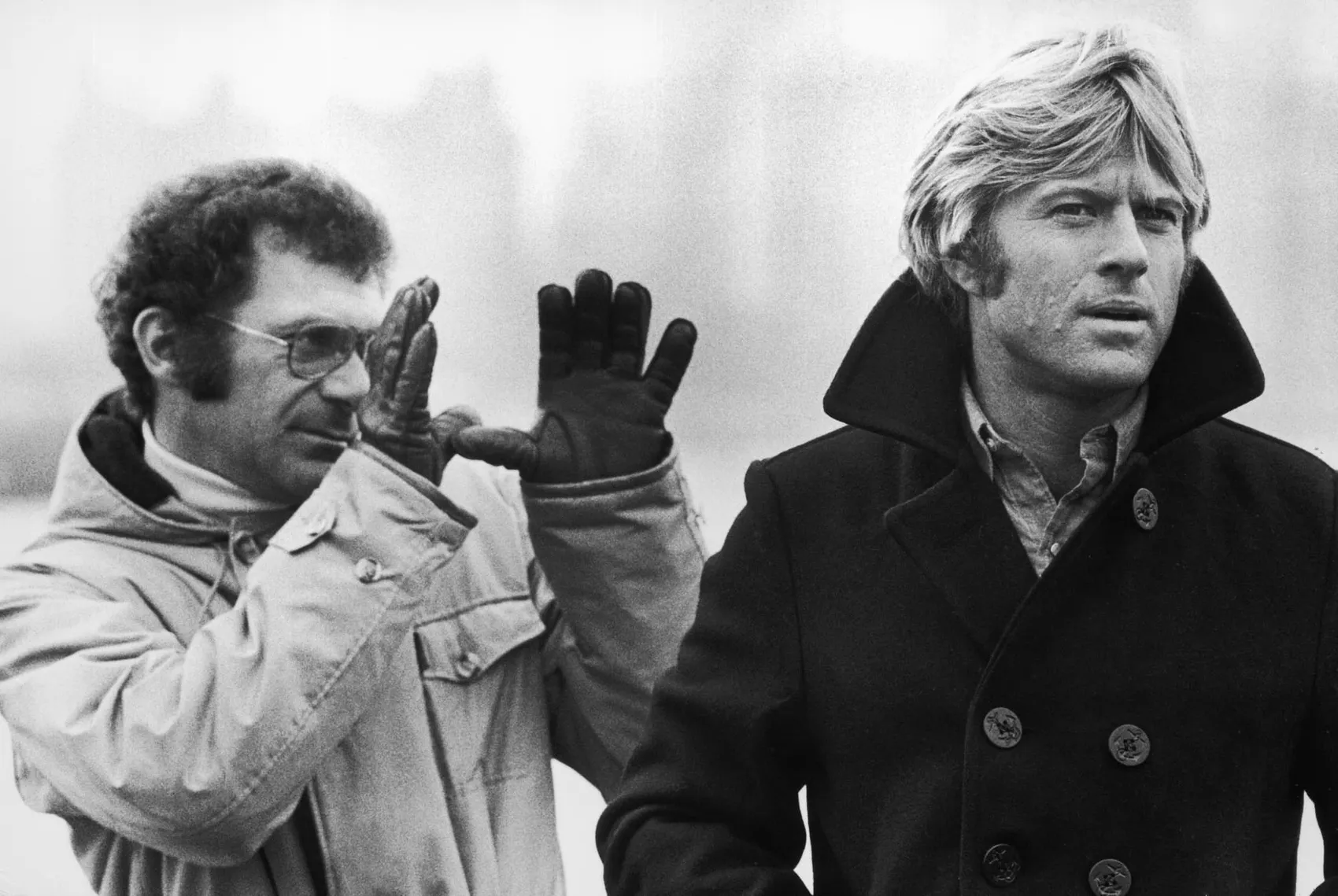
Robert Redford and Sydney Pollack on the Set of Three Days of the Condor, 1974
Robert Redford and Sydney Pollack on the Set of Three Days of the Condor, 1974
This photograph shows Robert Redford and Sydney Pollack on the set of Three Days of the Condor during filming in New York in 1974. The image captures a moment of concentration between actor and director as they work through a scene. It offers a rare glimpse into the collaborative process behind one of the most influential political thrillers of the decade.
At the time, Redford was at the height of his career. He was known for performances that balanced intelligence, restraint, and emotional control. Pollack, already an accomplished director, shared a similar approach. Their partnership was built on trust and precision, qualities that are evident in this quiet exchange.
Rather than depicting action or performance, the photograph focuses on preparation. Pollack gestures with his hands while Redford listens attentively. The setting is understated. There is no theatrical staging. The emphasis is on communication and intent. This moment reflects the discipline required to shape a film rooted in tension and realism.
Three Days of the Condor explored themes of surveillance, paranoia, and institutional power. Its relevance has only grown over time. This image captures the seriousness with which both men approached the material. It highlights the intellectual rigor behind the film’s production.
Photographed by Terry O’Neill, the image exemplifies his ability to document moments that exist between performance and pause. Rather than creating a formal portrait, he records an authentic interaction. The result is both intimate and historically significant.
Today, Robert Redford and Sydney Pollack on the set of Three Days of the Condor stands as a compelling document of creative collaboration. The photograph endures as a testament to shared vision, restraint, and the craft of filmmaking at its highest level.
Available Sizes (Unframed):
Editions of 50
- 16 × 20 in (40.6 × 50.8 cm)
- 20 × 24 in (50.8 × 61 cm)
- 30 x 40 in (76.2 x 101.6 cm)
- 48 x 72 in (122 x 183 cm)
Edition Information:
During his lifetime, Terry O’Neill produced a significant body of signed, limited-edition fine art photographs. Following his passing, a small archive of works prepared for exhibition and sale remained within his estate. These photographs are now exceptionally rare and available only in limited sizes.
Estate-stamped limited edition photographs are offered in select sizes only. Estate editions are released solely when the original signed edition of 50 in a given size had not fully sold out during the artist’s lifetime. In such cases, the remaining editions continue as Estate Editions until fully allocated.
In select cases, this artwork may also be available as a hand-signed lifetime print. Please contact the gallery directly for current availability and details.
Each print is accompanied by a certificate of authenticity issued by the gallery.
We ship worldwide and use a multitude of providers to safely deliver your masterpiece. Domestic delivery and installation may also be available via Hilton Contemporary’s private art shuttle.
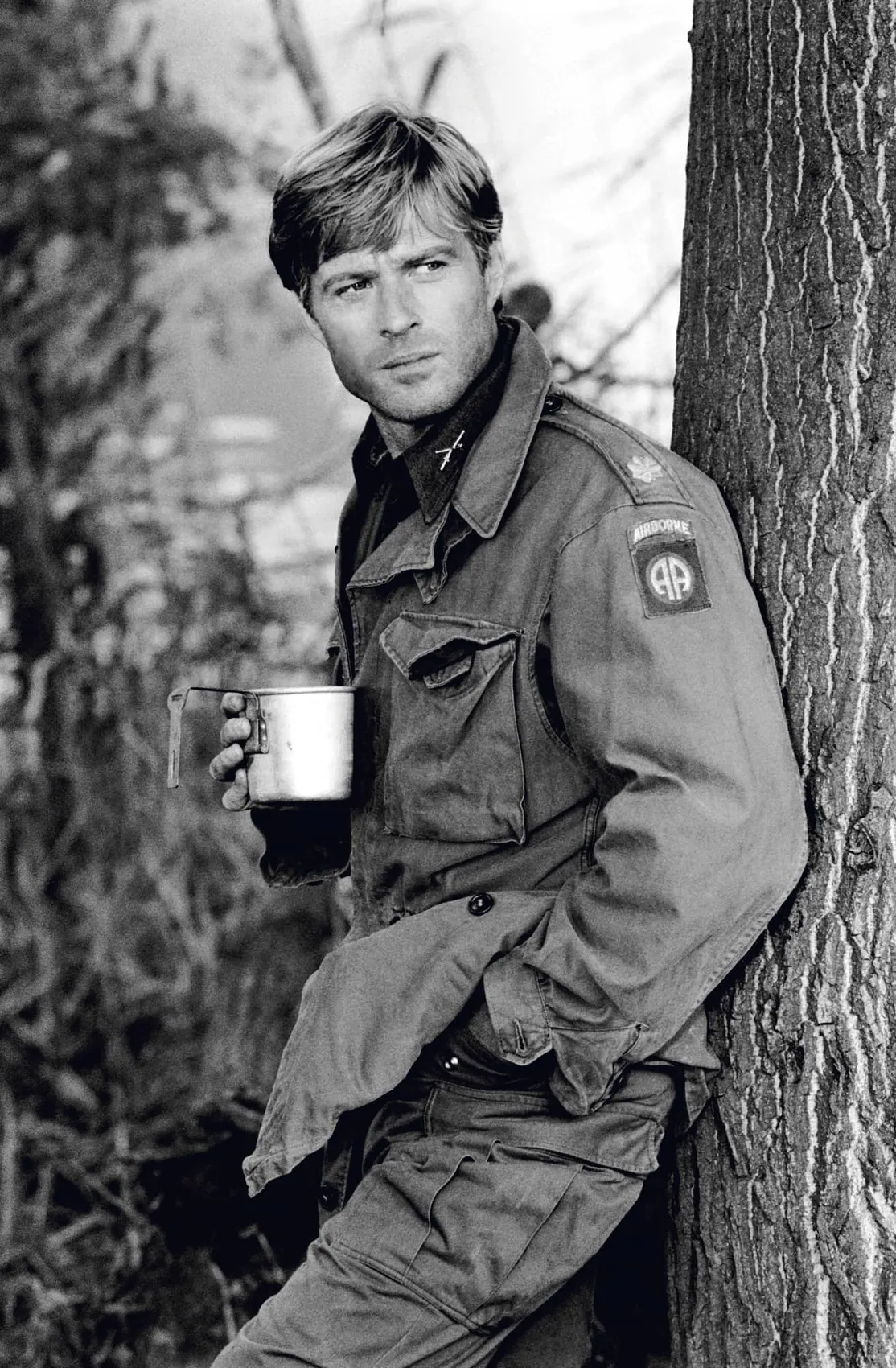
Robert Redford on the set of A Bridge Too Far, 1977
Robert Redford in A Bridge Too Far, 1977
This photograph shows Robert Redford in A Bridge Too Far during filming in 1977. At this point in his career, Redford was firmly established as one of Hollywood’s most respected leading men. He was known for performances built on control, understatement, and presence rather than spectacle. That sensibility is clearly reflected here.
Dressed in military uniform, Redford leans against a tree while holding a metal cup. His expression appears distant and thoughtful. The moment feels private, as though captured between takes. There is no sense of performance or action. Instead, the image emphasizes stillness and quiet concentration.
A Bridge Too Far was an ambitious World War II epic with a vast ensemble cast. Redford’s role required subtlety within a large and complex narrative. This photograph reflects that balance. The natural setting and worn uniform ground the image in realism. At the same time, Redford’s posture introduces a reflective tone that contrasts with the scale of the film.
The photograph was taken by Terry O’Neill, whose work is known for revealing unguarded moments behind the scenes. Rather than staging a formal portrait, O’Neill captures Redford in a pause between performances. This approach creates an image that feels human and immediate.
Today, Robert Redford in A Bridge Too Far stands as a compelling document of the actor at a mature stage in his career. The photograph endures as a study of restraint, introspection, and cinematic legacy. It highlights the power of quiet moments within the broader history of film and celebrity photography.
Available Sizes (Unframed):
Editions of 50
- 16 × 20 in (40.6 × 50.8 cm)
- 20 × 24 in (50.8 × 61 cm)
- 30 x 40 in (76.2 x 101.6 cm)
- 48 x 72 in (122 x 183 cm)
Edition Information:
During his lifetime, Terry O’Neill produced a significant body of signed, limited-edition fine art photographs. Following his passing, a small archive of works prepared for exhibition and sale remained within his estate. These photographs are now exceptionally rare and available only in limited sizes.
Estate-stamped limited edition photographs are offered in select sizes only. Estate editions are released solely when the original signed edition of 50 in a given size had not fully sold out during the artist’s lifetime. In such cases, the remaining editions continue as Estate Editions until fully allocated.
In select cases, this artwork may also be available as a hand-signed lifetime print. Please contact the gallery directly for current availability and details.
Each print is accompanied by a certificate of authenticity issued by the gallery.
We ship worldwide and use a multitude of providers to safely deliver your masterpiece. Domestic delivery and installation may also be available via Hilton Contemporary’s private art shuttle.
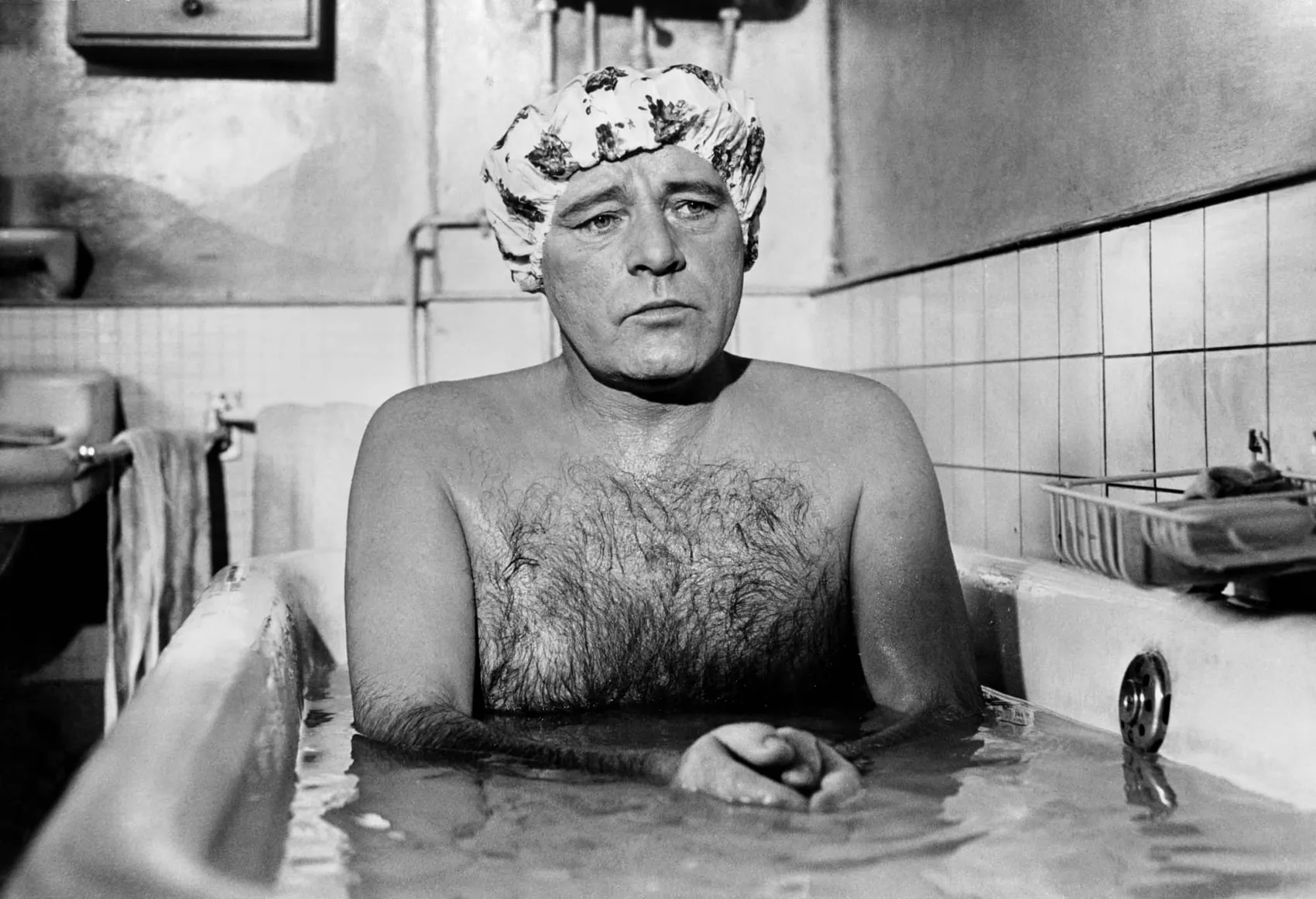
Richard Burton in the Bath, On the Set of Staircase, Paris, 1969
Richard Burton in the Bath, On the Set of Staircase, Paris, 1969
Richard Burton in the bath was photographed in Paris in 1969 during the filming of Staircase. At the time, Burton was already regarded as one of the most formidable actors of his generation. The film marked a departure from the epic roles that had defined much of his career. Instead, it focused on intimacy, character, and restraint.
In Staircase, Burton portrays a hairdresser navigating a strained personal relationship. The role required emotional subtlety rather than theatrical force. This photograph captures that shift. Seated in a bath, Burton appears quiet and introspective. His expression is thoughtful. His posture is reserved. The setting feels private and unguarded.
The image strips away the grandeur often associated with Burton’s public persona. There are no costumes or dramatic gestures. The bath becomes a space of pause. It allows the viewer to see the actor between performance and reflection. This moment of stillness adds depth to the portrait.
Photographed by Terry O’Neill, the image exemplifies his ability to humanize cultural icons. Rather than staging a formal portrait, O’Neill captures an unscripted moment. The result is both candid and psychologically rich. It reflects a broader shift in celebrity photography during the late 1960s.
Today, Richard Burton in the bath stands as a rare glimpse into the actor’s inner world. It remains a compelling document of a pivotal moment in his career. The photograph endures as a quiet meditation on fame, vulnerability, and performance.
Available Sizes (Unframed):
Editions of 50
- 16 × 20 in (40.6 × 50.8 cm)
- 20 × 24 in (50.8 × 61 cm)
- 30 x 40 in (76.2 x 101.6 cm)
- 48 x 72 in (122 x 183 cm)
Edition Information:
During his lifetime, Terry O’Neill produced a significant body of signed, limited-edition fine art photographs. Following his passing, a small archive of works prepared for exhibition and sale remained within his estate. These photographs are now exceptionally rare and available only in limited sizes.
Estate-stamped limited edition photographs are offered in select sizes only. Estate editions are released solely when the original signed edition of 50 in a given size had not fully sold out during the artist’s lifetime. In such cases, the remaining editions continue as Estate Editions until fully allocated.
In select cases, this artwork may also be available as a hand-signed lifetime print. Please contact the gallery directly for current availability and details.
Each print is accompanied by a certificate of authenticity issued by the gallery.
We ship worldwide and use a multitude of providers to safely deliver your masterpiece. Domestic delivery and installation may also be available via Hilton Contemporary’s private art shuttle.
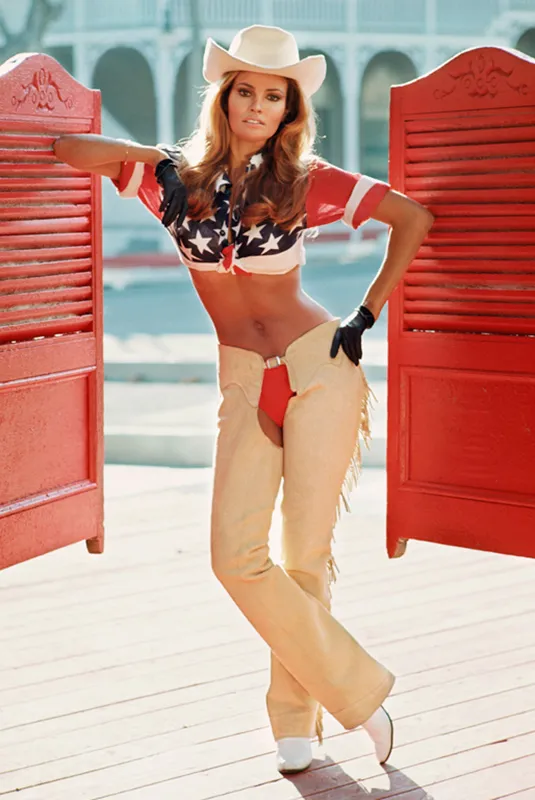
Raquel Welch in Chaps as Myra Breckinridge, 1970
Raquel Welch in Chaps as Myra Breckinridge, 1970
Raquel Welch in chaps was photographed in 1970 during the production of Myra Breckinridge. At the time, Welch was one of Hollywood’s most recognizable figures. She hoped the role would move her beyond the image of a 1960s sex symbol. The film ultimately failed both critically and commercially. Despite this, the imagery created around the project has endured.
In this photograph, Welch appears confident and commanding. Her posture is direct and self-assured. The styling is bold and deliberate. Together, these elements create an image that is instantly recognizable. The photograph reflects a moment when fashion, celebrity, and provocation converged. It also marks a shift in Hollywood’s visual language at the start of the 1970s.
Removed from its cinematic context, the image functions as a standalone portrait. It no longer depends on the narrative of the film. Instead, it presents Welch as a constructed cultural icon. Her gaze and stance project authority rather than vulnerability. This tension between glamour and strength defines the image’s lasting appeal.
The photograph captures a pivotal moment in Welch’s career. It represents both ambition and risk. While the role did not reshape her film trajectory, it contributed to her enduring visual legacy. The image has since become one of the most frequently referenced portraits associated with her career.
Today, Raquel Welch in chaps remains a defining example of celebrity photography from the era. It reflects the power of a single image to outlive the circumstances of its creation. Decades later, the photograph continues to resonate as a symbol of Hollywood mythology and cultural memory.
Available Sizes (Unframed):
Editions of 50
- 16 × 20 in (40.6 × 50.8 cm)
- 20 × 24 in (50.8 × 61 cm)
- 30 x 40 in (76.2 x 101.6 cm)
- 48 x 72 in (122 x 183 cm)
Edition Information:
During his lifetime, Terry O’Neill produced a significant body of signed, limited-edition fine art photographs. Following his passing, a small archive of works prepared for exhibition and sale remained within his estate. These photographs are now exceptionally rare and available only in limited sizes.
Estate-stamped limited edition photographs are offered in select sizes only. Estate editions are released solely when the original signed edition of 50 in a given size had not fully sold out during the artist’s lifetime. In such cases, the remaining editions continue as Estate Editions until fully allocated.
In select cases, this artwork may also be available as a hand-signed lifetime print. Please contact the gallery directly for current availability and details.
Each print is accompanied by a certificate of authenticity issued by the gallery.
We ship worldwide and use a multitude of providers to safely deliver your masterpiece. Domestic delivery and installation may also be available via Hilton Contemporary’s private art shuttle.
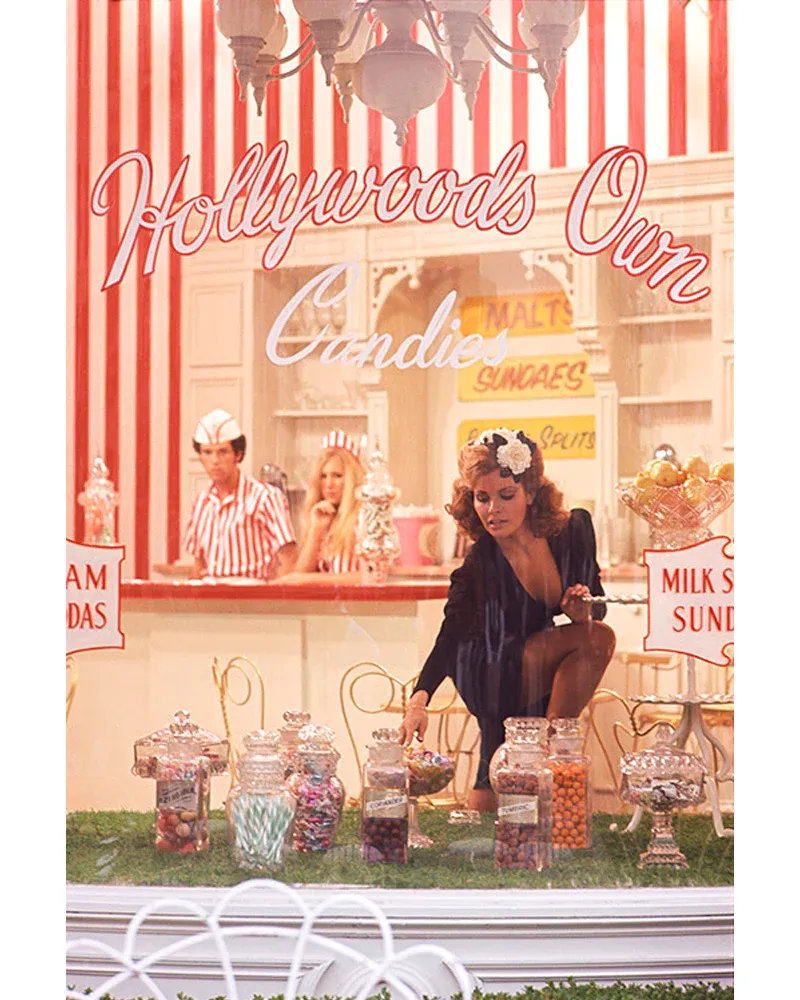
Raquel Welch in a Sweet Shop, 1970
Raquel Welch in a Sweet Shop, 1970
Raquel Welch in a Sweet Shop was photographed by Terry O’Neill in 1970 during the filming of Myra Breckinridge. The image places Raquel Welch inside a brightly staged confectionery, where glamour and performance meet.
Welch leans toward the shop window, reaching into rows of glass candy jars. Her pose feels playful and intentional. The gesture reflects the satirical tone of the film. Striped walls, pastel colors, and theatrical lighting heighten the sense of spectacle. The setting feels carefully constructed rather than incidental.
Myra Breckinridge, based on the novel by Gore Vidal and directed by Michael Sarne, challenged Hollywood conventions of the era. The film relied on exaggeration, irony, and visual excess. O’Neill’s photograph mirrors that approach. The image embraces artifice without losing composure.
Rather than presenting Welch as distant or untouchable, the photograph places her within the scene. The glass display separates subject and viewer. At the same time, her movement invites engagement. The moment feels staged yet intimate.
Raquel Welch in a Sweet Shop captures a star at the height of her visibility. It reflects early-1970s cinema and celebrity culture. Terry O’Neill’s photograph balances allure with self-awareness. The result is an image that feels playful, knowing, and distinctly of its time.
Available Sizes (Unframed):
Editions of 50
- 16 × 20 in (40.6 × 50.8 cm)
- 20 × 24 in (50.8 × 61 cm)
- 30 x 40 in (76.2 x 101.6 cm)
- 48 x 72 in (122 x 183 cm)
Edition Information:
During his lifetime, Terry O’Neill produced a significant body of signed, limited-edition fine art photographs. Following his passing, a small archive of works prepared for exhibition and sale remained within his estate. These photographs are now exceptionally rare and available only in limited sizes.
Estate-stamped limited edition photographs are offered in select sizes only. Estate editions are released solely when the original signed edition of 50 in a given size had not fully sold out during the artist’s lifetime. In such cases, the remaining editions continue as Estate Editions until fully allocated.
In select cases, this artwork may also be available as a hand-signed lifetime print. Please contact the gallery directly for current availability and details.
Each print is accompanied by a certificate of authenticity issued by the gallery.
We ship worldwide and use a multitude of providers to safely deliver your masterpiece. Domestic delivery and installation may also be available via Hilton Contemporary’s private art shuttle.
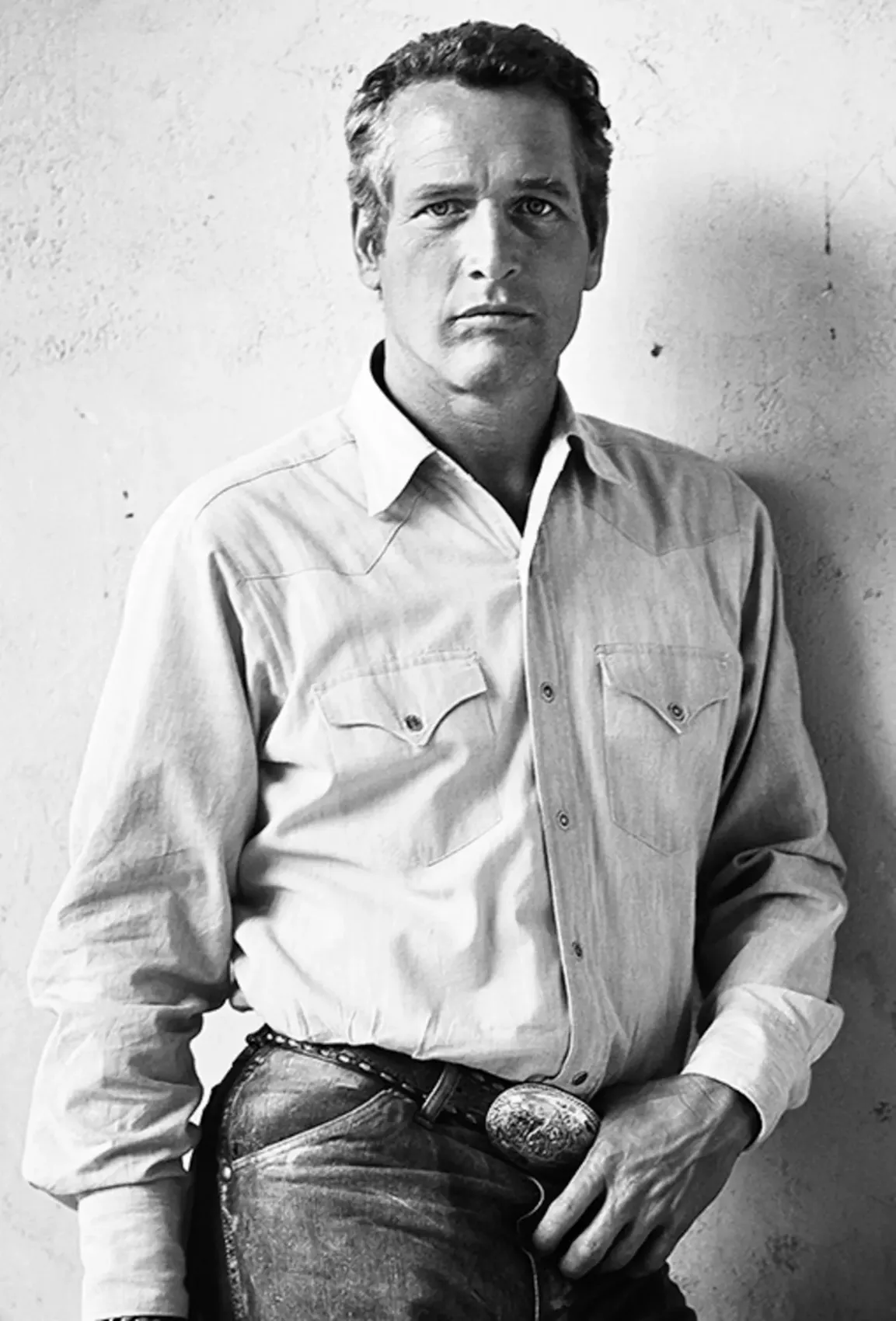
Paul Newman for Pocket Money, 1972
Paul Newman for Pocket Money, 1972
Paul Newman for Pocket Money is a publicity portrait photographed by Terry O’Neill in 1972 during the filming of Pocket Money. Taken in Tucson, Arizona, the image presents Paul Newman in character, blending the visual language of the Western with the understated realism that defined his screen presence.
Newman appears relaxed yet guarded, dressed in practical workwear that reflects the film’s down-on-his-luck cowboy protagonist. His posture and expression convey quiet resolve rather than bravado. The simplicity of the composition allows the subject to carry the frame, emphasizing character over performance. O’Neill’s camera strips away spectacle, focusing instead on Newman’s physical presence and the emotional restraint that made him one of American cinema’s most compelling actors.
Pocket Money paired Newman with Lee Marvin in a Western-inflected buddy comedy that leaned more toward character study than traditional genre conventions. Newman’s role marked another moment in his long collaboration with films that explored moral ambiguity and aging masculinity, themes that recur throughout his career.
O’Neill’s photograph reflects this tonal balance. The image feels grounded and unforced, capturing Newman between takes rather than in a fully staged moment. The textured wall behind him and the natural light contribute to the authenticity of the scene, reinforcing the sense of place and time.
Paul Newman for Pocket Money stands as a document of early-1970s American filmmaking and of Newman’s enduring screen persona. It captures an actor at ease within his craft, photographed by a photographer known for recognizing when presence alone is enough.
Available Sizes (Unframed):
Editions of 50
- 16 × 20 in (40.6 × 50.8 cm)
- 20 × 24 in (50.8 × 61 cm)
- 30 x 40 in (76.2 x 101.6 cm)
Edition Information:
During his lifetime, Terry O’Neill produced a significant body of signed, limited-edition fine art photographs. Following his passing, a small archive of works prepared for exhibition and sale remained within his estate. These photographs are now exceptionally rare and available only in limited sizes.
Estate-stamped limited edition photographs are offered in select sizes only. Estate editions are released solely when the original signed edition of 50 in a given size had not fully sold out during the artist’s lifetime. In such cases, the remaining editions continue as Estate Editions until fully allocated.
In select cases, this artwork may also be available as a hand-signed lifetime print. Please contact the gallery directly for current availability and details.
Each print is accompanied by a certificate of authenticity issued by the gallery.
We ship worldwide and use a multitude of providers to safely deliver your masterpiece. Domestic delivery and installation may also be available via Hilton Contemporary’s private art shuttle.
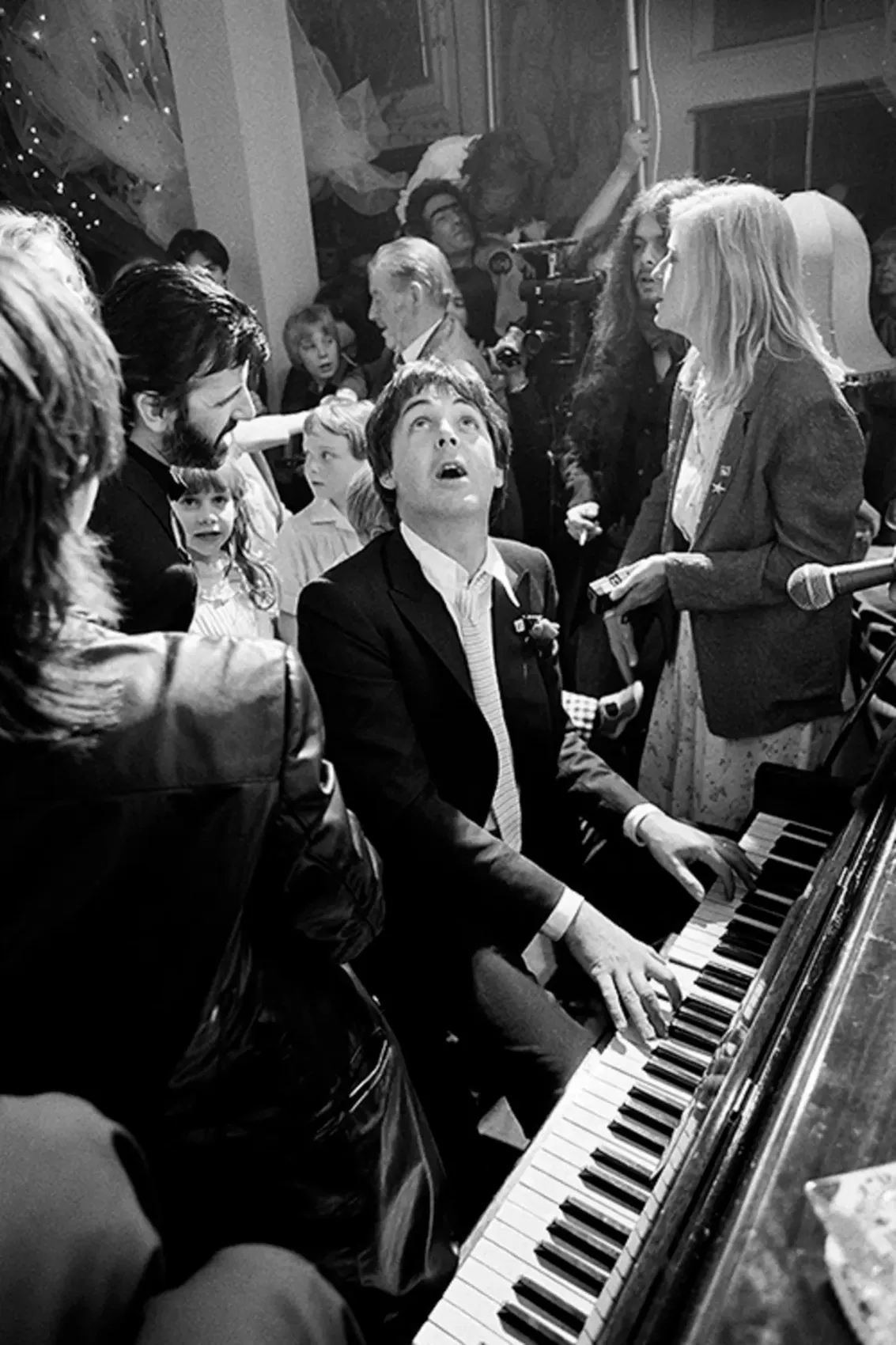
Paul McCartney at Ringo Starr’s Wedding, London 1981
Paul McCartney at Ringo Starr’s Wedding, London 1981
Paul McCartney at Ringo Starr’s Wedding captures an unscripted moment from a private celebration held in London in 1981. Photographed by Terry O’Neill, the image shows Paul McCartney seated at a piano during the wedding of Ringo Starr, surrounded by friends, family, and onlookers.
McCartney is shown mid-performance, his hands on the keys while his attention lifts upward, as if responding to the room rather than the instrument alone. The surrounding figures press in close, creating a sense of intimacy and movement. Children, guests, and members of the inner circle appear within arm’s reach, reinforcing the informal nature of the moment. The scene feels spontaneous, shaped by proximity rather than staging.
O’Neill’s photograph is less about spectacle and more about presence. The piano becomes a gathering point rather than a stage, and McCartney’s role shifts from global icon to friend and participant. The image documents a shared history that extended beyond music and into personal life, offering a rare glimpse into the enduring bonds formed during and after the Beatles’ years together.
The composition emphasizes closeness and immediacy. Faces emerge from the background, some watching, others engaged in quiet conversation. The camera remains within the crowd, placing the viewer inside the room rather than at a distance. This perspective underscores O’Neill’s ability to capture moments that exist between public recognition and private experience.
Paul McCartney at Ringo Starr’s Wedding stands as a document of friendship and continuity. It reflects a moment when music, memory, and personal connection intersected away from the spotlight, preserved through O’Neill’s instinct for authenticity.
Available Sizes (Unframed):
Editions of 50
- 16 × 20 in (40.6 × 50.8 cm)
- 20 × 24 in (50.8 × 61 cm)
- 30 x 40 in (76.2 x 101.6 cm)
Edition Information:
During his lifetime, Terry O’Neill produced a significant body of signed, limited-edition fine art photographs. Following his passing, a small archive of works prepared for exhibition and sale remained within his estate. These photographs are now exceptionally rare and available only in limited sizes.
Estate-stamped limited edition photographs are offered in select sizes only. Estate editions are released solely when the original signed edition of 50 in a given size had not fully sold out during the artist’s lifetime. In such cases, the remaining editions continue as Estate Editions until fully allocated.
In select cases, this artwork may also be available as a hand-signed lifetime print. Please contact the gallery directly for current availability and details.
Each print is accompanied by a certificate of authenticity issued by the gallery.
We ship worldwide and use a multitude of providers to safely deliver your masterpiece. Domestic delivery and installation may also be available via Hilton Contemporary’s private art shuttle.
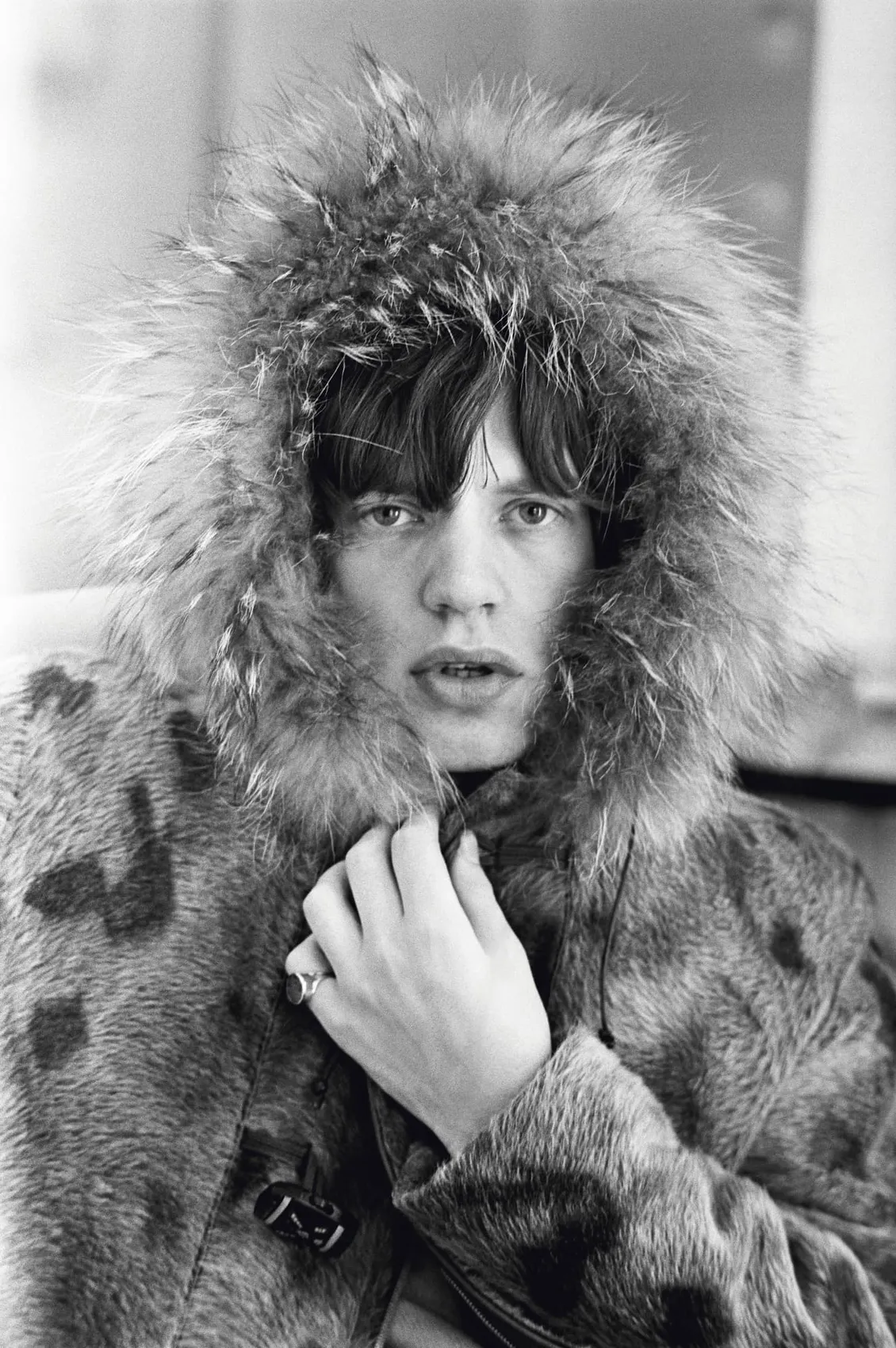
Mick Jagger in Fur Parka, 1964
Mick Jagger in Fur Parka, 1964
Mick Jagger in Fur Parka is a striking portrait photographed by Terry O’Neill in 1964, capturing Mick Jagger at a pivotal moment in his early career. The image balances exposure and restraint, presenting a figure already recognized as a cultural force while revealing a quieter, more personal presence.
The fur parka frames Jagger’s face tightly, drawing immediate focus to his eyes and expression. His gaze feels direct yet contemplative, creating a sense of closeness that pulls the viewer into the frame. One hand holds the parka closed at his chest, a subtle gesture that suggests both protection and vulnerability. This small detail shifts the photograph away from performance and toward something more introspective.
Texture plays a central role in the composition. The contrast between the coarse fur, Jagger’s skin, and his tousled hair gives the image a tactile quality. These elements heighten the physical presence of the subject while reinforcing the emotional weight of the portrait. The photograph feels lived-in rather than staged, reflecting O’Neill’s instinct for capturing moments between public personas.
Taken during the rise of the Rolling Stones, Mick Jagger in Fur Parka reflects the dual identity that defined Jagger in the 1960s. He appears both rebellious and reserved, embodying the tension between fame and individuality. The image resists spectacle, instead offering a study in character and self-awareness.
This photograph stands as one of Terry O’Neill’s most intimate portraits of Jagger. It documents not just a rock star, but a young artist navigating visibility, identity, and the emotional cost of becoming an icon.
Available Sizes (Unframed):
Editions of 50
- 16 × 20 in (40.6 × 50.8 cm)
- 20 × 24 in (50.8 × 61 cm)
- 30 x 40 in (76.2 x 101.6 cm)
Edition Information:
During his lifetime, Terry O’Neill produced a significant body of signed, limited-edition fine art photographs. Following his passing, a small archive of works prepared for exhibition and sale remained within his estate. These photographs are now exceptionally rare and available only in limited sizes.
Estate-stamped limited edition photographs are offered in select sizes only. Estate editions are released solely when the original signed edition of 50 in a given size had not fully sold out during the artist’s lifetime. In such cases, the remaining editions continue as Estate Editions until fully allocated.
In select cases, this artwork may also be available as a hand-signed lifetime print. Please contact the gallery directly for current availability and details.
Each print is accompanied by a certificate of authenticity issued by the gallery.
We ship worldwide and use a multitude of providers to safely deliver your masterpiece. Domestic delivery and installation may also be available via Hilton Contemporary’s private art shuttle.
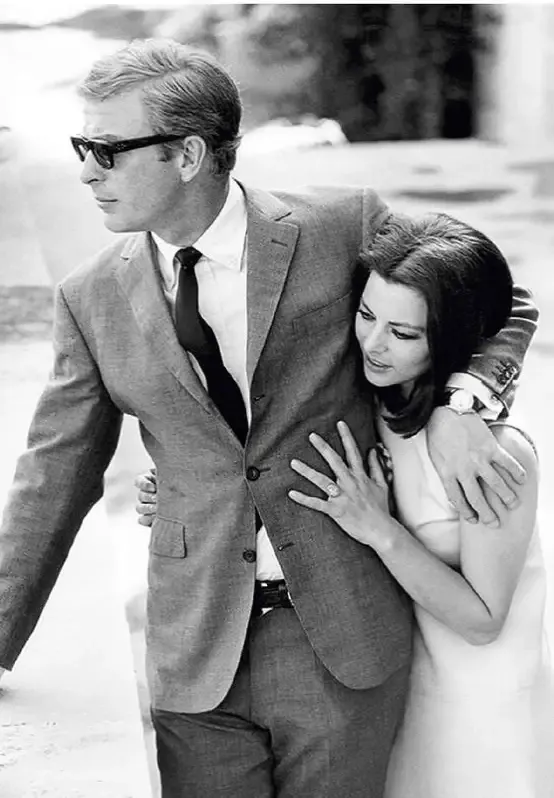
Michael Caine and Giovanna Ralli in Deadfall, 1968
Michael Caine and Giovanna Ralli in Deadfall, 1968
Michael Caine and Giovanna Ralli is captured in this on-set photograph taken during the filming of Deadfall in 1968. Shot on location in Mallorca by Terry O’Neill, the image presents the two actors during a quiet moment away from the camera, reflecting the film’s cool, understated tone.
Michael Caine stars as a jewel thief drawn into an ambitious heist involving a heavily guarded Mediterranean estate. At the time, Caine was emerging as one of Britain’s most influential leading men, known for redefining masculine style on screen. His restrained posture and tailored wardrobe reflect the controlled confidence that became his signature during the late 1960s.
Giovanna Ralli appears alongside Caine, her presence adding both glamour and emotional tension to the narrative. Their natural closeness in the photograph suggests familiarity developed during filming, reinforcing the chemistry that appears on screen. Rather than staging a dramatic pose, Terry O’Neill allows the scene to unfold with ease, emphasizing authenticity over performance.
The film Deadfall occupies a distinct place in Caine’s career, combining European locations with a polished crime aesthetic. Mallorca’s sunlit setting contrasts with the film’s darker themes, a balance echoed in this photograph. O’Neill’s ability to capture actors between takes results in an image that feels personal while remaining visually precise.
This Michael Caine and Giovanna Ralli Deadfall photograph stands as a document of late-1960s cinema, preserving a moment when British film embraced international style and modern realism. It also reflects Terry O’Neill’s enduring talent for photographing cultural icons with clarity and restraint.
Available Sizes (Unframed):
Editions of 50
- 16 × 20 in (40.6 × 50.8 cm)
- 20 × 24 in (50.8 × 61 cm)
- 30 x 40 in (76.2 x 101.6 cm)
Edition Information:
During his lifetime, Terry O’Neill produced a significant body of signed, limited-edition fine art photographs. Following his passing, a small archive of works prepared for exhibition and sale remained within his estate. These photographs are now exceptionally rare and available only in limited sizes.
Estate-stamped limited edition photographs are offered in select sizes only. Estate editions are released solely when the original signed edition of 50 in a given size had not fully sold out during the artist’s lifetime. In such cases, the remaining editions continue as Estate Editions until fully allocated.
In select cases, this artwork may also be available as a hand-signed lifetime print. Please contact the gallery directly for current availability and details.
Each print is accompanied by a certificate of authenticity issued by the gallery.
We ship worldwide and use a multitude of providers to safely deliver your masterpiece. Domestic delivery and installation may also be available via Hilton Contemporary’s private art shuttle.