
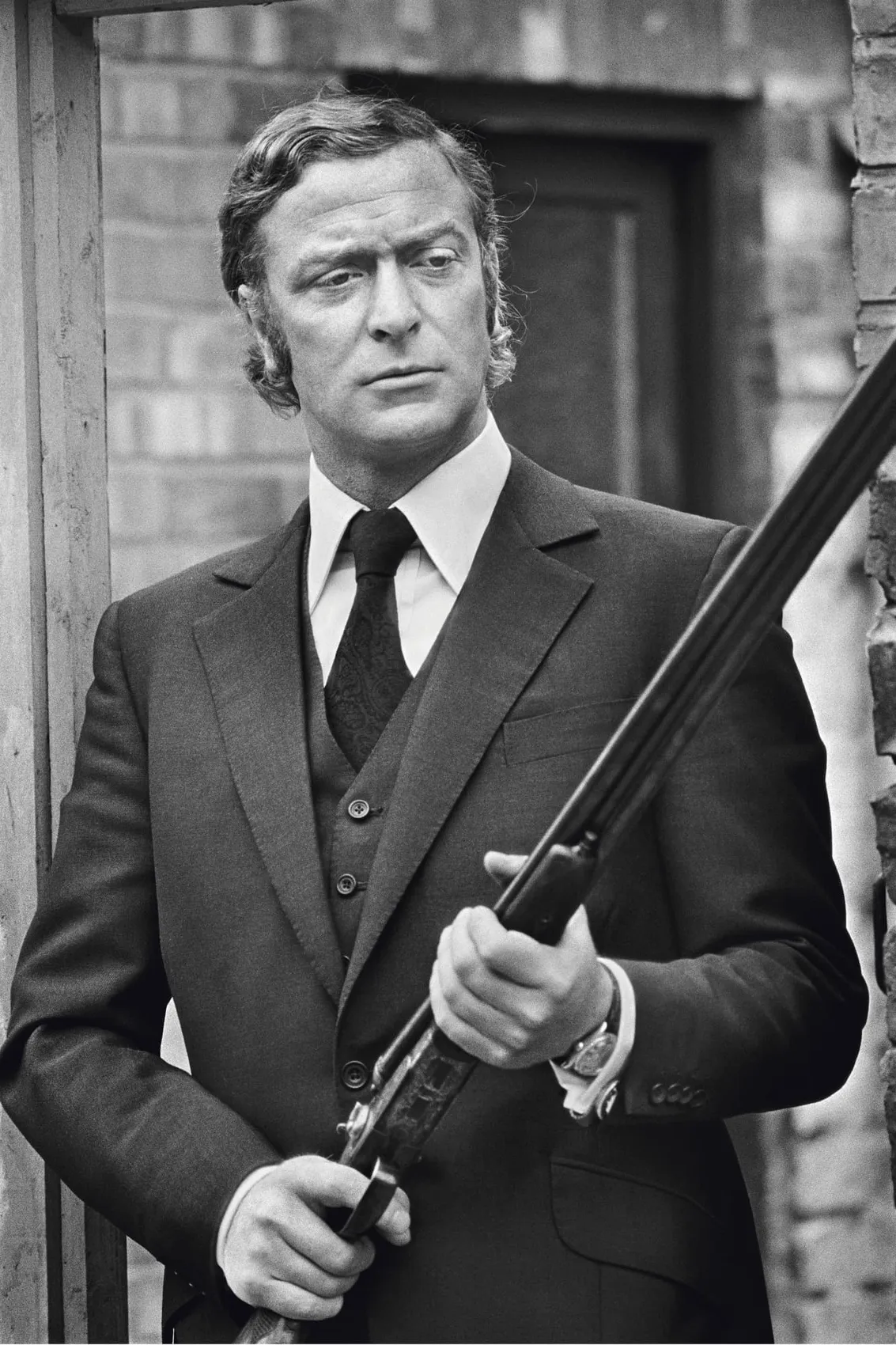
Michael Caine on the Set of Get Carter, 1971

Keith Richards Lighting a Cigarette, London 1964
Michael Caine on the set of Get Carter was photographed by Terry O’Neill in 1971 during the filming of the British crime classic. The image shows Caine in character as Jack Carter, dressed in a tailored three-piece suit and holding a shotgun.
Get Carter marked a defining moment in Michael Caine’s career. The film broke away from the polished image often associated with British leading men of the era. Instead, it presented a colder, more ruthless figure grounded in realism.
The photograph reflects that shift. Caine’s expression is controlled and focused. There is no theatrical gesture or exaggerated pose. The power of the image lies in its restraint.
Terry O’Neill photographed many actors at moments when their public image was evolving. His work often captured the space between performance and reality. This Michael Caine on the set of Get Carter photograph is a clear example of that approach.
The setting is minimal. Brickwork and framing elements place the emphasis on the subject rather than the environment. Caine’s posture suggests quiet authority rather than action. The weapon feels symbolic rather than dramatic.
At the time of filming, Get Carter challenged expectations of British cinema. Its tone was darker and more uncompromising. Caine’s performance helped redefine the crime genre in the United Kingdom.
This Michael Caine on the set of Get Carter image stands as a document of that transformation. It captures an actor stepping fully into a harder, more modern screen presence.
Within Terry O’Neill’s archive, the photograph remains one of the most striking portrayals of Caine. It represents both a pivotal film and a pivotal moment in British film history.
Available Sizes (Unframed):
Editions of 50
- 16 × 20 in (40.6 × 50.8 cm)
- 20 × 24 in (50.8 × 61 cm)
- 30 x 40 in (76.2 x 101.6 cm)
Edition Information:
During his lifetime, Terry O’Neill produced a significant body of signed, limited-edition fine art photographs. Following his passing, a small archive of works prepared for exhibition and sale remained within his estate. These photographs are now exceptionally rare and available only in limited sizes.
Estate-stamped limited edition photographs are offered in select sizes only. Estate editions are released solely when the original signed edition of 50 in a given size had not fully sold out during the artist’s lifetime. In such cases, the remaining editions continue as Estate Editions until fully allocated.
In select cases, this artwork may also be available as a hand-signed lifetime print. Please contact the gallery directly for current availability and details.
Each print is accompanied by a certificate of authenticity issued by the gallery.
We ship worldwide and use a multitude of providers to safely deliver your masterpiece. Domestic delivery and installation may also be available via Hilton Contemporary’s private art shuttle.

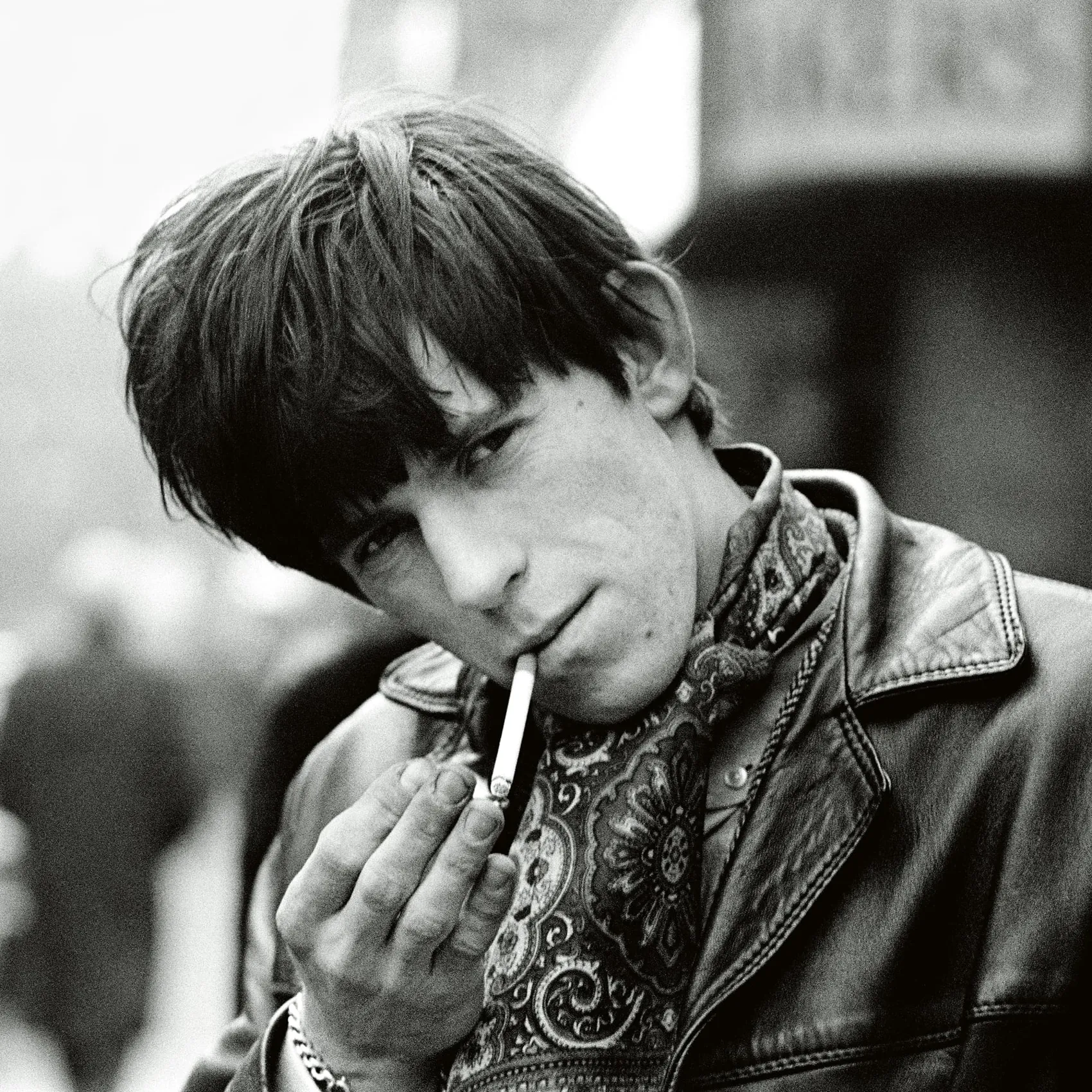
Keith Richards Lighting a Cigarette, London 1964
Keith Richards Lighting a Cigarette, London 1964
Keith Richards lighting a cigarette was photographed by Terry O’Neill in Soho, London, in 1964. The image shows Richards holding a cigarette in one hand as he looks toward the camera. His expression is direct and unguarded.
At the time, the Rolling Stones were emerging as a defining force in British rock music. Their sound and image contrasted sharply with the polished presentation of earlier pop acts. Richards played a central role in shaping that identity.
The photograph captures Richards at an early stage of his career. Fame had not yet fully set in. What comes through instead is attitude and self-possession. The cigarette becomes part of the gesture rather than a posed accessory.
Terry O’Neill often photographed musicians outside of controlled studio environments. Soho provided a fitting backdrop. The area was closely associated with London’s creative and countercultural life during the 1960s.
Rather than emphasizing performance, the image focuses on presence. Richards is not shown with a guitar or on stage. The moment feels observational rather than constructed. This approach was characteristic of O’Neill’s work.
O’Neill documented many artists just before they reached global recognition. His photographs often captured the tension between anonymity and fame. This Keith Richards lighting a cigarette image reflects that balance clearly.
The close framing draws attention to Richards’ face and gesture. Texture and contrast define the composition. The background remains secondary.
As a document of early 1960s music history, the photograph holds lasting significance. It records the formation of a public persona that would become iconic. The image also stands as an example of Terry O’Neill’s ability to recognize cultural shifts as they were unfolding.
This photograph of Keith Richards lighting a cigarette remains an important work within O’Neill’s archive. It captures the emergence of a figure who would shape the sound and image of rock music for decades.
Available Sizes (Unframed):
Editions of 50
- 16 × 20 in (40.6 × 50.8 cm)
- 20 × 24 in (50.8 × 61 cm)
- 30 x 40 in (76.2 x 101.6 cm)
Edition Information:
During his lifetime, Terry O’Neill produced a significant body of signed, limited-edition fine art photographs. Following his passing, a small archive of works prepared for exhibition and sale remained within his estate. These photographs are now exceptionally rare and available only in limited sizes.
Estate-stamped limited edition photographs are offered in select sizes only. Estate editions are released solely when the original signed edition of 50 in a given size had not fully sold out during the artist’s lifetime. In such cases, the remaining editions continue as Estate Editions until fully allocated.
In select cases, this artwork may also be available as a hand-signed lifetime print. Please contact the gallery directly for current availability and details.
Each print is accompanied by a certificate of authenticity issued by the gallery.
We ship worldwide and use a multitude of providers to safely deliver your masterpiece. Domestic delivery and installation may also be available via Hilton Contemporary’s private art shuttle.
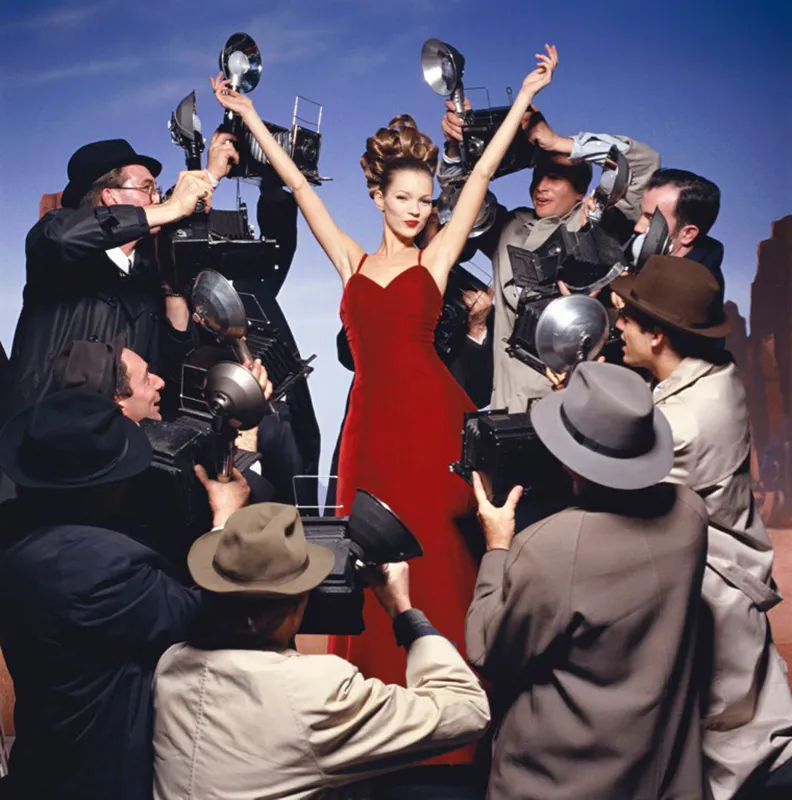
Kate Moss, Studio Portrait 1995
Kate Moss, Studio Portrait 1995
Kate Moss is photographed wearing a red dress during a studio shoot in 1995. Captured by Terry O’Neill, the image presents Moss surrounded by staged photographers, their cameras raised and flash units pointed toward her.
The composition functions as both portrait and commentary. Moss stands at the center with her arms raised, composed and self-possessed. Around her, the photographers crowd inward, creating a sense of pressure and spectacle. The scene evokes the constant presence of cameras that defined celebrity life during the 1990s.
By 1995, Kate Moss had become one of the most recognizable figures in fashion. Her image circulated widely across editorial, advertising, and popular media. This photograph reflects that moment, when visibility itself became part of the narrative surrounding public figures.
The shoot was constructed in a controlled studio environment. The photographers are staged rather than documentary. This choice allows the image to comment on celebrity culture without relying on an actual paparazzi encounter. Artifice becomes part of the message.
Terry O’Neill often explored the relationship between fame and image-making. His work frequently blurred the line between documentation and reflection. This Kate Moss studio portrait 1995 photograph reflects that approach by turning the act of being photographed into the subject itself.
The red dress anchors the composition. Its color contrasts sharply with the muted tones of the surrounding figures. Moss remains visually dominant despite the surrounding attention, reinforcing her central role within the image.
As a document of mid-1990s visual culture, the photograph holds lasting relevance. It captures a period when celebrity, fashion, and media exposure became inseparable. This Kate Moss studio portrait 1995 image remains a clear example of O’Neill’s ability to use staging to reveal deeper cultural dynamics.
Available Sizes (Unframed):
Editions of 50
- 16 × 20 in (40.6 × 50.8 cm)
- 20 × 24 in (50.8 × 61 cm)
- 30 x 40 in (76.2 x 101.6 cm)
Edition Information:
During his lifetime, Terry O’Neill produced a significant body of signed, limited-edition fine art photographs. Following his passing, a small archive of works prepared for exhibition and sale remained within his estate. These photographs are now exceptionally rare and available only in limited sizes.
Estate-stamped limited edition photographs are offered in select sizes only. Estate editions are released solely when the original signed edition of 50 in a given size had not fully sold out during the artist’s lifetime. In such cases, the remaining editions continue as Estate Editions until fully allocated.
In select cases, this artwork may also be available as a hand-signed lifetime print. Please contact the gallery directly for current availability and details.
Each print is accompanied by a certificate of authenticity issued by the gallery.
We ship worldwide and use a multitude of providers to safely deliver your masterpiece. Domestic delivery and installation may also be available via Hilton Contemporary’s private art shuttle.
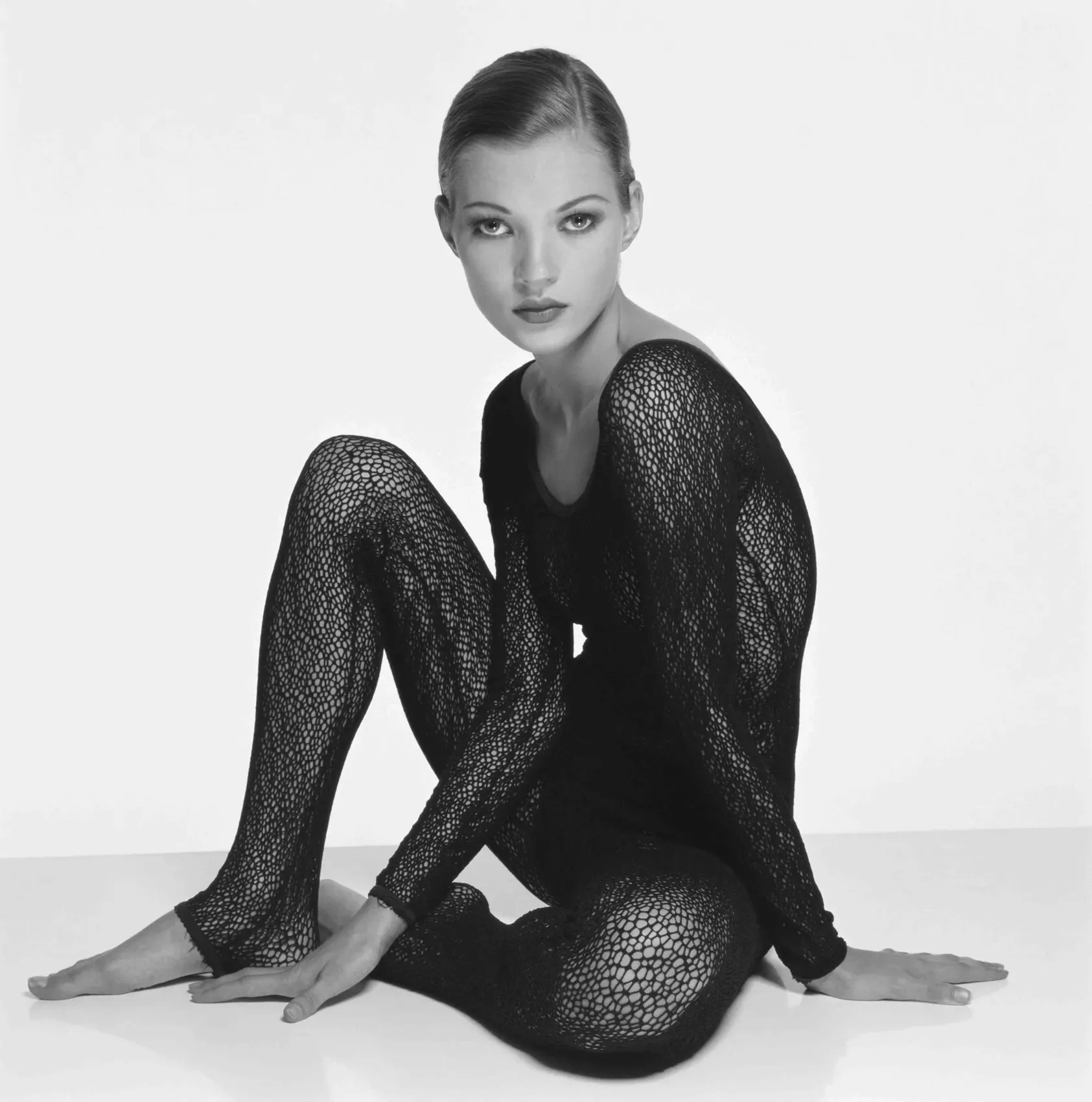
Kate Moss, London 1992
Kate Moss, London 1992
Kate Moss is photographed during a studio session in London in March 1992. Captured by Terry O’Neill, the image dates from a moment just before Moss became one of the most influential figures in fashion.
At the time, Moss was still early in her career. She had not yet become the face of a generation. What the photograph reveals instead is a sense of restraint and clarity that would soon define her public image.
The session took place shortly before Moss’s Calvin Klein campaign, which would mark a turning point in fashion imagery. That campaign helped shift the industry away from excess and toward a more minimal, understated aesthetic. This photograph anticipates that transition.
O’Neill’s composition is stripped back and controlled. The background is plain. The focus remains on form, posture, and expression. Clothing functions as texture rather than statement.
Rather than directing the scene, O’Neill allowed stillness to guide the image. His portraits often captured subjects just before widespread recognition. This Kate Moss London 1992 photograph reflects that instinct with precision.
The image occupies a significant place within early 1990s fashion history. It records a moment of quiet before global exposure transformed its subject. Moss would soon become a defining presence in editorial and advertising work throughout the decade.
As a photograph, it remains restrained and direct. As a historical document, it marks the emergence of a new visual language. This Kate Moss London 1992 portrait continues to resonate for its simplicity, timing, and clarity.
Available Sizes (Unframed):
Editions of 50
- 16 × 20 in (40.6 × 50.8 cm)
- 20 × 24 in (50.8 × 61 cm)
- 30 x 40 in (76.2 x 101.6 cm)
Edition Information:
During his lifetime, Terry O’Neill produced a significant body of signed, limited-edition fine art photographs. Following his passing, a small archive of works prepared for exhibition and sale remained within his estate. These photographs are now exceptionally rare and available only in limited sizes.
Estate-stamped limited edition photographs are offered in select sizes only. Estate editions are released solely when the original signed edition of 50 in a given size had not fully sold out during the artist’s lifetime. In such cases, the remaining editions continue as Estate Editions until fully allocated.
In select cases, this artwork may also be available as a hand-signed lifetime print. Please contact the gallery directly for current availability and details.
Each print is accompanied by a certificate of authenticity issued by the gallery.
We ship worldwide and use a multitude of providers to safely deliver your masterpiece. Domestic delivery and installation may also be available via Hilton Contemporary’s private art shuttle.
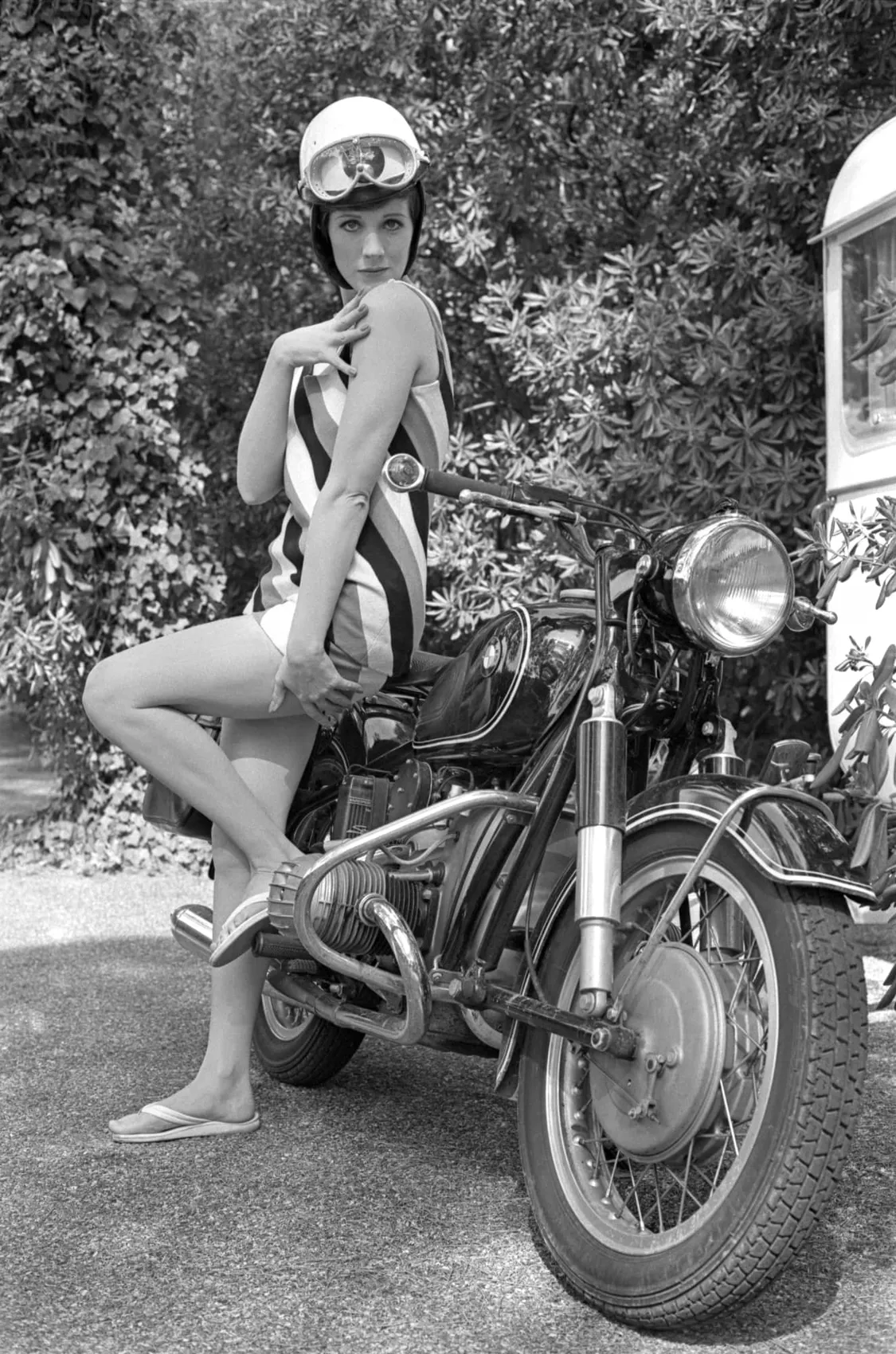
Julie Andrews on the Set of Star! 1968
Julie Andrews on the Set of Star!, 1968
Julie Andrews on the Set of Star! was photographed by Terry O’Neill in 1968 during location filming in the south of France. The image shows Andrews seated on a motorcycle, wearing a striped costume and helmet used during production. The setting is informal and composed.
Star!, directed by Robert Wise, was a large-scale musical based on the life of performer Gertrude Lawrence. Julie Andrews starred in the leading role. By 1968, she was already an internationally recognized figure in film and stage.
The photograph was taken outside a studio environment. Natural light and surrounding foliage replace controlled sets. Terry O’Neill often favored these conditions. His work emphasized atmosphere rather than staged performance.
Instead of capturing Andrews in action, the image presents a pause between scenes. Costume and character remain visible. Movement is implied rather than shown. This Julie Andrews on the Set of Star! photograph emphasizes presence over spectacle.
O’Neill documented many of the most influential cultural figures of the 20th century. His portraits often balance elegance with realism. This approach is evident in the quiet tone of the image.
The motorcycle introduces contrast within a period musical. It suggests motion and modernity. Andrews’ posture remains calm and assured. The composition avoids theatrical exaggeration.
As a document of 1960s film production, the image holds lasting relevance. It records a major musical during location filming. The photograph of Julie Andrews on the Set of Star! also preserves a reflective moment within a demanding production schedule.
Available Sizes (Unframed):
Editions of 50
- 16 × 20 in (40.6 × 50.8 cm)
- 20 × 24 in (50.8 × 61 cm)
- 30 x 40 in (76.2 x 101.6 cm)
Edition Information:
During his lifetime, Terry O’Neill produced a significant body of signed, limited-edition fine art photographs. Following his passing, a small archive of works prepared for exhibition and sale remained within his estate. These photographs are now exceptionally rare and available only in limited sizes.
Estate-stamped limited edition photographs are offered in select sizes only. Estate editions are released solely when the original signed edition of 50 in a given size had not fully sold out during the artist’s lifetime. In such cases, the remaining editions continue as Estate Editions until fully allocated.
In select cases, this artwork may also be available as a hand-signed lifetime print. Please contact the gallery directly for current availability and details.
Each print is accompanied by a certificate of authenticity issued by the gallery.
We ship worldwide and use a multitude of providers to safely deliver your masterpiece. Domestic delivery and installation may also be available via Hilton Contemporary’s private art shuttle.
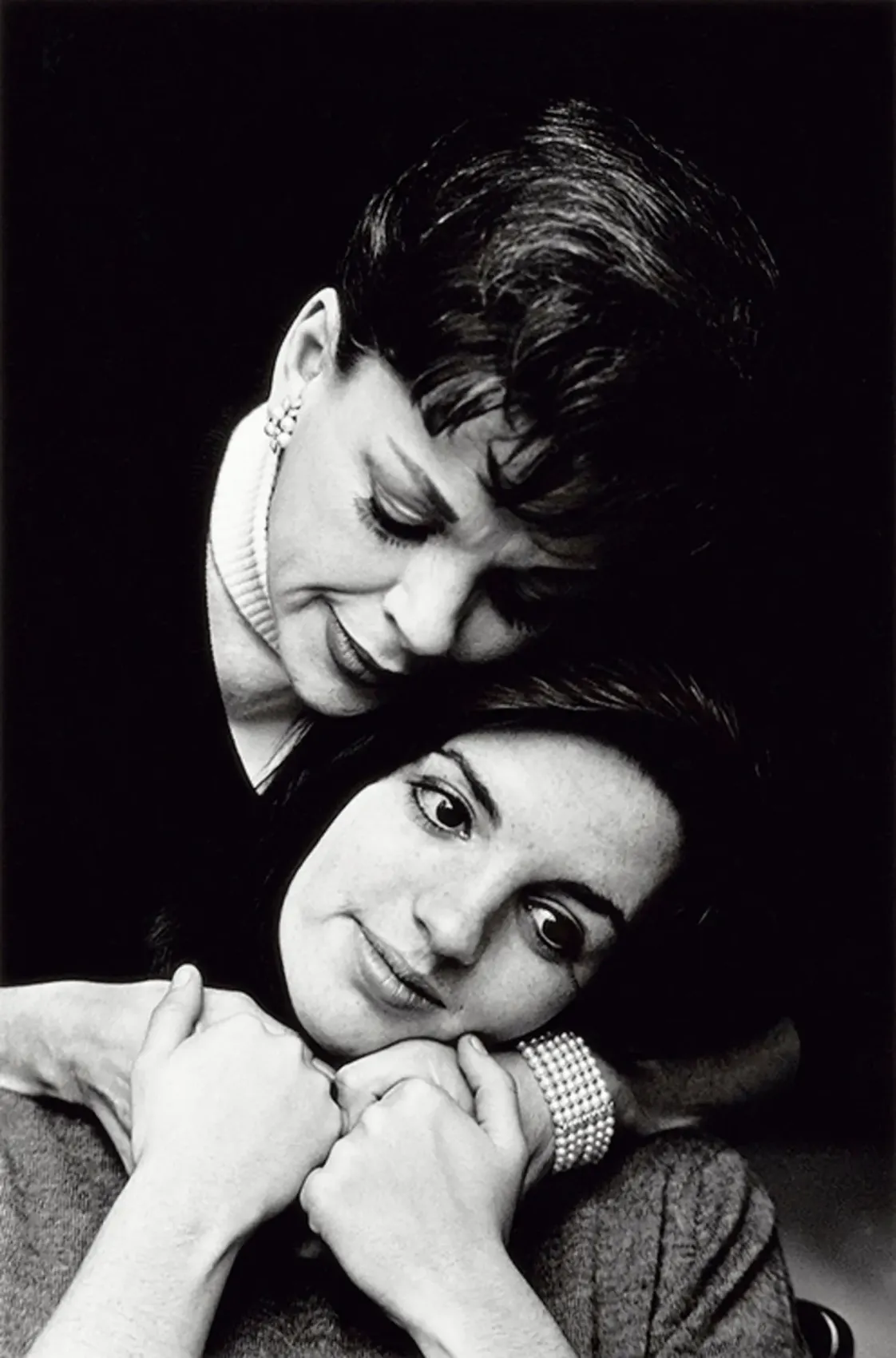
Judy Garland and Liza Minelli, 1964
Judy Garland and Liza Minelli, 1964
Judy Garland and Liza Minnelli were photographed together by Terry O’Neill in 1964. The image captures an intimate moment between mother and daughter. Both figures are shown in close proximity, emphasizing tenderness and connection.
By 1964, Judy Garland was already a legendary performer. Her career spanned film, music, and live performance. She remained one of the most influential entertainers of the 20th century.
Liza Minnelli was emerging as a performer in her own right. Raised within a world shaped by stage and screen, she was beginning to develop her own artistic identity. The photograph records a moment before her rise to international fame.
Rather than presenting a formal portrait, Terry O’Neill focused on emotion and proximity. Garland’s posture suggests protection and affection. Minnelli’s expression conveys trust and calm.
O’Neill often photographed cultural figures outside of performance settings. His work emphasized authenticity and restraint. This Judy Garland and Liza Minnelli photograph reflects that approach clearly.
The composition avoids theatrical elements. Lighting and framing remain simple. Attention is directed toward facial expression and gesture.
As a document of mid-20th-century cultural history, the image holds lasting significance. It unites two generations of performers in a single frame. The photograph records personal connection rather than public persona.
This portrait of Judy Garland and Liza Minnelli remains a powerful example of Terry O’Neill’s ability to capture intimacy. It stands as both a family photograph and a cultural document. The image continues to resonate for its emotional clarity and historical importance.
Available Sizes (Unframed):
Editions of 50
- 16 × 20 in (40.6 × 50.8 cm)
- 20 × 24 in (50.8 × 61 cm)
- 30 x 40 in (76.2 x 101.6 cm)
Edition Information:
During his lifetime, Terry O’Neill produced a significant body of signed, limited-edition fine art photographs. Following his passing, a small archive of works prepared for exhibition and sale remained within his estate. These photographs are now exceptionally rare and available only in limited sizes.
Estate-stamped limited edition photographs are offered in select sizes only. Estate editions are released solely when the original signed edition of 50 in a given size had not fully sold out during the artist’s lifetime. In such cases, the remaining editions continue as Estate Editions until fully allocated.
In select cases, this artwork may also be available as a hand-signed lifetime print. Please contact the gallery directly for current availability and details.
Each print is accompanied by a certificate of authenticity issued by the gallery.
We ship worldwide and use a multitude of providers to safely deliver your masterpiece. Domestic delivery and installation may also be available via Hilton Contemporary’s private art shuttle.
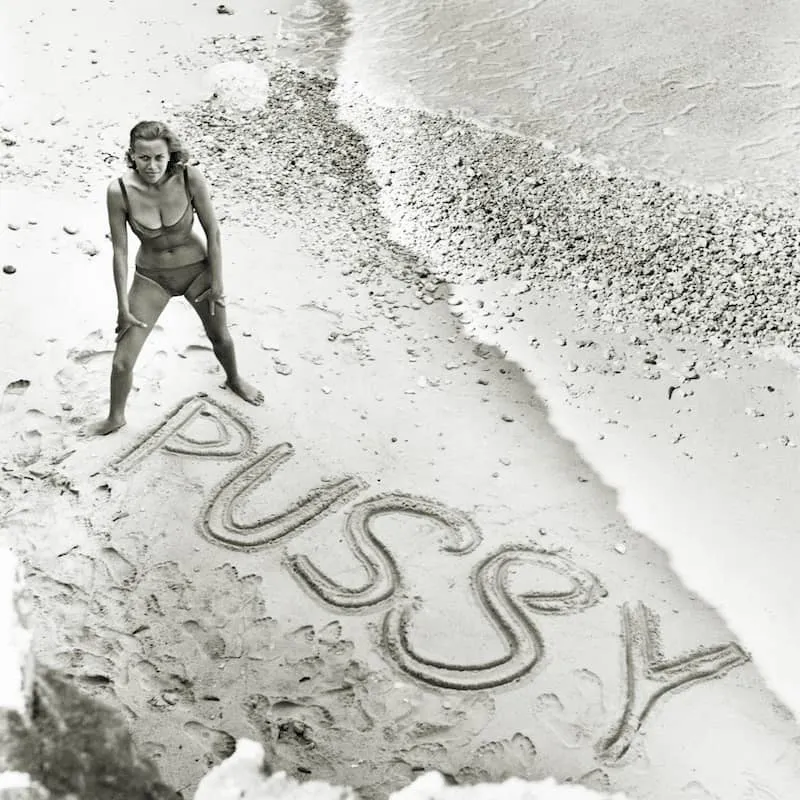
Honor Blackman as Pussy Galore, 1964
Honor Blackman as Pussy Galore, 1964
Honor Blackman as Pussy Galore was photographed by Terry O’Neill in 1964 for the promotion of Goldfinger. The image shows Blackman standing on a beach wearing a bikini. Written in the sand below her feet is the name of her character.
The photograph was created as part of the publicity campaign for the third James Bond film. Released in 1964, Goldfinger became one of the most influential entries in the franchise. Honor Blackman’s role as Pussy Galore marked a significant shift in the portrayal of Bond women.
Blackman’s character was presented as independent and authoritative. Pussy Galore leads an all-female flying team in the film. Her presence challenged earlier conventions associated with the Bond series. That strength is reflected in O’Neill’s photograph.
Rather than a studio setting, the image places Blackman in an open coastal landscape. The beach setting introduces simplicity and contrast. Terry O’Neill framed the composition to emphasize stance and expression rather than glamour alone.
O’Neill was known for his ability to capture defining cultural moments. His photographs often balanced publicity with authenticity. This Honor Blackman as Pussy Galore image reflects that approach clearly.
The handwritten name in the sand functions as both identification and symbol. It anchors the image to the film while remaining informal. The gesture reinforces the character’s cultural impact without relying on props or costumes from the set.
As a document of 1960s cinema, the photograph holds lasting importance. It records a moment when the James Bond franchise was solidifying its global identity. Honor Blackman’s portrayal became one of the most recognizable in the series.
The photograph, Honor Blackman as Pussy Galore, remains a key work within Terry O’Neill’s archive. It captures a turning point in film publicity and gender representation. The image continues to resonate as both a cinematic and cultural record.
Available Sizes (Unframed):
Editions of 50
- 16 × 20 in (40.6 × 50.8 cm)
- 20 × 24 in (50.8 × 61 cm)
- 30 x 40 in (76.2 x 101.6 cm)
Edition Information:
During his lifetime, Terry O’Neill produced a significant body of signed, limited-edition fine art photographs. Following his passing, a small archive of works prepared for exhibition and sale remained within his estate. These photographs are now exceptionally rare and available only in limited sizes.
Estate-stamped limited edition photographs are offered in select sizes only. Estate editions are released solely when the original signed edition of 50 in a given size had not fully sold out during the artist’s lifetime. In such cases, the remaining editions continue as Estate Editions until fully allocated.
In select cases, this artwork may also be available as a hand-signed lifetime print. Please contact the gallery directly for current availability and details.
Each print is accompanied by a certificate of authenticity issued by the gallery.
We ship worldwide and use a multitude of providers to safely deliver your masterpiece. Domestic delivery and installation may also be available via Hilton Contemporary’s private art shuttle.
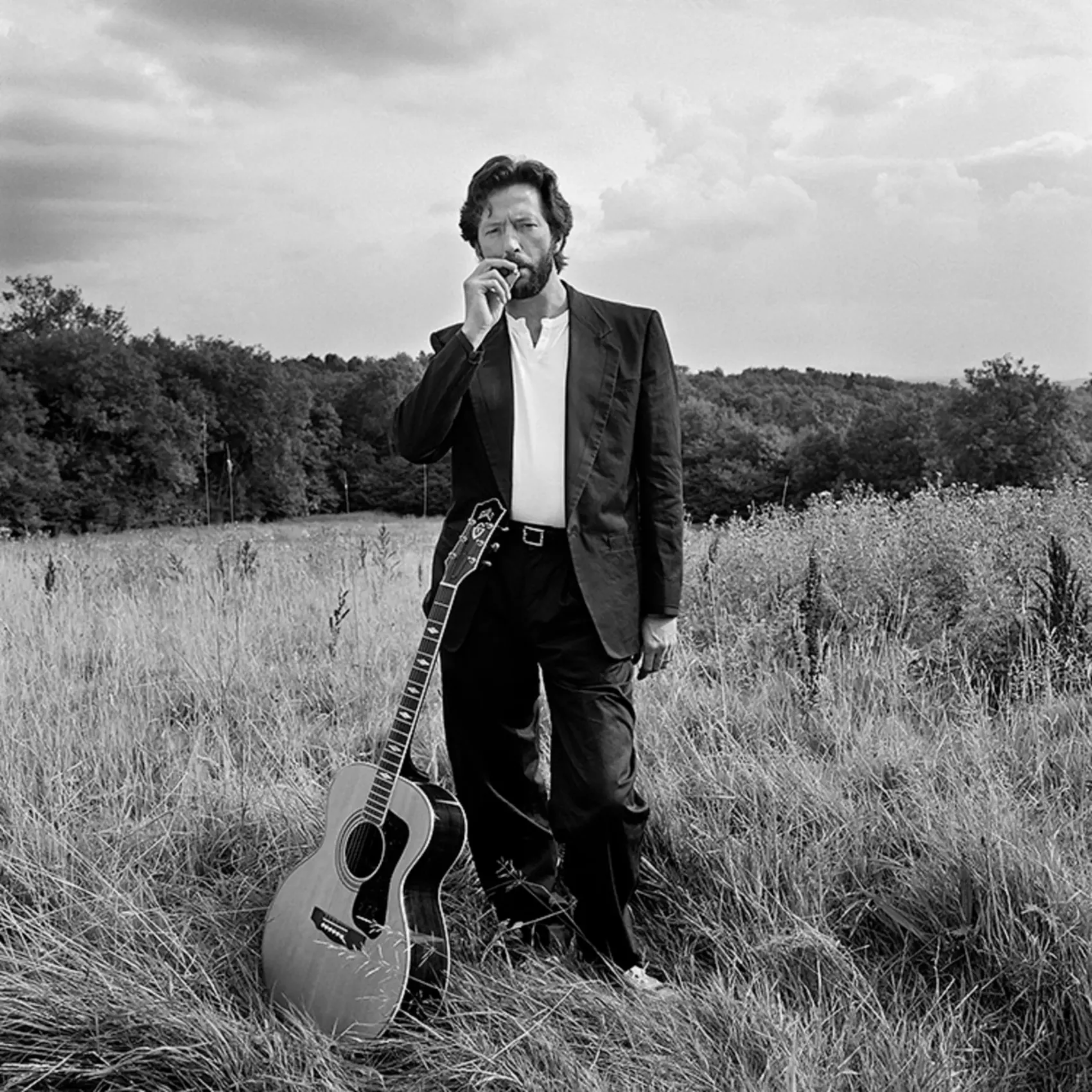
Eric Clapton Near His Home in Surrey, 1993
Eric Clapton Near His Home in Surrey, 1993
Eric Clapton near his home in Surrey was photographed by Terry O’Neill in 1993. The image shows Clapton posing with his guitar in a quiet rural landscape. Open fields and distant trees form the setting.
By this point, Eric Clapton was firmly established as one of the most influential guitarists in modern music. He remains the only artist inducted into the Rock and Roll Hall of Fame three times. Those inductions recognize his solo career and his work with both The Yardbirds and Cream.
Clapton’s influence spans blues, rock, and contemporary popular music. His guitar style shaped multiple generations of musicians. Rolling Stone ranked him second on its list of the 100 Greatest Guitarists of All Time.
Rather than placing the subject on stage, the photograph situates Clapton away from performance. There is no audience present. Terry O’Neill instead emphasized posture, environment, and stillness.
O’Neill frequently photographed musicians between public appearances. His approach relied on observation rather than direction. This Eric Clapton near his home in Surrey photograph reflects that method clearly.
The guitar appears as a familiar presence rather than a dramatic prop. Its placement reinforces continuity rather than spectacle. Attention remains focused on mood and setting.
Surrounding grass and open space frame the figure without distraction. The landscape contributes to a sense of calm and reflection. Visual simplicity defines the composition.
As a document of early 1990s music history, the image holds lasting relevance. It captures an artist whose influence was already secure. This Eric Clapton near his home in Surrey photograph also stands as a strong example of Terry O’Neill’s ability to record cultural figures in quiet, personal environments.
Available Sizes (Unframed):
Editions of 50 - Silver Gelatin Print
- 16 × 20 in (40.6 × 50.8 cm)
- 20 × 24 in (50.8 × 61 cm)
- 30 x 40 in (76.2 x 101.6 cm)
Edition Information:
During his lifetime, Terry O’Neill produced a significant body of signed, limited-edition fine art photographs. Following his passing, a small archive of works prepared for exhibition and sale remained within his estate. These photographs are now exceptionally rare and available only in limited sizes.
Estate-stamped limited edition photographs are offered in select sizes only. Estate editions are released solely when the original signed edition of 50 in a given size had not fully sold out during the artist’s lifetime. In such cases, the remaining editions continue as Estate Editions until fully allocated.
In select cases, this artwork may also be available as a hand-signed lifetime print. Please contact the gallery directly for current availability and details.
Each print is accompanied by a certificate of authenticity issued by the gallery.
We ship worldwide and use a multitude of providers to safely deliver your masterpiece. Domestic delivery and installation may also be available via Hilton Contemporary’s private art shuttle.
Elton John at Dodger Stadium, 1975
Elton John at Dodger Stadium, 1975
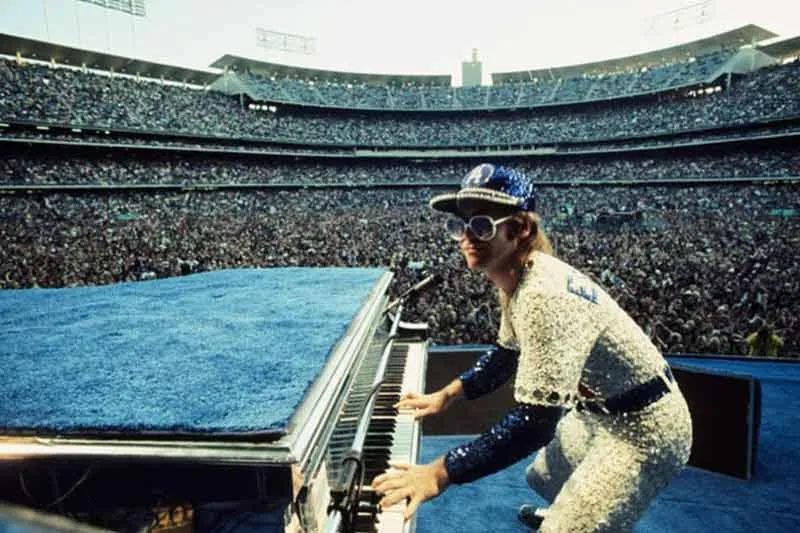
Elton John at Dodger Stadium was photographed by Terry O’Neill in October 1975. The image was taken during the first of two historic concerts in Los Angeles. Elton John is shown seated at the piano in a custom baseball uniform. A vast crowd fills the stadium behind him.
By 1975, Elton John had reached a rare level of global success. His albums dominated international charts. Live performances had become central to his public identity. The Dodger Stadium concerts confirmed his ability to command audiences on an unprecedented scale.
The photograph was taken from the stage. This position places the viewer close to the performer. At the same time, the immense audience remains fully visible. Terry O’Neill’s framing balances intimacy with scale. The contrast between the single figure and the crowd defines the image.
Elton John’s costume played an important role in the performance. The baseball uniform referenced the stadium setting. It also reflected the theatrical approach that defined his concerts. Visual presentation and music were inseparable during this period.
Terry O’Neill was known for documenting musicians at moments of cultural impact. He avoided staged publicity images whenever possible. His photographs often focused on live environments. This Elton John at Dodger Stadium photograph reflects that approach clearly.
Rather than isolating the performer, the image emphasizes context. The audience becomes part of the composition. The stadium setting reinforces the scale of the event. Energy and atmosphere are central to the photograph’s meaning.
As a document of 1970s popular music, the image holds lasting importance. It records one of the most iconic performances of Elton John’s career. The photograph also represents a turning point in stadium-scale concerts. This Elton John at Dodger Stadium photograph remains a defining work within Terry O’Neill’s archive and within the visual history of live music.
Available Sizes (Unframed):
Editions of 50 - Silver Gelatin Print
- 16 × 20 in (40.6 × 50.8 cm)
Edition Information:
During his lifetime, Terry O’Neill produced a significant body of signed, limited-edition fine art photographs. Following his passing, a small archive of works prepared for exhibition and sale remained within his estate. These photographs are now exceptionally rare and available only in limited sizes.
Estate-stamped limited edition photographs are offered in select sizes only. Estate editions are released solely when the original signed edition of 50 in a given size had not fully sold out during the artist’s lifetime. In such cases, the remaining editions continue as Estate Editions until fully allocated.
In select cases, this artwork may also be available as a hand-signed lifetime print. Please contact the gallery directly for current availability and details.
Each print is accompanied by a certificate of authenticity issued by the gallery.
We ship worldwide and use a multitude of providers to safely deliver your masterpiece. Domestic delivery and installation may also be available via Hilton Contemporary’s private art shuttle.
Elton John on his bed in Windsor, 1970s
Elton John at His Piano in Windsor, 1970s
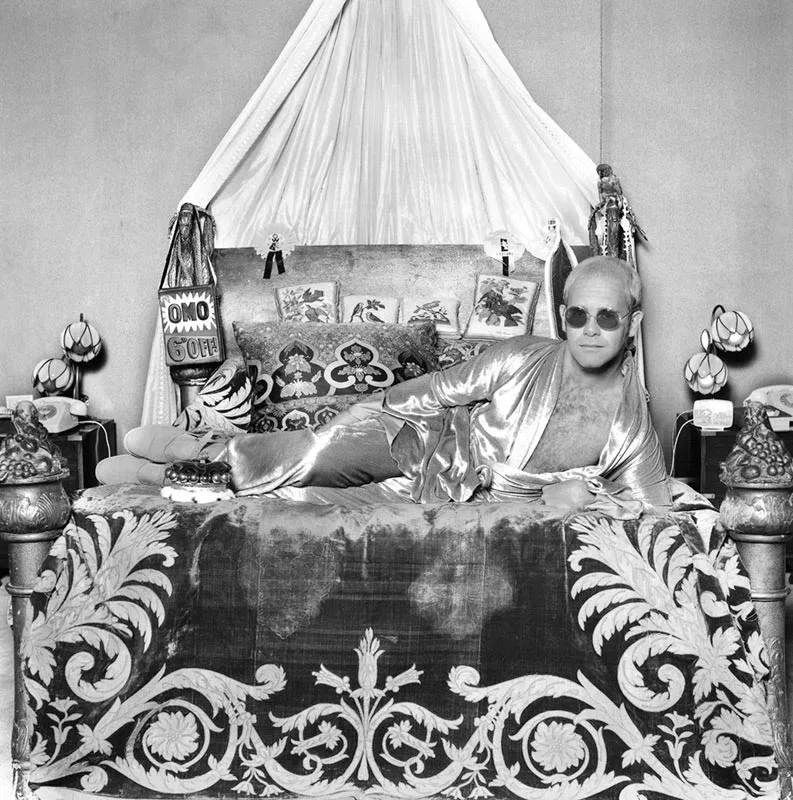
Elton John in Windsor was photographed by Terry O’Neill at the musician’s home during the 1970s. The image shows Elton John on his bed within a richly decorated interior, wearing a satin jumpsuit and round glasses. The setting reflects a private environment shaped by the same theatrical sensibility that defined his public image during this period.
During the 1970s, Elton John was among the most influential figures in popular music. His identity extended beyond performance into fashion, design, and visual presentation. Personal spaces were treated as expressions of creativity rather than purely domestic settings.
Terry O’Neill photographed Elton John away from the stage, focusing on moments of stillness. The composition emphasizes posture, attire, and environment rather than action. By placing the subject within his home, O’Neill presents a portrait shaped as much by setting as by personality.
The interior details surrounding the bed contribute to the photograph’s visual weight. Patterned textiles, decorative objects, and symmetry reinforce the sense of deliberate styling. At the same time, the absence of an audience shifts attention toward presence rather than performance.
O’Neill’s broader body of work often documented cultural figures between public appearances. His approach relied on observation rather than instruction. This Elton John in Windsor photograph reflects that method by capturing a composed but unguarded moment.
As a document of 1970s popular culture, the image holds lasting relevance. It records a period when music, fashion, and personal identity were increasingly intertwined. This Elton John in Windsor photograph remains a strong example of Terry O’Neill’s ability to translate cultural influence into an intimate domestic scene.
Available Sizes (Unframed):
Editions of 50 - Silver Gelatin Print
- 20 × 20 in (50.8 × 50.8 cm)
- 30 × 30 in (76.2 × 76.2 cm)
- 40 x 40 in (101.6 × 101.6 cm)
- 60 x 60 in (152.4 × 152.4 cm)
Edition Information:
During his lifetime, Terry O’Neill produced a significant body of signed, limited-edition fine art photographs. Following his passing, a small archive of works prepared for exhibition and sale remained within his estate. These photographs are now exceptionally rare and available only in limited sizes.
Estate-stamped limited edition photographs are offered in select sizes only. Estate editions are released solely when the original signed edition of 50 in a given size had not fully sold out during the artist’s lifetime. In such cases, the remaining editions continue as Estate Editions until fully allocated.
In select cases, this artwork may also be available as a hand-signed lifetime print. Please contact the gallery directly for current availability and details.
Each print is accompanied by a certificate of authenticity issued by the gallery.
We ship worldwide and use a multitude of providers to safely deliver your masterpiece. Domestic delivery and installation may also be available via Hilton Contemporary’s private art shuttle.