The midday sun on the equator is not a kind light; it is harsh and unflattering. Over the years in East Africa, I have tended to rest around midday rather than go out and work, but changes to the Amboseli ecosystem have put a stop to that.
There are many more Masai cattle and goats grazing in the Amboseli amphitheater now—thousands more in fact. They are herded from the villages to watering holes in the dry season at around 7:00 a.m., and herded back just before dusk. The influx has disrupted elephant behavior, as they like to have a monopoly of the freeways. The more the cattle, the scarcer the elephants.
At the end of the dry season, thebig lake crossings are much more likely to happen during that midday sun, and even then only once or twice a week.The bigger the group, the better the opportunity—but so many variables need to work in favor of the cameraman.
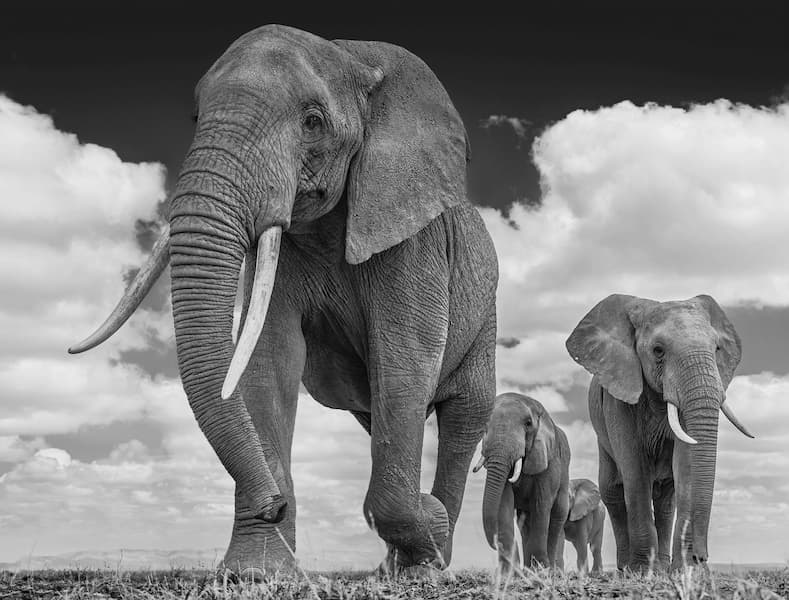
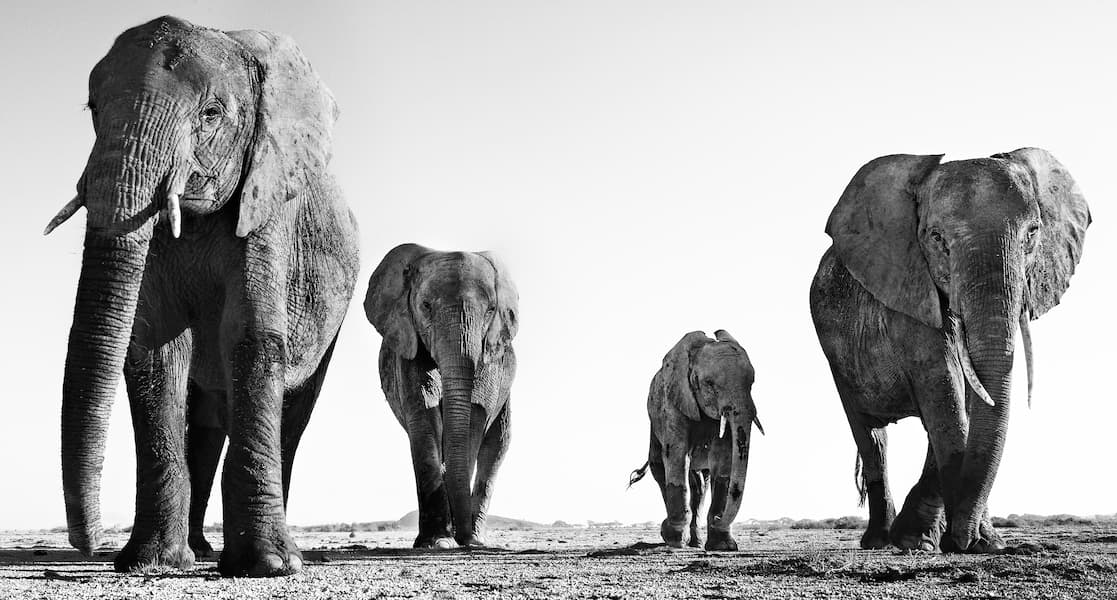
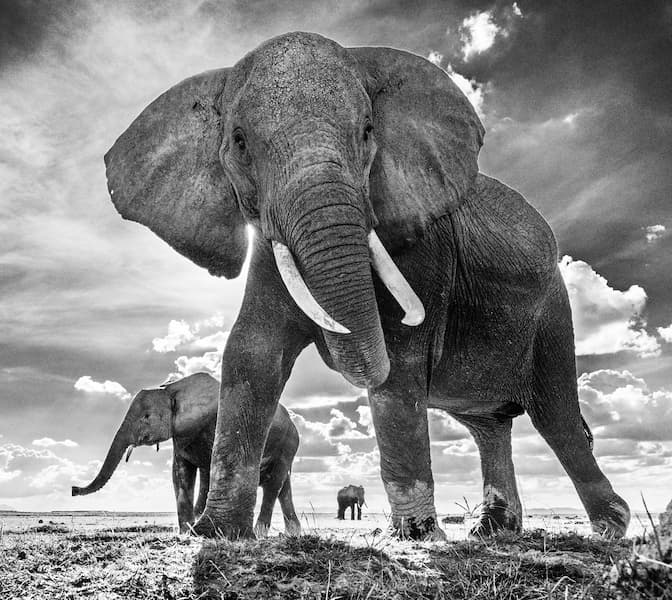
The first thing I look for is the size of the tusks. Sadly, the days of the really big tuskers have largely gone, but there are still some fabulous bulls in Amboseli. When a front line of elephants is on show, with no broken or single tusks, it is one of the greatest sights on this planet.
Elephant Uprising is one such moment. There is a unity and fortitudein the group that evokes human military imagery. This in itself is appropriate, as the elephant is on the rise in Amboseli— there is, indeed, a glorious uprising. The more I look at this image and its intensity, the more I recognize how lucky I wasto capture it. As almost always in this arid dust bowl, no one else was around—just me and an animal army.

Artwork Details
We ship worldwide and use a multitude of providers to safely deliver your artwork. Domestic delivery and installation may also be available via Hilton Contemporary’s private art shuttle. Please inquire.