

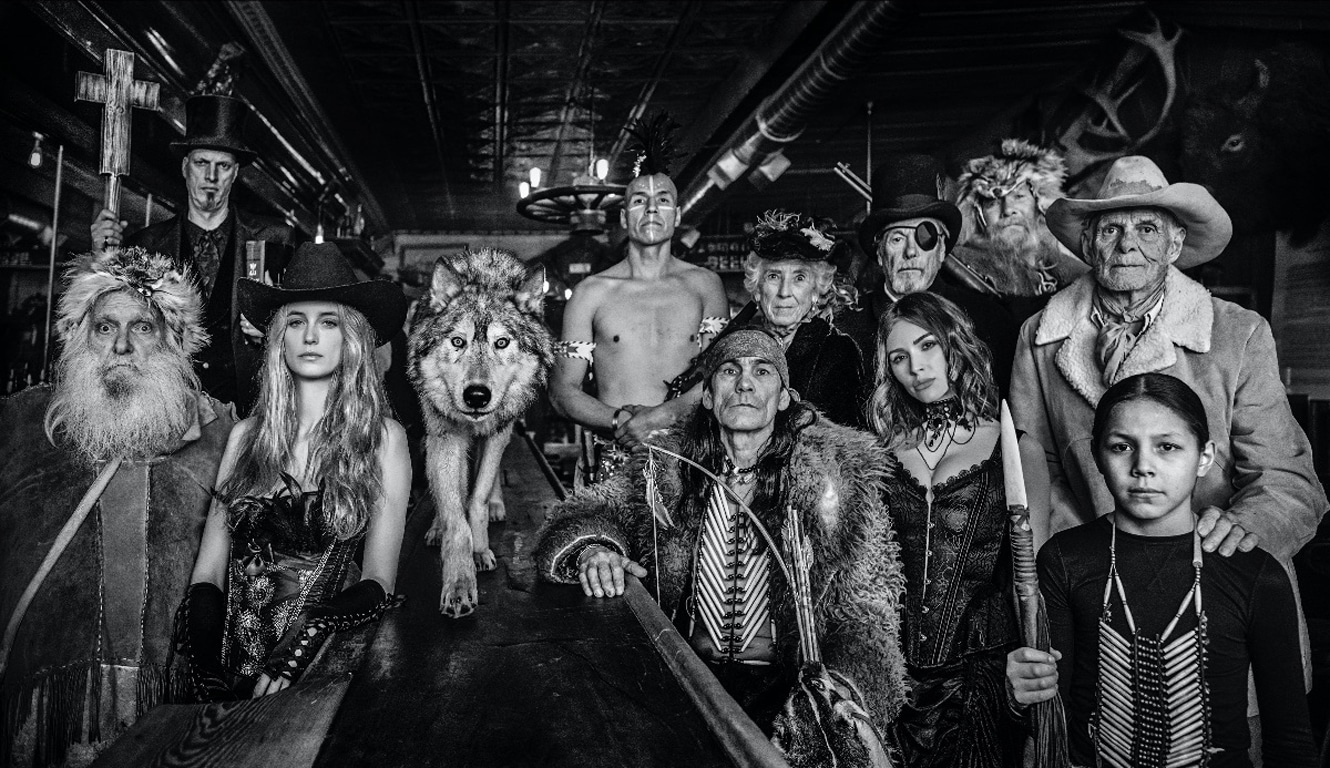

Village People

Manhattan, New York – 2023
Half of the proceeds will go to John McEnroe’s philanthropic endeavors.
“McSorley’s Old Ale House in the East Village is one of the most celebrated Irish bars on the Eastern Seaboard of America. Founded in 1854, it seemingly hasn’t changed much in 170 years and if the walls could talk, it would – “to be sure” – be one very long monologue.
The interior is a museum of the Irish in Manhattan and the joint has such a discernible vibe that Martin Scorsese and his crew did their press briefings for The Gangs of New York in the front bar. In the Great War, young soldiers heading to Europe in 1917, left a turkey wish bone on a wire above the bar; the bones of those who never returned still hang there in front of various JFK memorabilia.
The pub has been in the same Irish family hands for three generations and I was honoured to discover that the current custodian – Gregory – was a collector of my work. Naively, we tried to visit him on St Patrick’s Day, but couldn’t get within 200 yards of the pub. The next day, we had more luck and I was charmed not just by Gregory, but by the whole vibe of the joint. It is a truly special place and I knew I had to film there.
I didn’t have long to wait for the opportunity as John McEnroe – one of the most loved and talented of all American sporting legends and a truly uncompromising New Yorker – had agreed to be filmed by me in the city. Although the McEnroes are of Irish origin and therefore McSorley’s seemed like an appropriate destination, the reason that the location made sense went far deeper than that; John personifies the gritty, uncompromising New Yorker who fights for what he believes to be right – he always has. My leaning was the sawdust laden floors of McSorley’s offered a far more appropriate platform to film this blunt, quintessential, street fighter than some smart Upper East side Italian restaurant or cocktail bar. We were going Irish and tough.
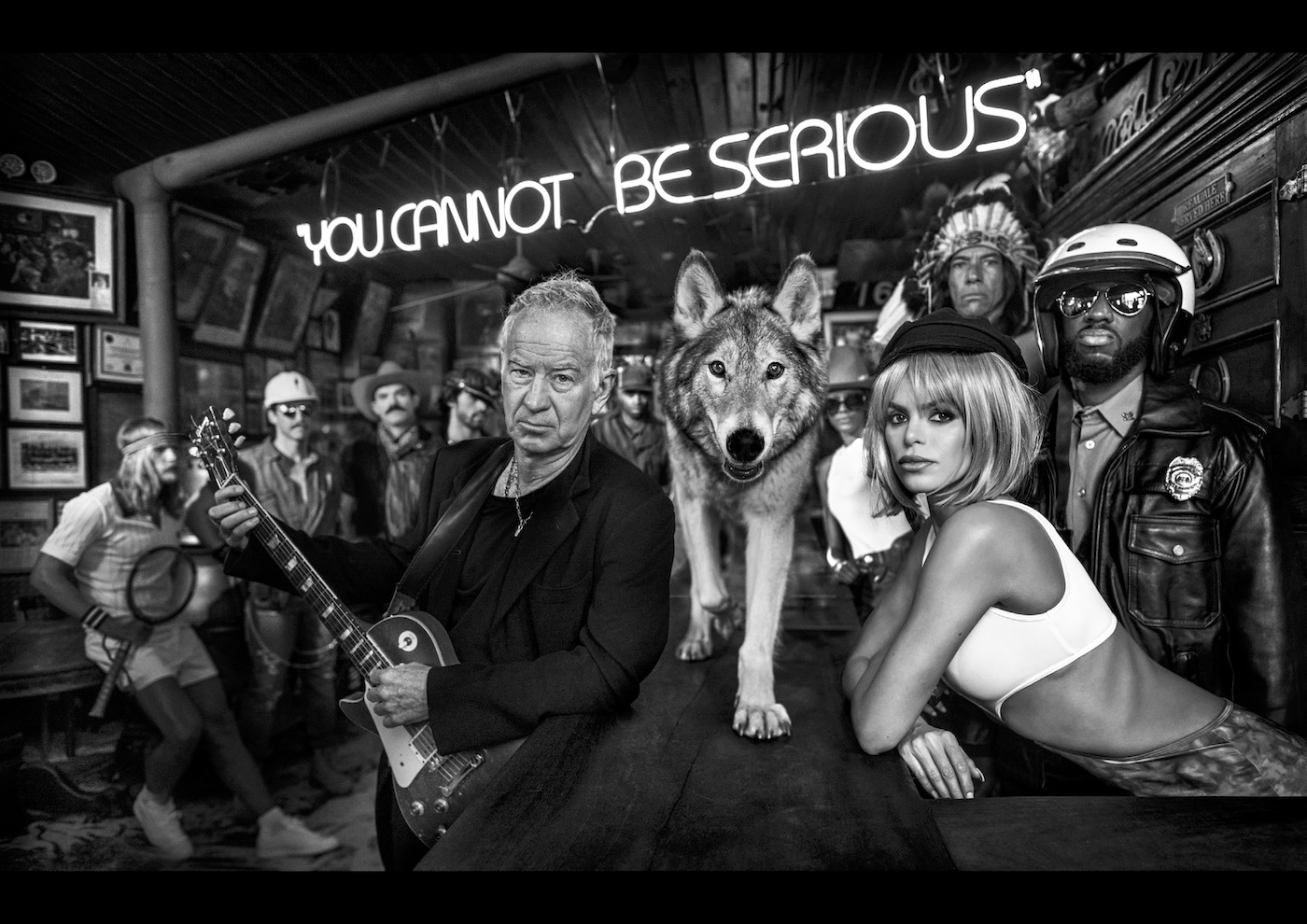
McEnroe’s most famous rebuke to an umpire was the “you cannot be serious” line and I thought those words somewhere in McSorley’s – no matter how incongruous they would be to the rest of the décor – would complement John well. I asked him to bring his Gibson guitar and not a tennis racket, as music now defines him as much tennis and besides, we did give a nod to his rival Bjorn Borg in the photograph.
We were on a creative roll now and I sensed we could add further to the visual overload. The band Village People seemed like a good additive, after-all, we were in the Village and they were of the McEnroe Borg era. Then, since we were playing to a sense of community, I thought we may as well throw in a lady of the night. Luckily Vivian from Pretty Woman was on hand to help.
It is a bar full of Village People, which is what McSorley’s presumably was in 1854. McEnroe looks pure Rock and Roll bad ass. To anyone that says, I would not want to be in that bar, I would simply reply “You cannot be serious.”
AVAILABLE SIZES:
LARGE: Edition of 20 + 3 AP
- Image Size: 56” x 90” in (142.2 cm x 228.6 cm)
- Framed Image: 71” x 105" in (180.3 cm x 266.7 cm)
STANDARD: Edition of 20 + 3 AP
- Image Size: 37” x 59” in (93.98 cm x 149.9 cm)
- Framed Image: 52” x 74” in (132.1 cm x 188 cm)
We ship worldwide and use a multitude of providers to safely deliver your masterpiece. Domestic delivery and installation may also be available via Hilton Asmus Contemporary’s private art shuttle. Please inquire.

Manifest Destiny
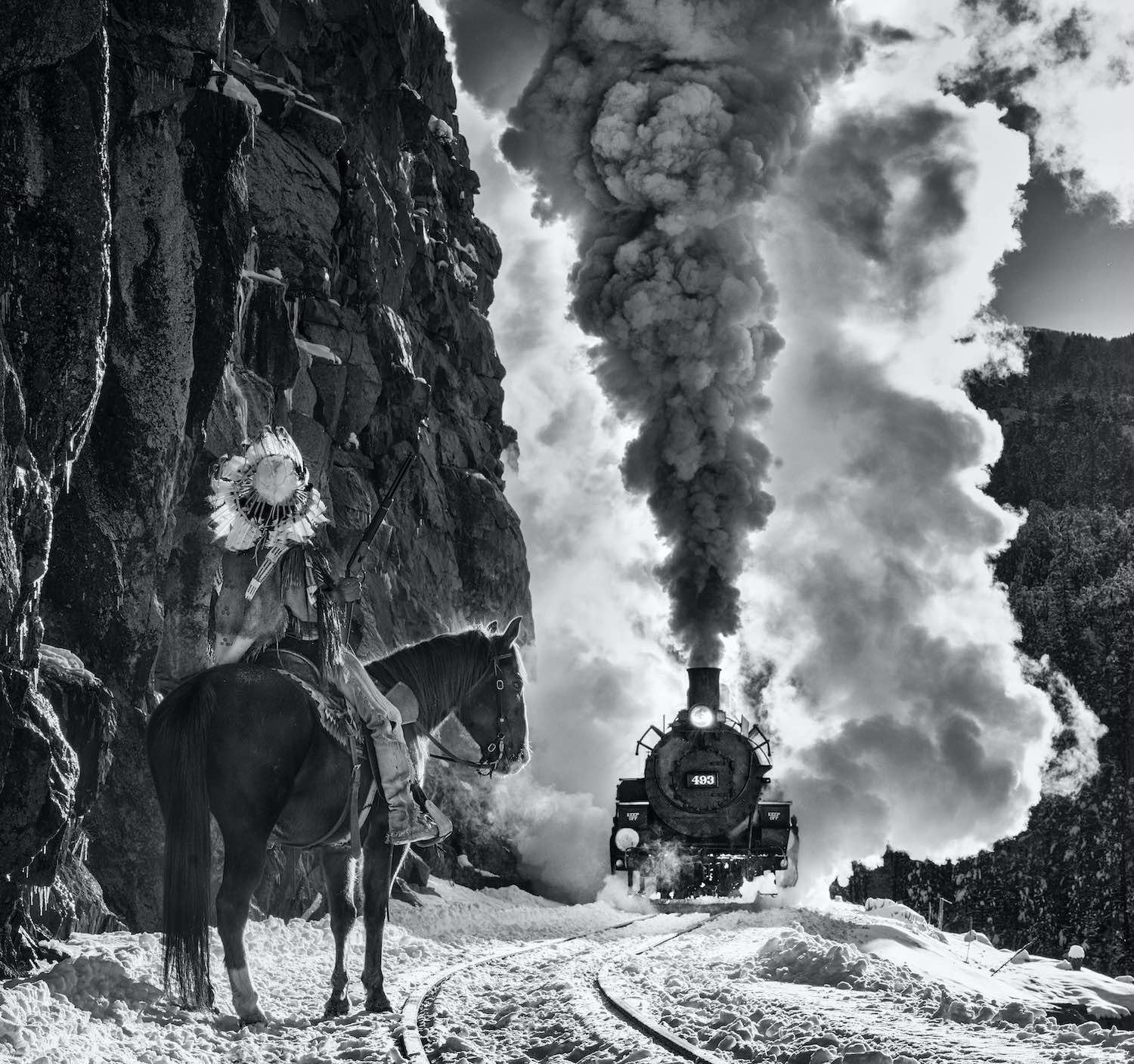
Durango, Colorado – 2023
“Other nations have tried to check the fulfillment of our manifest destiny to overspread the continent allotted by providence for the free development of our yearly multiplying millions.
It was in 1845 that John Louis O’Sullivan, a popular columnist, articulated the long-standing American belief in the God-given mission of the United States to expand across North America all the way to the Pacific Ocean. In so doing he coined the term “Manifest Destiny”.
There was a sense of unbridled purpose. Nothing would get in their way: forests would be cut; mountains carved and railroads built. 60 million bison were culled and replaced by cattle. Native Americans faced an existential crisis.
Some tribes, of course, fought, whilst others negotiated. There was heavy loss of life on both sides and there is irony now that this period of nation building is deeply uncomfortable for many current day Americans. What created the wealthiest country in the world is not something to celebrate.
Railroads were an integral part of the Manifest Destiny and undermined the sovereignty of Native nations. Their construction threatened to destroy indigenous communities and their cultures as the railroad expanded into territories inhabited by Native Americans.
But for all that, encounters between steam trains and Native Americans were not necessarily as Hollywood has depicted. There was not much conflict and indigenous people mostly watched the railroad construction with a degree of fascination. Indeed, some found themselves drawn into a closer relationship with settlers because of the commercial opportunities that came with railroad construction. There was collaboration and often Native Americans offered protection from bandits.
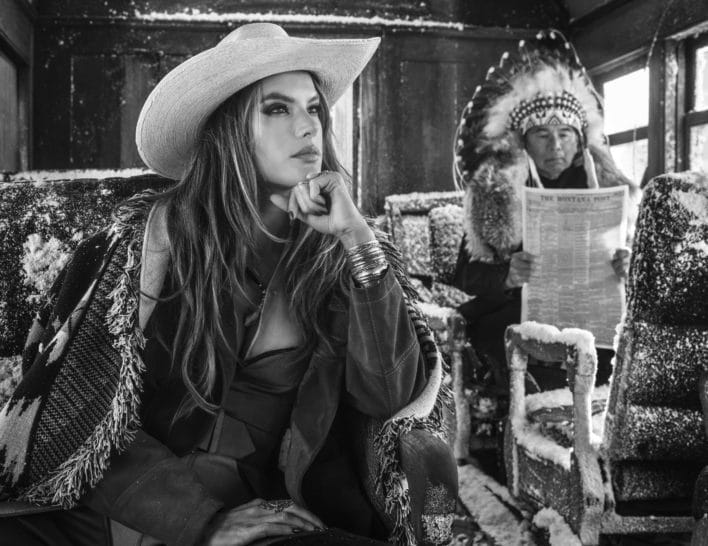
19th century artists often depicted Native Americans as passive contextual narrative in railroad images; they are present but only to frame the story, not make the story. They simply establish the scene. This was my intent one cold February morning at Horseshoe Bend on the famous Durango & Silverton Railroad high in the San Jose Mountains. The Native American is not on the bend to attack, he is there simply to proudly show his presence. It is for the viewer to imagine how the next five minutes unfolded.
A great deal of logistical teamwork enabled this opportunity that cold sunny morning and the result is a strong photograph. As always it is a big team effort to create work like this.
Available sizes
LARGE: Edition of 12 + 3 AP
- Image size: 56" x 60" in (142.2 cm x 152.4 cm)
- Framed Image: 71" x 75" in (180.3 cm x 190.5 cm)
STANDARD: Edition of 12 + 3 AP
- Image size: 37" x 40" in (93.98 cm x 101.6 cm)
- Framed Image: 52" x 55" in (132.1 cm x 139.7 cm)
We ship worldwide and use a multitude of providers to safely deliver your masterpiece. Domestic delivery and installation may also be available via Hilton Asmus Contemporary’s private art shuttle. Please inquire.
BLACKFEET NATION
Blackfeet Nation
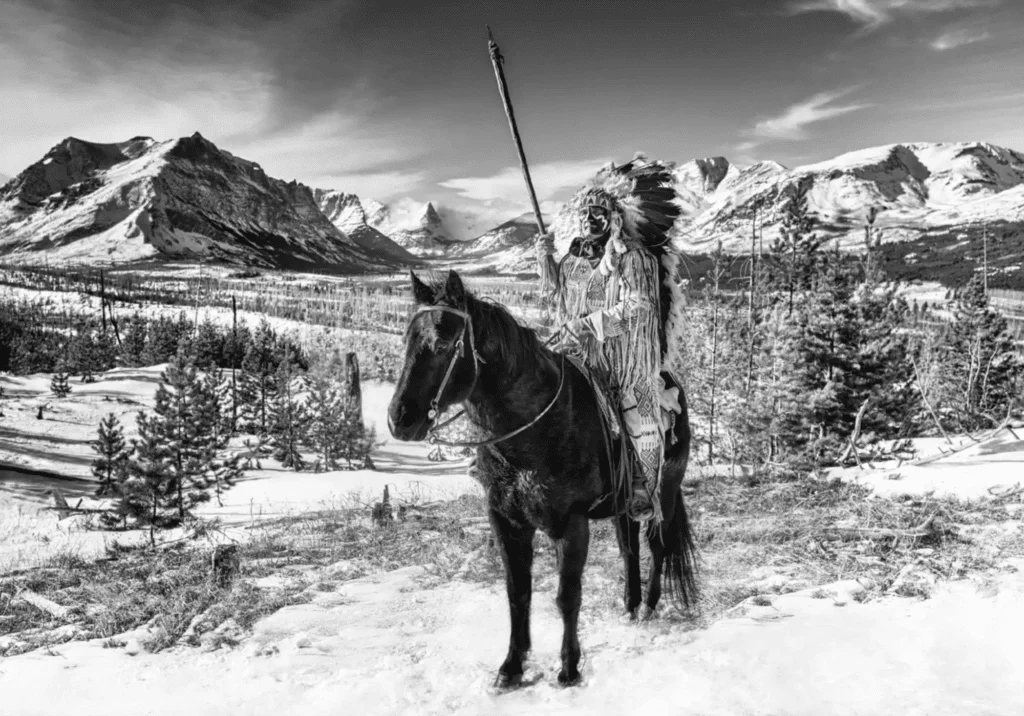
Montana, USA – 2022
In the 17th century, the Blackfeet settled in the region that is now Montana. Previously, they resided in the woodlands north and west of the Great Lakes, but pressure from British traders pushed them west. They eventually acquired firearms and horses and became a formidable example of the classic Plains Indian culture.
Ravaged by smallpox and constantly struggling with the challenges of extreme winters, low bison numbers and relative isolation, the Blackfeet had great fortitude and are often now referred to as the “Real People” of Montana.
The Blackfeet’s tribal headquarters are in the town of Browning in the extreme North West corner of the state. The celebrated Glacier National Park may sit to the west and with it comes smart resorts like Whitefish, but Browning has little refinement – it is a grim and remote frontier town that is avoided by most travelers. It’s all a bit sketchy up there – especially in the winter.
However, within 20 minutes of Browning, the Blackfeet enjoy some of the most majestic scenery in America, and it was this that drew me to the location. It was always going to be a winter shoot, as the snow added in another character for free.
So in January 2023, we made the road trip north from Bozeman – it’s a long way, and the sense of adventure intensifies towards the Canadian border. This is a remote and isolated corner of America, and relative to other reservations in the US, I sense that filmmakers have had a light footprint around Browning.
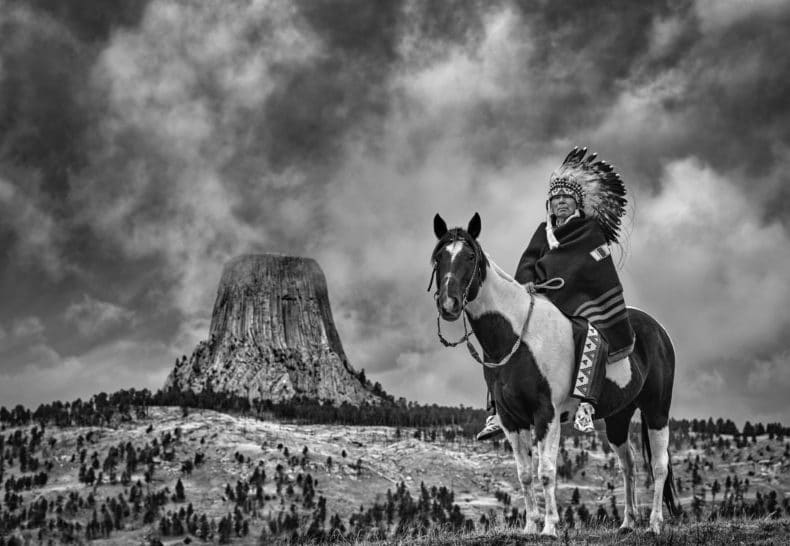
The tribal elder, Dutch Lunak and his horse Rain Man make for a powerful combination. The Blackfeet take the greatest joy in celebrating their heritage, and Dutch wears his look well. I wanted a face that conveyed dignity, wisdom and sovereignty, and I think he gave me all three.
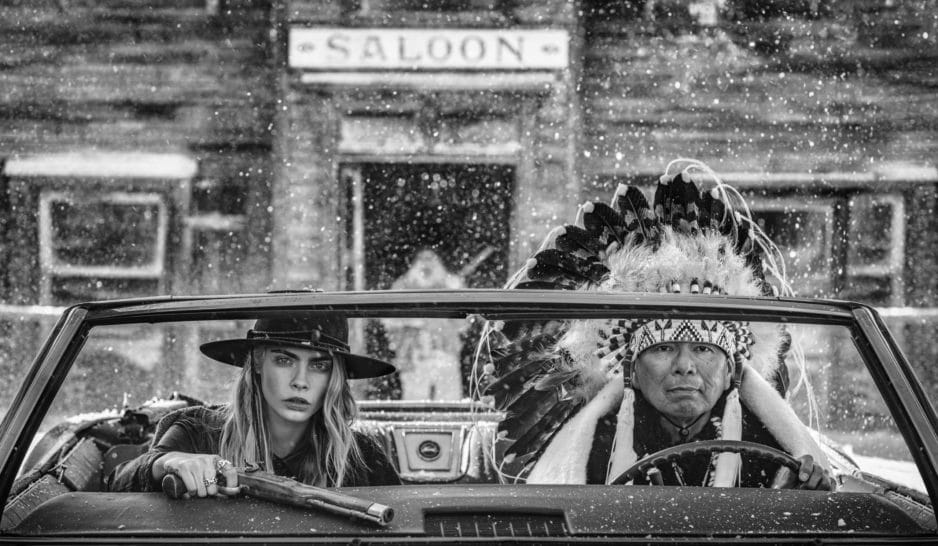
On the way home from Browning, Dutch took us to his favourite saloon in the village of Dupuyer (census population 86). Buffalo Joe’s is a gem of an establishment, and quite soon, this picture will be on the wall.
AVAILABLE SIZES:
LARGE - Edition of 12:
- Image Size: 71” x 96” in (180.3 cm x 243.8 cm)
STANDARD - Edition of 12:
- Image Size: 52” x 69” in (132.1 cm x 175.3 cm)
We ship worldwide and use a multitude of providers to safely deliver your masterpiece. Domestic delivery and installation may also be available via Hilton Asmus Contemporary’s private art shuttle. Please inquire.
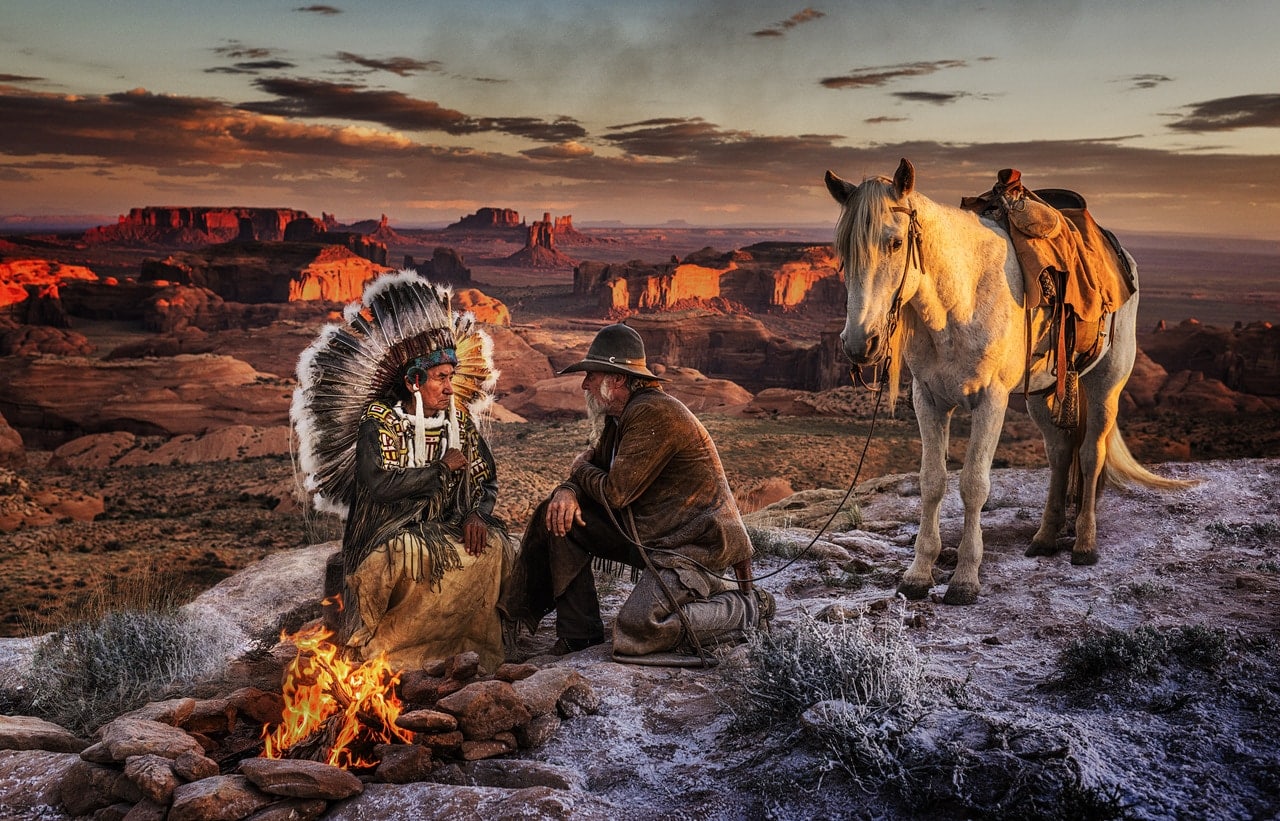
Summit (Colour)
Arizona, USA – 2022
The modern and enlightened narrative on post-Civil War meetings between cowboys and native Americans homes in on communication as opposed to conflict. Of course, the truth was somewhere between the two and the Comanche in particular were not renowned for holding summits with those travelling west.
The work of Charlie Russell, the celebrated American painter of the wild west, has certainly influenced me as he understood how the grandeur of the American West added an extra character for free into his frontier storytelling. He also was sympathetic to the depiction of Native Americans and his work more often embodied a sense of peace not aggression. Given the amount of time he spent living with The Blackfeet Nation in Montana in the late 1880s, this is instructive.
There could be no more jaw dropping backdrop for this meeting than Monument Valley; it is the beating heart of the South West. But to take this photograph was a big logistical exercise and we wonder whether we may have broken new ground here. The route up the escarpment to the south is just too steep for most horsemen. I can’t find anything quite like it and that is always a good moment.
It was a cold morning at that altitude, even in October and the light snow cover adds an additional layer to the story. It is very much my kind of photograph.
AVAILABLE SIZES:
LARGE: Edition of 12
- Image Size: 56” x 88” in (142.2 cm x 223.5 cm)
- Framed Image: 71” x 103” in (180.3 cm x 261.6 cm)
STANDARD: Edition of 12
- Image size: 37” x 58” in (93.98 cm x 147.3 cm)
- Framed Image: 52” x 73” in (132.1 cm x 185.4 cm)
We ship worldwide and use a multitude of providers to safely deliver your masterpiece. Domestic delivery and installation may also be available via Hilton Asmus Contemporary’s private art shuttle. Please inquire.
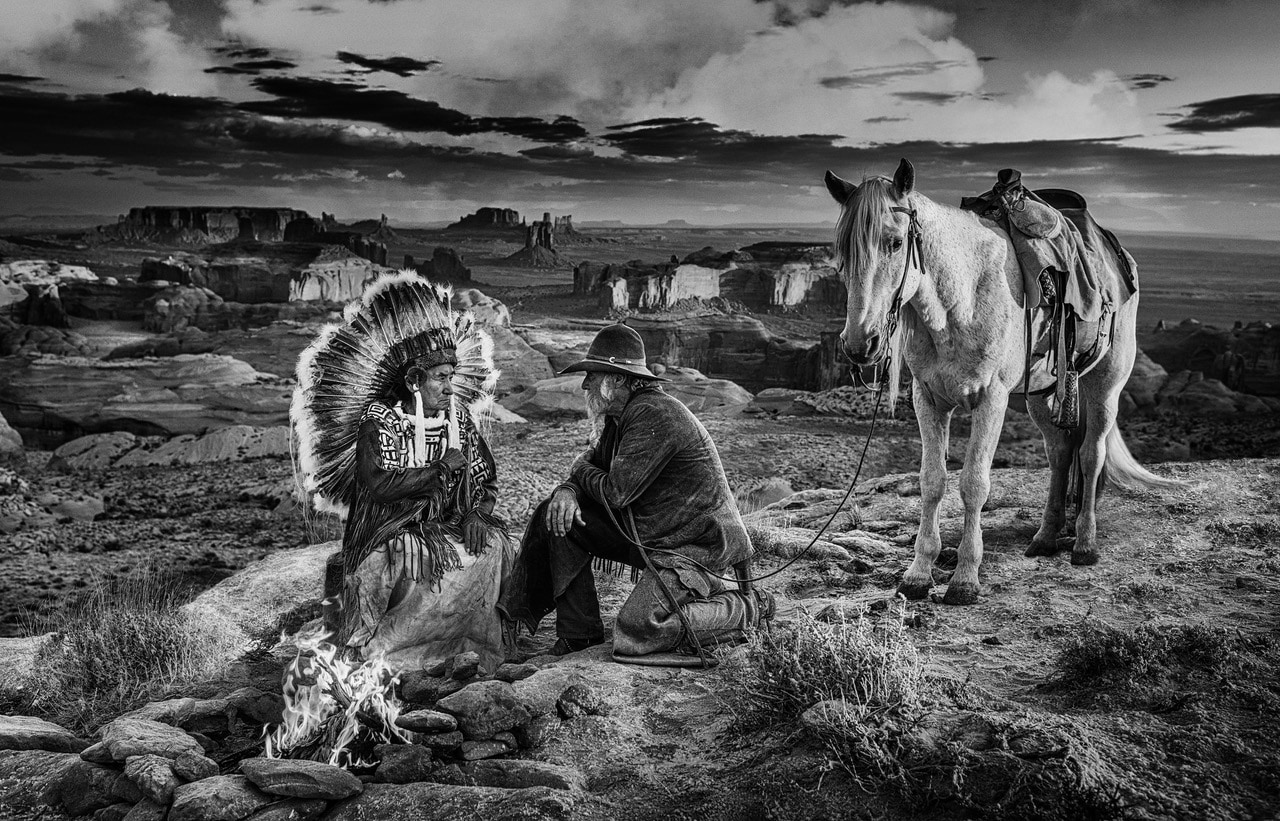
Summit (B&W)
Arizona, USA – 2022
The modern and enlightened narrative on post-Civil War meetings between cowboys and native Americans homes in on communication as opposed to conflict. Of course, the truth was somewhere between the two and the Comanche in particular were not renowned for holding summits with those travelling west.
The work of Charlie Russell, the celebrated American painter of the wild west, has certainly influenced me as he understood how the grandeur of the American West added an extra character for free into his frontier storytelling. He also was sympathetic to the depiction of Native Americans and his work more often embodied a sense of peace not aggression. Given the amount of time he spent living with The Blackfeet Nation in Montana in the late 1880s, this is instructive.
There could be no more jaw dropping backdrop for this meeting than Monument Valley; it is the beating heart of the South West. But to take this photograph was a big logistical exercise and we wonder whether we may have broken new ground here. The route up the escarpment to the south is just too steep for most horsemen. I can’t find anything quite like it and that is always a good moment.
It was a cold morning at that altitude, even in October and the light snow cover adds an additional layer to the story. It is very much my kind of photograph.
AVAILABLE SIZES:
LARGE: Edition of 12
- Image Size: 56” x 88” in (142.2 x 223.5 cm)
- Framed Image: 71” x 103” in (180.3 x 261.6 cm)
STANDARD: Edition of 12
- Image Size: 37” x 58” in (93.98 x 147.3 cm)
- Framed Image: 52” x 73” in (132.1 x 185.4 cm)
We ship worldwide and use a multitude of providers to safely deliver your masterpiece. Domestic delivery and installation may also be available via Hilton Asmus Contemporary’s private art shuttle. Please inquire.
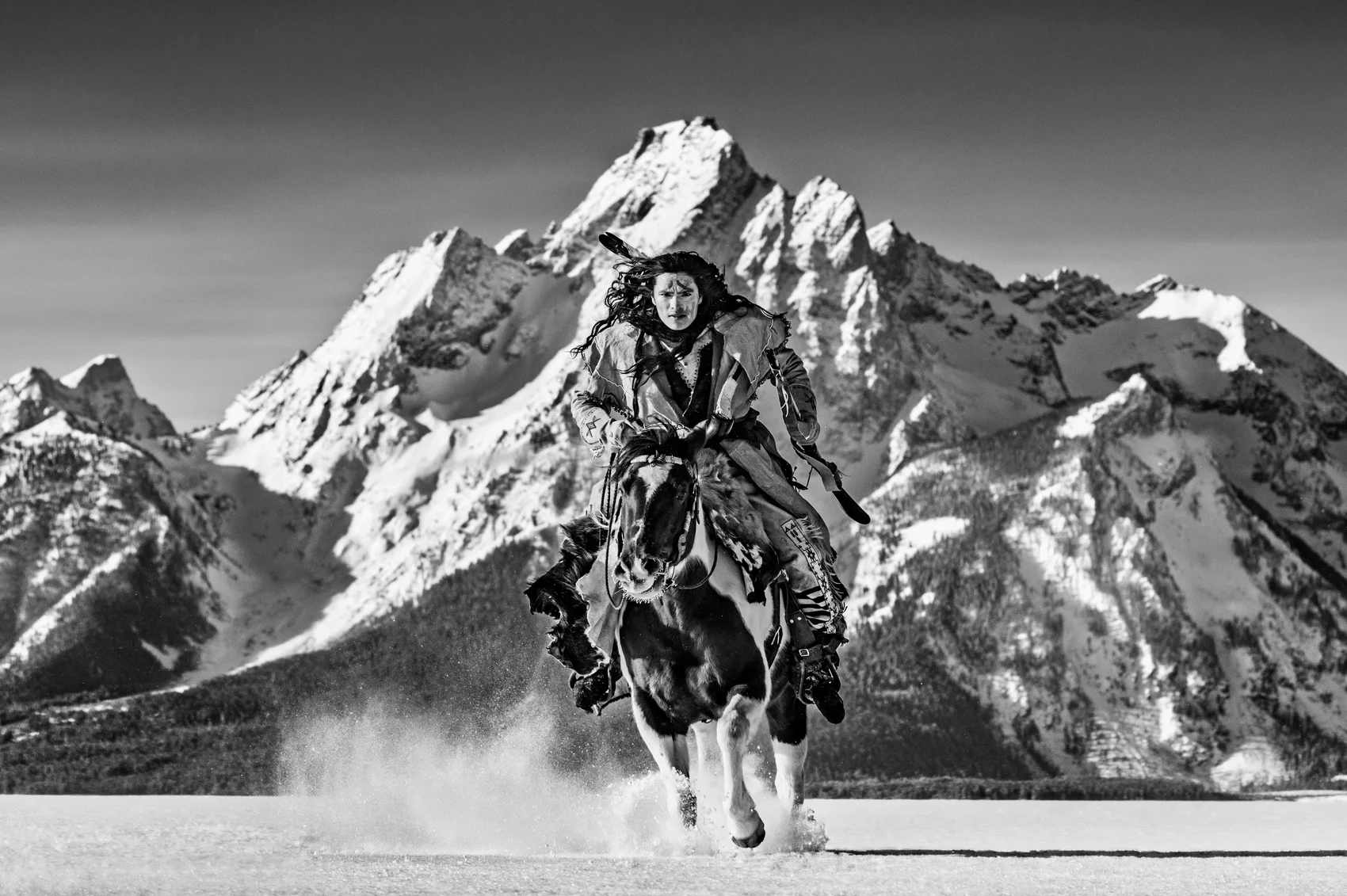
High Noon
Grand Tetons, Wyoming – 2021
“Mount Moran in the Tetons offers as good a mountain backdrop as I know in America. In the winter, in particular, it has a grandeur that is difficult to match.
The lake below this section of the Tetons is frozen thick in mid winter and offers the perfect stage on which to tell stories, but we are always mindful that on a good day, the whole scene become too bright within 45 minutes of sunrise. Images like this require very early starts and we are always in position well before dawn.
The Native Americans were introduced to horses by early Spanish immigrants and they adapted quickly to the optionality and mobility given to them by horses. The Comanche in the south became a feared and dominant tribe largely because of their horsemanship skills.
This frame – taken on a very cold morning in Wyoming – simply pays homage to a tested partnership that played a material role in shaping 19th century American history.”
-David Yarrow
AVAILABLE SIZES:
Large: Edition of 12
- Image Size: 56" x 84" in (142.24 cm x 213.36 cm)
- Framed Image: 71” x 99” in (180.34 cm x 251.46 cm)
Standard: Edition of 12
- Image Size: 37" x 56" in (93.98 cm x 142.24 cm)
- Framed Image: 52" x 71" in (132.08 cm x 180.34 cm)
We ship worldwide and use a multitude of providers to safely deliver your masterpiece. Domestic delivery and installation may also be available via Hilton Asmus Contemporary’s private art shuttle. Please inquire.
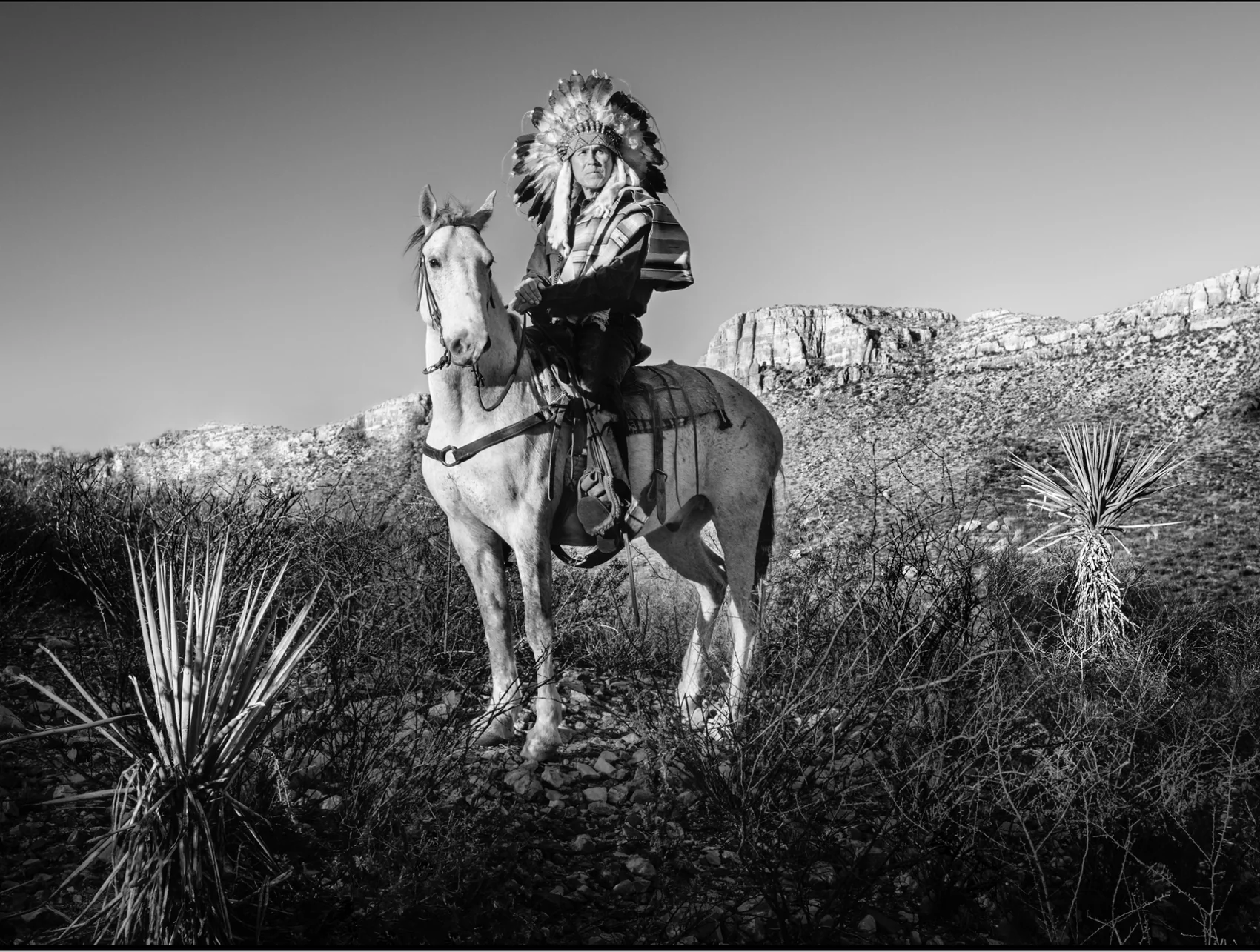
Apache
West Texas – 2021
In the 16th century, the Apache migrated south to the Texas Panhandle from what is now Canada. There they eventually encountered Mexicans; Western settlers and of course the Comanche – the most feared of the native American tribes.
The Apache wars with the US army spanned three decades of the 19th century, but it was ultimately the Comanche who pushed them further south towards the border with Mexico. Consequentially, the Apache settled the furthest south of the all Native American tribes.
In my search for the setting for this portrait, I looked for features that would readily locate the elder and his horse.
There needed to be a sense of place to lend weight to the narrative. We found this escarpment rising above cactus rich scrubland only about 40 miles north of the Rio Grande in West Texas.
The photograph was taken just a few minutes after sunrise. Out there in South West Texas the light can get a little too harsh before most folk are out of bed. As it was, we were back home by 10 am.
We want to thank our new friend Mo Brings Plenty for his help in this project.
AVAILABLE SIZES:
Standard
- Image size: 37" x 50"
- Framed with a 3" mat: 48" x 61"
- Framed with a 5" mat: 52" x 75"
Large
- Image size: 56" x 76"
- Framed with a 3" mat: 67" x 87"
- Framed with a 5" mat: 71" x 91”
We ship worldwide and use a multitude of providers to safely deliver your masterpiece. Domestic delivery and installation may also be available via Hilton Asmus Contemporary’s private art shuttle. Please inquire.
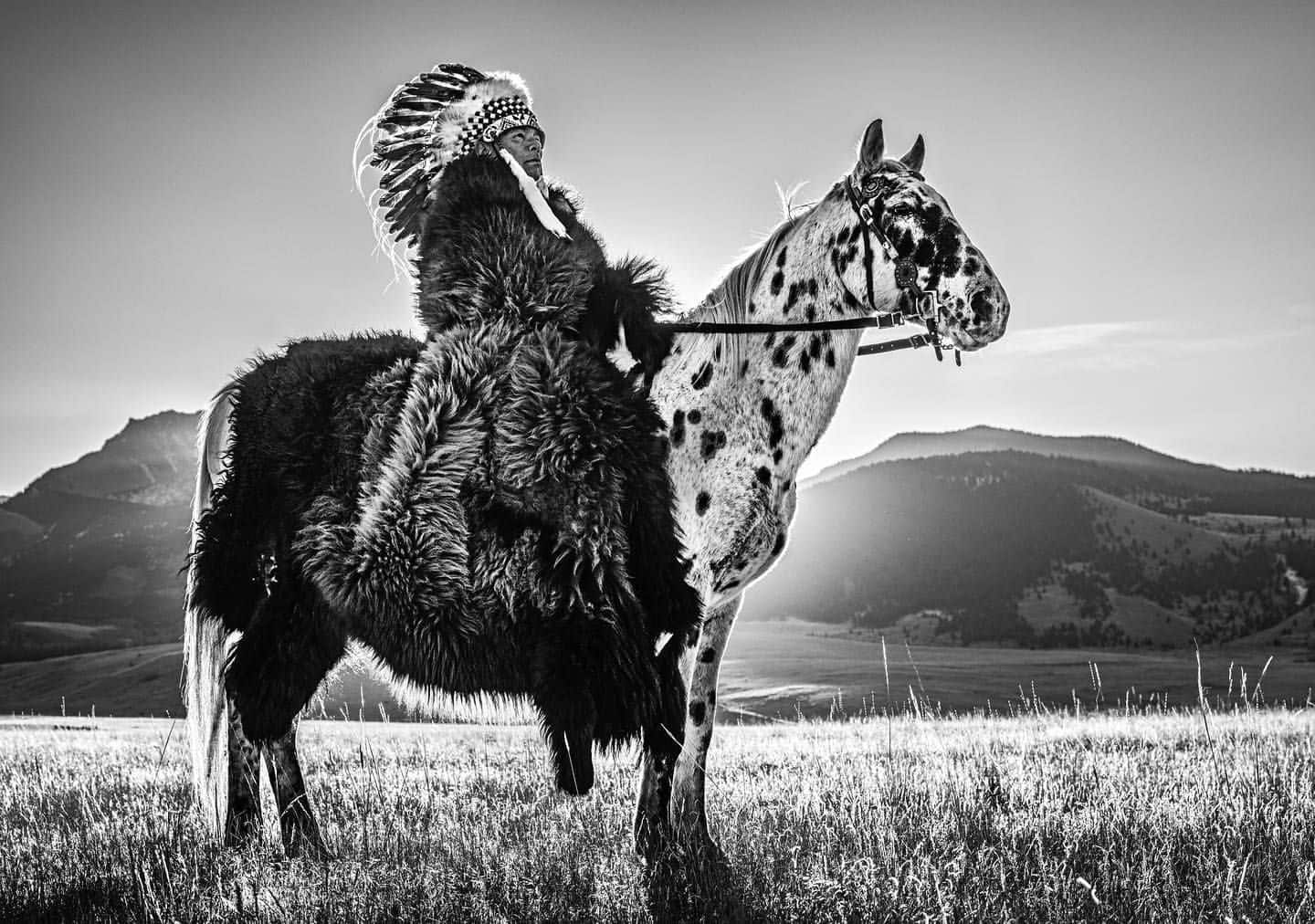
Lakota
Montana, USA 2020
My default position is always to glorify the subject – I am at heart a romanticist. Chief John Spotted Tail of the Lakota is not a hard subject to work with as much of the glorification is a given, bit we still needed the right horse, the right light and the right landscape.
We worked together initially in Wyoming, but I always wanted to photograph him in Montana too. The valley running south of Ennis to West Yellowstone offers stunning visuals and that was our focus. We determined the best light to be first thing in the morning and if we shot into the light looking east towards Big Sky, I knew we could have a strong frame.
Images shot directly against the light need a full tonal range and much of the credit for bringing out the shadow detail must go to my editing partners in Los Angeles. They and Chief John take the credit for this powerful photograph.
Available sizes
Large - Edition of 12
- Image Size: 56” x 80” in (142.24 cm x 203.2 cm)
- Framed Image: 71” x 95” in (180.34 cm x 241.3 cm)
Standard - Edition of 12
- Image Size: 37” x 53” in (93.98 cm x 134.62 cm)
- Framed Image: 52” x 68” in (132.08 cm x 172.72 cm)
We ship worldwide and use a multitude of providers to safely deliver your masterpiece. Domestic delivery and installation may also be available via Hilton Asmus Contemporary’s private art shuttle. Please inquire.
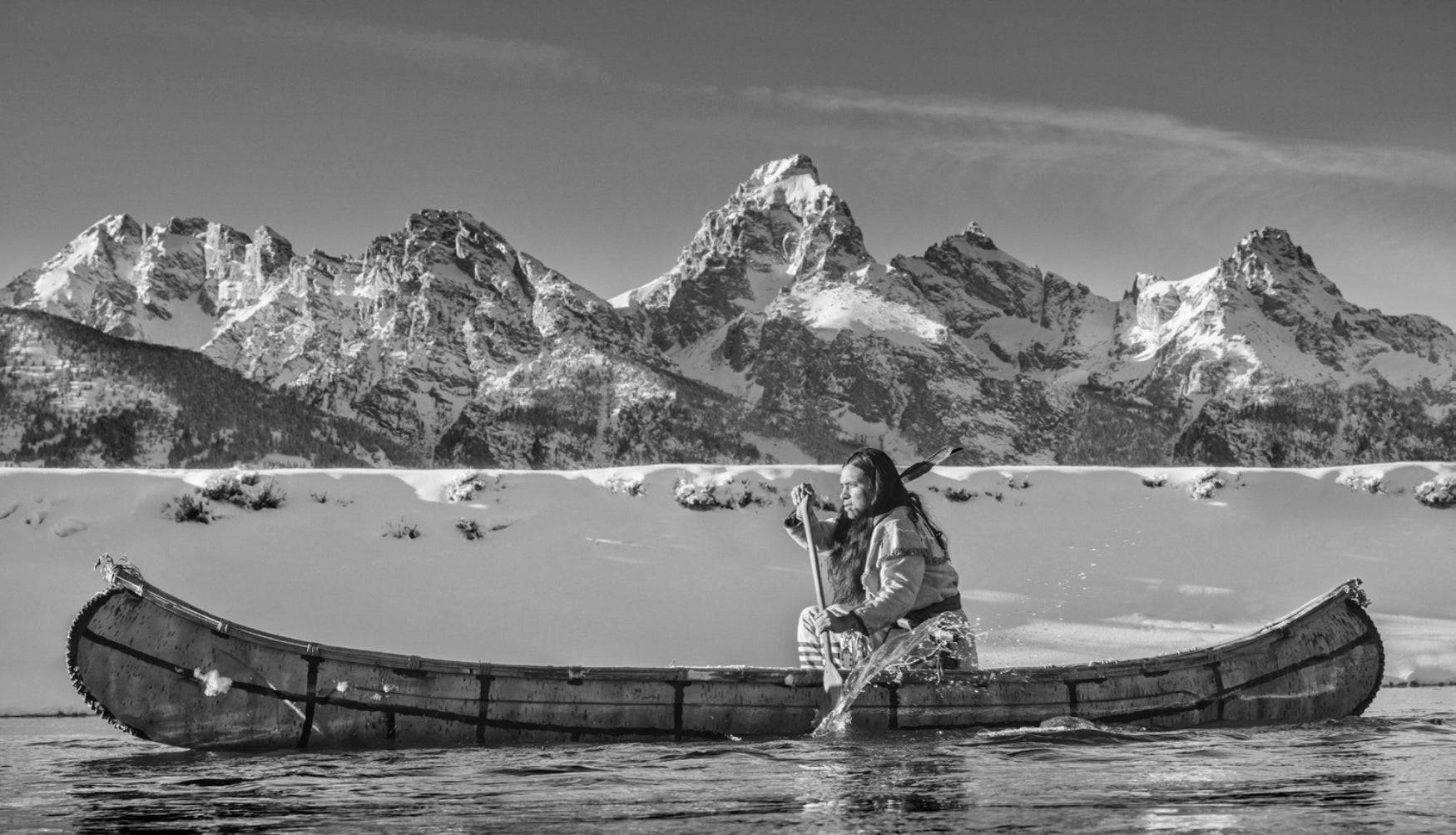
A River Runs Through It
Grand Teton National Park, Wyoming, USA – 2021
Ansel Adams brought the majesty of Snake River and the Tetons into the homes of Americans in 1942. So there is no real commercial merit in a photographer travelling to this sensational destination in Wyoming and taking a loose landscape image on a tripod. They may take a beautiful image, but manifestly they would also be 79 years behind the curve. Teton National Park is an imperial amphitheatre deserving not only our attention, but also our respect, and we are rather late in the game in documenting its magnificence. New images of the Eiffel Tower rarely make a Sotheby’s auction.
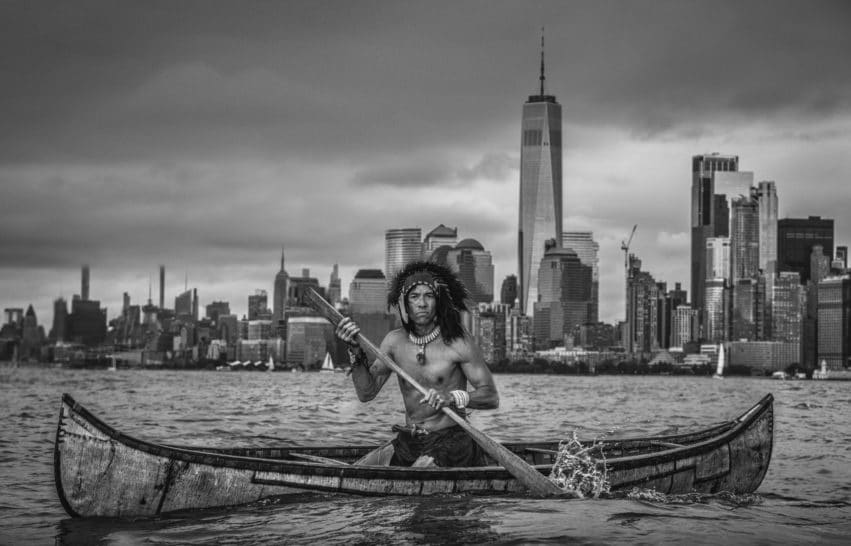
My strategy in the Tetons was to play with what we had and be authentic in the additives. We threw around many ideas and then threw most Out. The most authentic suggestion was the idea of working with a native American in a 19th century canoe on Snake River itself. The concept was sound, but the execution was hampered by the fact that the most scenic stretches of the river are three miles further east from the mountains than I would like. On a standard lens, the peaks lose some of their sense of enormity. But there is one stretch of water where the river runs parallel and much closer to the mountain base. The river banks are a little higher and block the base, but this was a small price to pay for the improved proximity between the canoe and the mountain range.
In good light, this was always a late afternoon location, and the January temperature that day was low. I knew I was going to get wet and cold as the camera needed to be on the river’s surface and that meant me being deep in the river in normal ski clothing. The lower the camera, the more the mountains were amplified, and the canoe would also then be flat to my camera. The picture was all that mattered in those 10 minutes, not my comfort.
Haatepah in the canoe was so game and did an extraordinary job.
AVAILABLE SIZES:
Large: Edition of 12
- Image Size: 56” x 97” in (142.24 cm x 246.38 cm)
- Framed Image: 71” x 112” in (180.34 cm x 284.48 cm)
Standard: Edition of 12
- Image Size: 37” x 64” in (93.98 cm x 162.56 cm)
- Framed Image: 52” x 79” in (132.08 cm x 200.66 cm)
We ship worldwide and use a multitude of providers to safely deliver your masterpiece. Domestic delivery and installation may also be available via Hilton Asmus Contemporary’s private art shuttle. Please inquire.